Securing Critical AI Supply Chains
U.S. to Ban Chinese Humanoid Robots and Power Inverters for National Security
Anonymous
Key Points
1
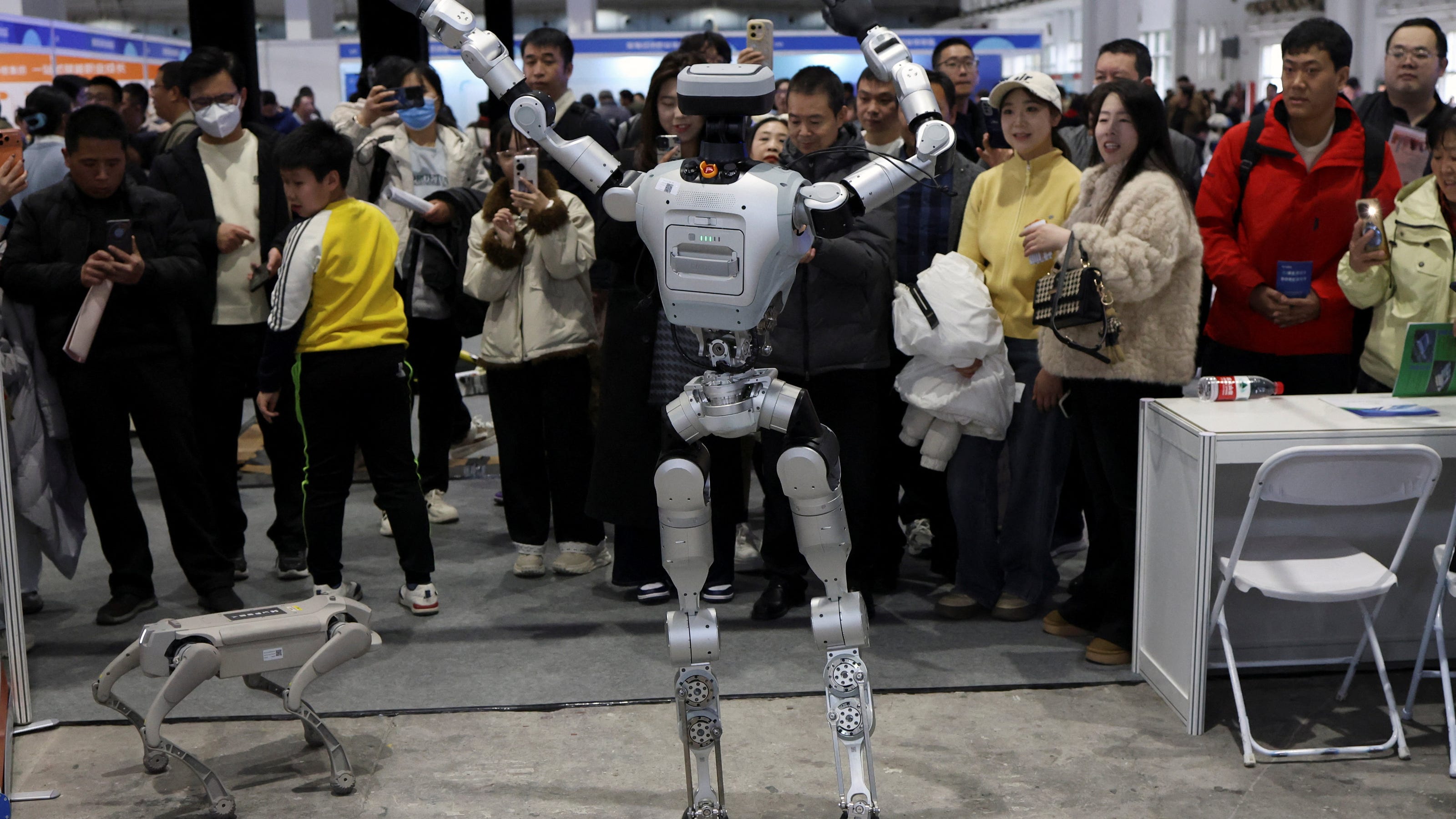
The measures specifically ban new Chinese-made humanoid and quadruped robots and connected power inverters, with inverters described as devices that enable renewable energy sources and batteries to connect to grids and data center equipment.
2
"Economic security is national security," officials said, underscoring a framing that independent and secure supply chains for critical and emerging technologies like robotic devices and power inverters are essential.
3
Officials characterize the move as part of a broader, multi-faceted effort to reindustrialize America and push manufacturing back to the United States to support the U.S. AI buildout.
4
Market analysis tied to the bans suggests the measures could decrease the likelihood of a visit by Xi Jinping to the United States before 2027.
5
Bloomberg drew attention to the broader context, noting the ban is part of a wider drive to tighten restrictions on advanced Chinese industrial and energy equipment on national security grounds.
The Trump administration is planning to ban imports of new Chinese-made humanoid robots, quadruped robots, and connected power inverters, according to Detroit News and MarketScreener. The move is designed to shield the U.S. AI buildout from national security threats and push key manufacturing back to American soil.
The Federal Communications Commission is set to implement the restrictions. Officials framed the policy in stark terms: "Economic security is national security." The bans cover entire new categories of Chinese-connected devices that plug into U.S. energy grids and data centers.
What Exactly Gets Banned and Why It Matters
The ban targets two categories of Chinese tech. First: humanoid and quadruped robots — machines that walk on two or four legs and are increasingly used in warehouses and factories. Second: connected power inverters. Inverters are devices that let solar panels, batteries, and other energy sources feed power into the electrical grid or data center equipment, according to MarketScreener.
Officials say both categories pose real risks. A Chinese-made inverter connected to a U.S. data center could give Beijing a back door into critical infrastructure. A robot built in China could carry software that sends data overseas. The administration argues that letting these devices spread through America's AI supply chain is simply too dangerous.
Reshoring America's AI Supply Chain Is the Endgame
Administration officials describe the ban as one piece of a larger industrial strategy. The goal is to bring robot and inverter manufacturing back to the United States. Officials say independent and secure supply chains for emerging technologies are essential to America's AI ambitions, according to Detroit News.
The plan is part of what the White House calls a "multi-faceted effort to reindustrialize America." U.S. companies building out AI data centers need reliable, secure hardware. By cutting off Chinese suppliers, the administration hopes to force investment into domestic alternatives — even if that raises costs in the short term.
Xi Visit and Diplomatic Fallout Now in Doubt
The bans carry a diplomatic price tag. Market analysts say the measures could reduce the chances of Chinese President Xi Jinping visiting the United States before 2027, according to Detroit News. A planned Xi visit had been seen as a potential reset in U.S.-China relations amid ongoing trade tensions.
The move comes as Washington is also weighing sanctions on Chinese AI firms over intellectual property concerns. Taken together, analysts say the steps signal a hardening posture toward Beijing — one that goes beyond tariffs and into the core of the tech and energy sectors.
Bloomberg Flags a Wider Crackdown on Chinese Industrial Tech
Bloomingbit reported that the robot and inverter ban is part of a broader U.S. drive to tighten restrictions on advanced Chinese industrial and energy equipment on national security grounds. This is not a one-off move — it fits a pattern of escalating tech restrictions that began with semiconductors and Huawei and is now spreading to robotics and energy hardware.
Analysts see the policy as a template. If inverters and robots can be banned on security grounds, so can other connected devices made in China. The administration appears to be drawing a clear line: Chinese hardware will not be allowed inside America's most critical digital and energy infrastructure.
Sentiment
Mostly NegativeNEGATIVENEUTRALPOSITIVE
Publishers
36
Articles
154
Reach
190
A
AnonymousAuthor


