Florida Gator Safety
Florida Alligator Attacks Spark Safety Questions as Rising Temperatures Increase Activity
Anonymous
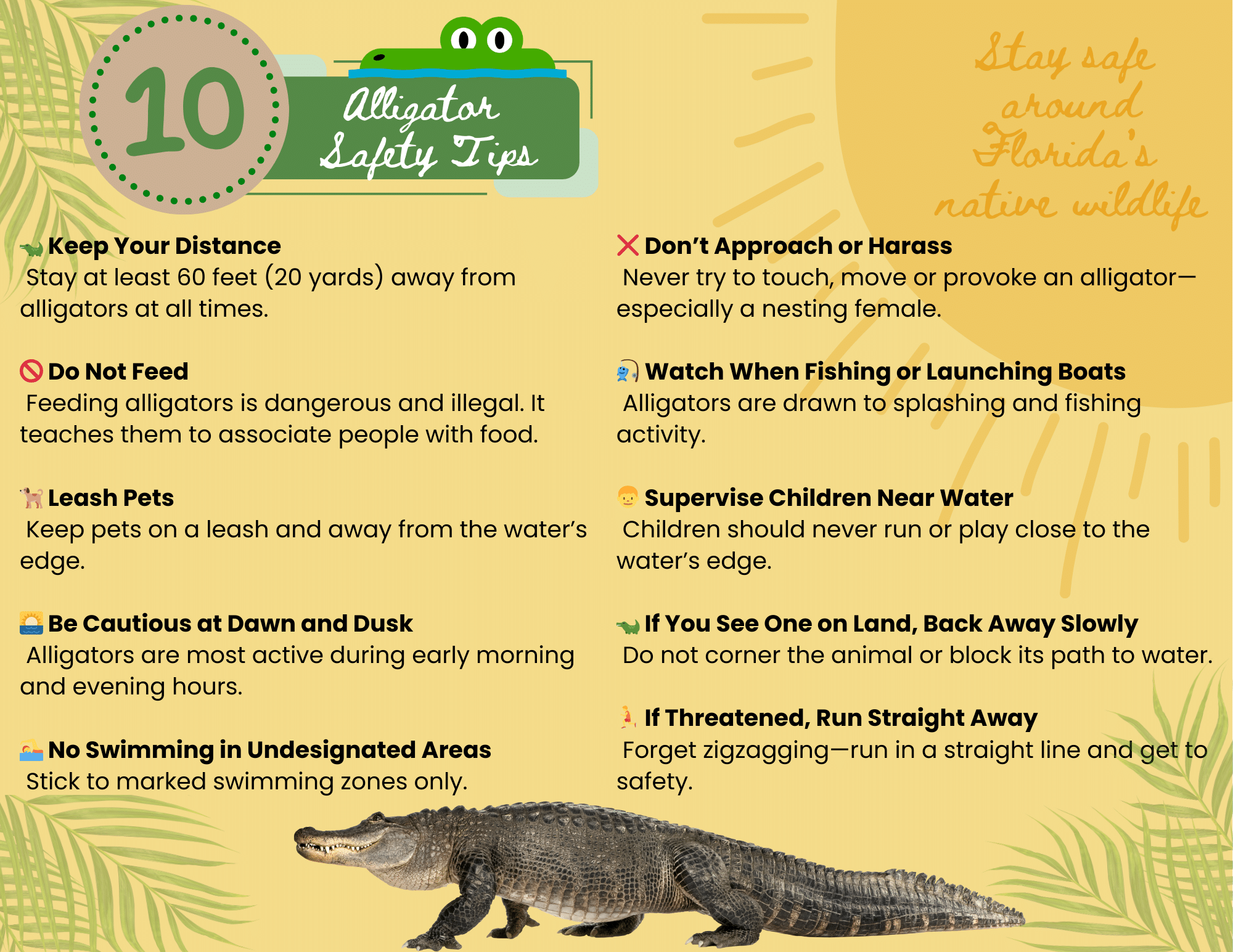
A series of alligator attacks across Florida has put residents and wildlife experts on alert, including a deadly encounter in Orlando that has drawn national attention WGAL. The incidents are raising hard questions about how humans and alligators can safely share the same spaces — especially as warmer temperatures drive these reptiles into greater activity.
Florida is home to an estimated 1.3 million alligators. They live in every county in the state. That means encounters are not rare — but fatal attacks are, and experts say human behavior plays a big role in keeping it that way WMTW.
What Happens After an Alligator Attacks Someone
When an alligator is involved in an attack, a licensed trapper is called in to remove it. Allen Register, co-owner of Gatorama in Glades County, explained the process KOCO. The trapper locates the animal, captures it, and removes it from the area. In most cases, the alligator is then euthanized.
Register said the system exists to protect people — but it also ends the life of the animal. That is why experts stress prevention. "The goal is to respect wildlife and fear it," Register said KMBC. Removing an alligator does not fix the root problem if human habits are what drew it close in the first place.
Rising Temperatures Push Alligators Into More Encounters
Dr. Edwin Everham of Florida Gulf Coast University says warmer weather directly increases alligator activity WISN. As temperatures rise in spring and summer, alligators move more, feed more, and range farther from their usual habitats. This brings them into closer contact with neighborhoods, golf courses, and retention ponds near homes.
Spring is also mating season for alligators. Male alligators travel long distances looking for mates during this time. That movement increases the chances of a surprise encounter. Residents near lakes or wetlands should be especially alert from April through June WLKY.
Feeding Alligators Makes Them Dangerous to Everyone
Both Register and Dr. Everham point to feeding as one of the most dangerous things people do around alligators KCCI. When people feed them, alligators lose their natural fear of humans. They start to associate people with food. That is when a normally cautious animal becomes a threat.
It is also illegal in Florida to feed wild alligators. A fine can reach up to $500. But enforcement is difficult. Estero resident Richard Wilbanks, who was bitten while trying to save his puppy from an alligator, said the animal showed no hesitation — a sign, experts say, of a gator that had grown too comfortable around people WGAL.
How Floridians Can Stay Safe Around Alligators
Experts offer clear advice: never swim in fresh water at night, when alligators are most active. Stay away from the water's edge, especially near marshy or weedy areas. Keep pets on leashes and away from the shoreline KCRA. Alligators can move fast on land — up to 35 mph in short bursts.
If you see an alligator that seems aggressive or is near a populated area, call the Florida Fish and Wildlife Conservation Commission's nuisance alligator hotline at 1-866-FWC-GATOR. Do not try to handle or move the animal yourself WBALTV. Register summed it up plainly: respect the animal, keep your distance, and never feed it.
Sentiment
NeutralNEGATIVENEUTRALPOSITIVE
Publishers
12
Articles
12
Reach
12
A
AnonymousAuthor


