Russian Satellites May Have Aided Iran's Base Strike
Russian Satellites May Have Aided Iran's Base Strike
Anonymous
Key Points
1
CNN’s analysis was conducted with orbital-tracking data and assistance from Project Aurora, the European Space Agency’s Aurora Program, and Kayhan Space; the network said it did not obtain the Russian satellite imagery itself.
2
The satellites’ capabilities varied: Kosmos-2573 reportedly used synthetic-aperture radar that could image targets through clouds or darkness, while other spacecraft could intercept radar or communications signals, detect thermal emissions, or identify air-defense systems.
3
CNN reported that the E-3 Sentry was destroyed even though it had been moved from its prewar or usual location, suggesting that the attack was effective despite efforts to reposition the aircraft.
4
Nawaf Obaid, a senior fellow at King’s College London, told CNN, “The war wouldn’t be where it is today if it wasn’t for the unique capabilities that the Russians gave to the Iranians,” underscoring one expert’s assessment of the assistance’s importance.
5
The reported assistance was described as potentially extending beyond satellite imagery: U.S. intelligence was also examining whether Russia supplied guidance-related intelligence or technology that improved the accuracy of Iranian drones in attacks on CIA-linked facilities.
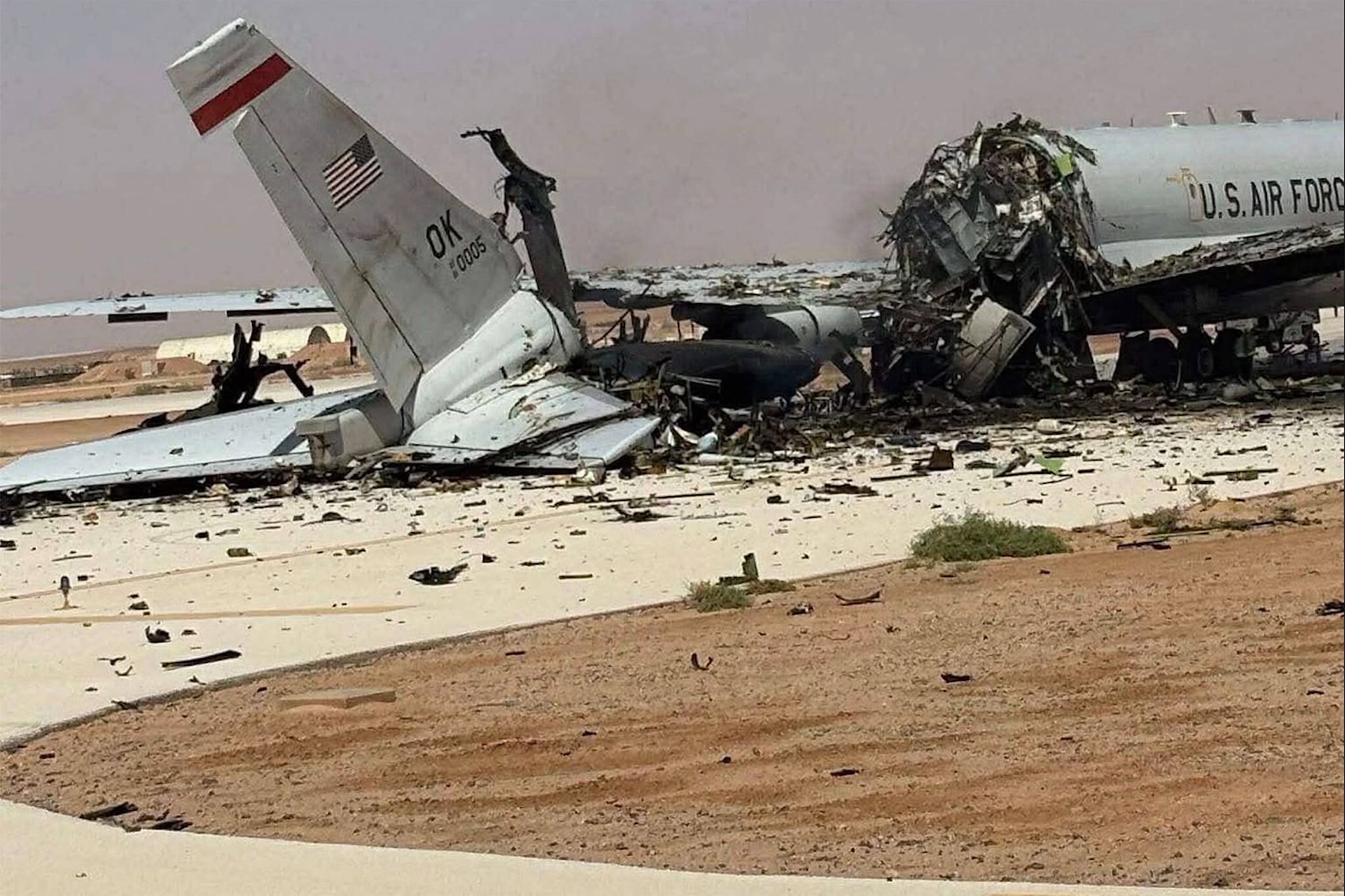
Russian spy satellites may have helped Iran strike a U.S. military base in Saudi Arabia on March 27, according to CNN investigations. Fourteen Russian reconnaissance satellites passed over Prince Sultan Air Base two days before the attack, potentially collecting imagery and intelligence data. CNN reported that Iran received at least some of this information and used it to improve attack accuracy, wounding 12 U.S. service members and destroying an E-3 Sentry AWACS aircraft.
U.S. intelligence officials told CNN that Russian assistance extended beyond satellite imagery. They examined whether Russia supplied guidance intelligence or technology that improved the accuracy of Iranian drones in attacks on CIA-linked facilities in Riyadh. Russia has denied providing any assistance to Iran, and experts disagree about how significant the aid actually was.
Russian Satellites Track the Base Before Attack
CNN's analysis used orbital-tracking data and help from the European Space Agency's Aurora Program and Kayhan Space. The network did not directly obtain Russian satellite imagery but traced when 14 Russian reconnaissance satellites passed over Prince Sultan Air Base. The timing — two days before Iran's strike — raised alarms among U.S. intelligence officials monitoring the movements.
What The Satellites Could Actually See
Russian spy satellites have different capabilities that could help plan an attack. Kosmos-2573 used synthetic-aperture radar, allowing it to image targets through clouds or darkness. Other Russian spacecraft could intercept radar signals, pick up communications, detect thermal emissions from aircraft engines, or identify air-defense systems. This combination gave Iran a detailed picture of U.S. positions and defenses.
The E-3 Sentry Was Hit Despite Being Moved
The U.S. military had relocated the E-3 Sentry AWACS aircraft from its usual location before the March 27 attack, attempting to reduce vulnerability. Despite this precaution, Iranian forces destroyed the plane anyway. CNN reported the successful strike suggested that Russian intelligence gave Iran information accurate enough to track the aircraft even after it moved positions.
Experts Debate How Much Russia Really Helped
Assessments differ on the importance of Russian assistance. Nawaf Obaid, a senior fellow at King's College London, told CNN, "The war wouldn't be where it is today if it wasn't for the unique capabilities that the Russians gave to the Iranians." Other U.S. officials suggested the aid was helpful but not decisive in changing the course of attacks. CNN did not establish that Moscow directly ordered or coordinated the strike with Iran.
Sentiment
Mostly NegativeNEGATIVENEUTRALPOSITIVE
Publishers
16
Articles
11
Reach
27
A
AnonymousAuthor