Channel Boat Rescue
French and British Authorities Rescue 157 Migrants After English Channel Boat Fire
Anonymous
Key Points
1
French authorities deployed two rescue ships, a Navy helicopter, and medical personnel as part of the operation.
2
The rescue was described by AFP as one of the largest such operations since records began in 2018.
3
Migrants’ boats have been observed to be larger than in previous years, with some up to about 12 meters long, and the average number of people per boat rising from around 26 in 2021 to roughly 65 this year.
4
The UK–France agreement linked to the crossings includes a multi-million-euro plan to curb departures and deploy new technology aimed at reducing the use of smugglers’ ‘taxi boats’ along the northern French coast.
A small boat carrying 157 migrants caught fire in the English Channel on Tuesday, triggering one of the largest rescue operations in the waterway's modern history. French and British teams pulled all 157 people to safety, with no casualties reported, according to WTOP.
The vessel departed from near Boulogne-sur-Mer in Normandy the day before. Five people were rescued overnight, but the rest refused help until the engine fire forced the situation. WRAL reported that 103 migrants were saved by French vessels and 54 by British ones, with all taken to Boulogne-sur-Mer for medical checks.
One of the Largest Channel Rescues Since 2018
French authorities sent two rescue ships, a Navy helicopter, and medical teams to the scene. British responders included RNLI lifeboats and UK Border Force vessels. WRAL described the joint operation as a textbook example of cross-border coordination between France and the United Kingdom.
AFP called it one of the largest rescue operations since records began in 2018, according to Winnipeg Free Press. The scale reflects a broader shift in how migrants attempt the crossing — and how dangerous it has become.
Bigger Boats, More People, Greater Risk
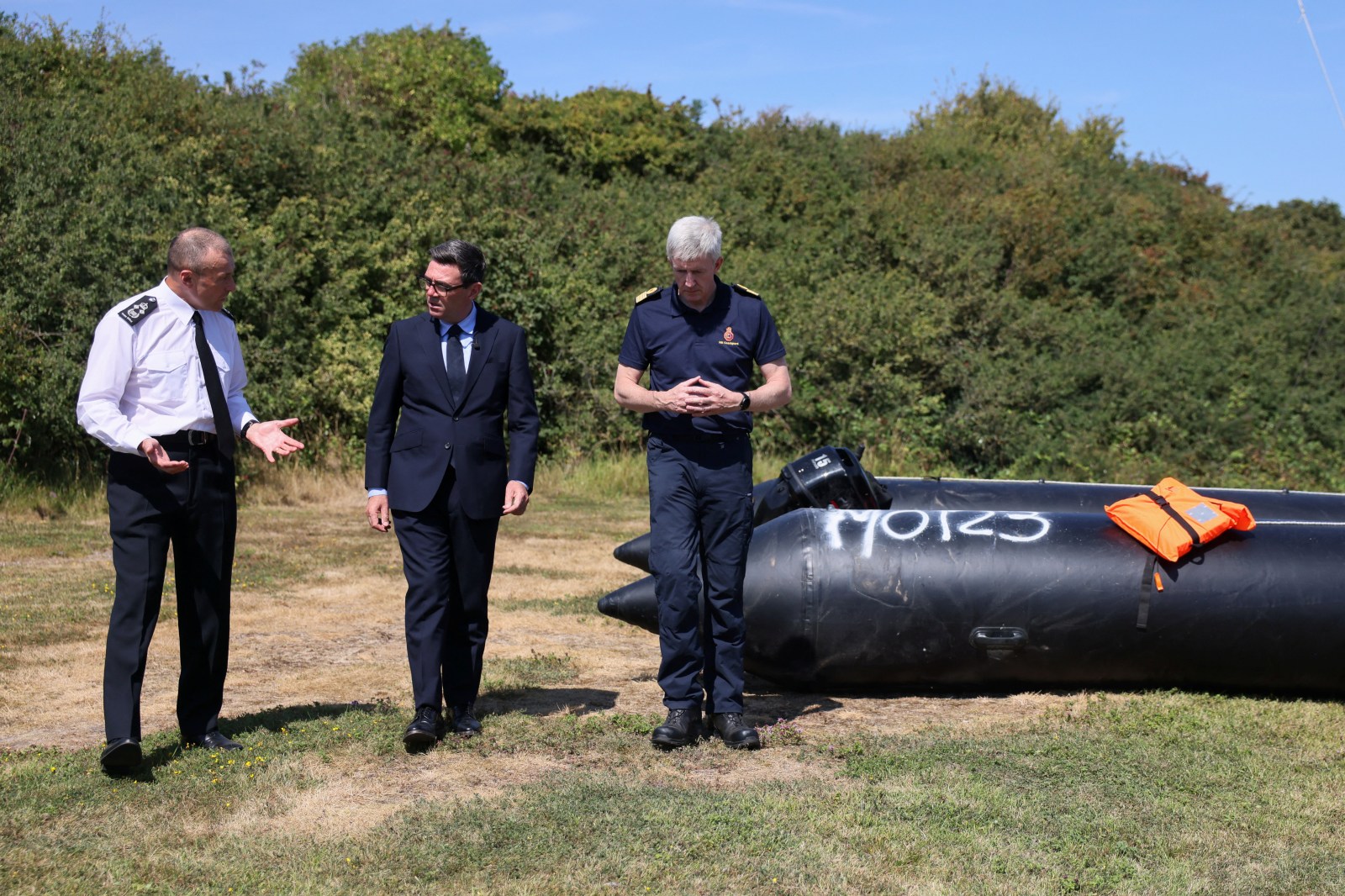
Migrant boats in the Channel are getting larger. Some now stretch up to about 12 meters long. The average number of people per boat has jumped from roughly 26 in 2021 to about 65 this year, according to WTOP.
Smugglers use these oversized dinghies — sometimes called 'taxi boats' — to pack in as many people as possible. More passengers mean more money per trip. But it also means a single engine fire or capsize can put dozens of lives at risk at once.
Why Rescuers Cannot Simply Pull Migrants Off Boats
Rescue teams face a difficult problem. Many migrants refuse help unless they are in immediate danger. Forcing people off a moving, crowded boat risks capsizing it and killing everyone on board. On Tuesday, the fire removed that choice — and crews moved in fast.
IBTimes UK noted that the overcrowded inflatable was already under severe stress before the engine ignited. The fire turned a dangerous crossing into a life-or-death emergency in minutes.
UK–France Deal Targets Smugglers With New Technology
Tuesday's rescue puts pressure on both governments to act. The UK and France have a joint agreement that includes a multi-million-euro plan to cut departures from the northern French coast. The deal funds new surveillance technology and extra patrols to break up smuggling networks, according to Head Topics.
Despite those efforts, crossings and fatalities continue to rise. The Channel remains one of the world's busiest shipping lanes. For migrants who attempt it on a rubber dinghy, the odds are getting worse — not better.
Sentiment
Mostly NegativeNEGATIVENEUTRALPOSITIVE
Publishers
64
Articles
279
Reach
343
Topics
A
AnonymousAuthor


