Sweden ASC 890 Deployed
Ukraine Deploys Swedish ASC 890 Airborne Warning Aircraft for Combat Missions
Anonymous
Key Points
1
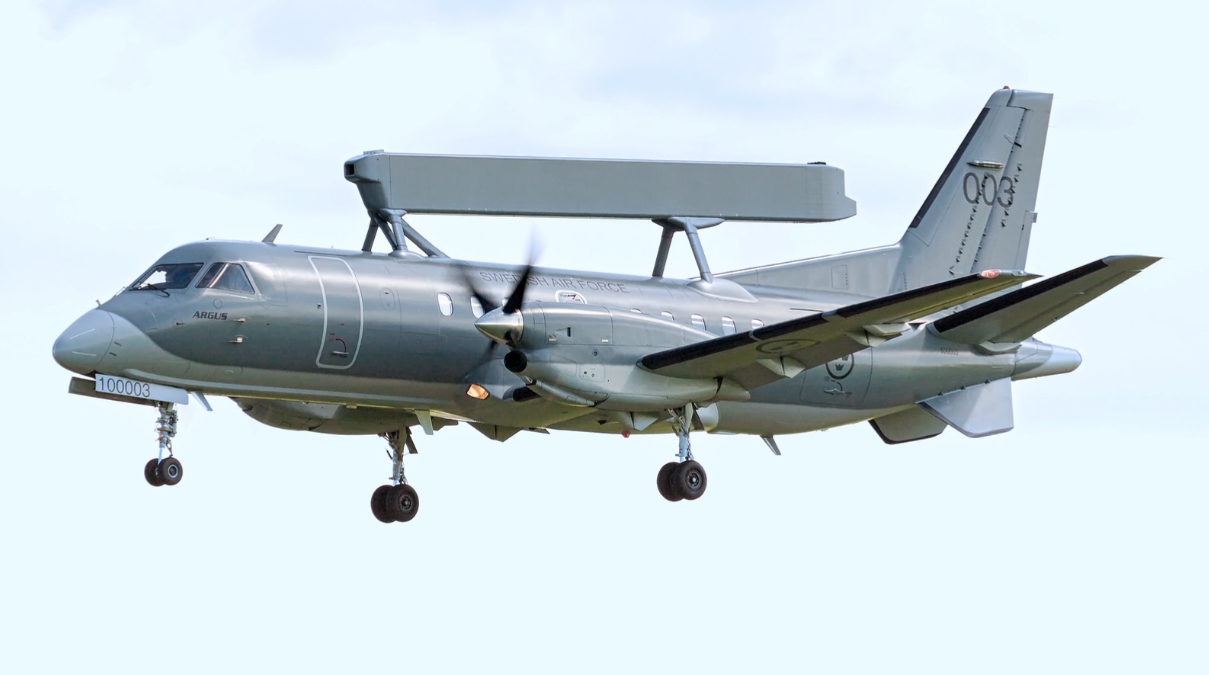
Sweden announced the two-aircraft transfer as part of a military aid package worth €1.16 billion, described at the time as the country’s largest aid package to Ukraine. Swedish Prime Minister Ulf Kristersson formally handed over the aircraft to Ukraine’s ambassador in a ceremony on May 30, 2024.
2
The Erieye radar can reportedly track up to 500 surface targets and 1,000 air targets simultaneously, cover altitudes up to 20 kilometers and detect targets at an instrumental range of up to 450 kilometers, with a fighter-detection range of about 350 kilometers.
3
Ukraine has modified its F-16s to interact with the Swedish airborne-warning aircraft, allowing data collected by the ASC 890 to be integrated directly into fighter operations.
4
The aircraft can pass tracking data to Ukrainian fighter pilots so they can intercept threats without activating their own radars, reducing the risk of exposing their positions. The ASC 890 is operated by a six-person crew that includes mission-control, combat-control and surveillance specialists.
5
Independent reporting had indicated that the aircraft may have been operating in Ukrainian airspace before the official confirmation: footage posted on a Russian Telegram channel on March 20, 2026, appeared to show the aircraft in flight, although the date and location could not be independently verified.
Ukraine's Defense Ministry confirmed in March 2026 that Swedish-supplied ASC 890 airborne radar aircraft are now flying combat missions over the country Air Data News. The two Saab 340-based planes, equipped with Erieye radar systems, can detect and track aircraft, cruise missiles, and drones up to 450 kilometers away Euromaidan Press. The aircraft serve as flying command centers, feeding real-time targeting data directly to Ukrainian F-16 and Mirage 2000 fighters to help them intercept threats without using their own radars—a critical advantage that reduces their exposure to enemy detection Turkish Defence. Air Data News
Sweden announced the transfer of the two aircraft in May 2024 as part of a €1.16 billion military aid package, described at the time as Sweden's largest single aid package to Ukraine Militarnyi. Ukraine formally received the planes in August 2025, though independent reporting suggests they may have been operating in Ukrainian airspace for months before the official confirmation Militarnyi.
Radar That Sees 450 Kilometers Away
The Erieye radar aboard the ASC 890 represents a major leap in Ukraine's air-defense capabilities. The system can simultaneously track 1,000 air targets and 500 surface targets, covering altitudes up to 20 kilometers Air Data News. Fighter aircraft can be detected at roughly 350 kilometers away, giving Ukrainian pilots crucial early warning and time to respond Euromaidan Press.
Silent Interception Through Data Sharing
The ASC 890's true power lies in how it feeds information to fighters. Rather than forcing pilots to activate their own radars—which broadcasts their location to enemy forces—the aircraft transmits tracking data directly to their cockpits Turkish Defence. This allows pilots to intercept incoming threats while staying invisible to Russian detection systems. A six-person crew manages surveillance, mission control, and combat operations aboard each aircraft Militarnyi.
Integrating Swedish Planes With Western Fighters
Ukraine has modified its F-16s to accept data streams from the Swedish aircraft, creating a unified air-defense network Turkish Defence. The ASC 890 now coordinates operations across Ukraine's fleet of F-16s, Mirage 2000s, and potentially future Gripen fighters. This networked approach multiplies the effectiveness of each individual aircraft and allows faster decision-making across the air force.
However, Trend Chart notes that the slow-moving radar planes remain vulnerable. Flying at subsonic speeds with limited maneuverability, the ASC 890s must operate in contested airspace where Russian long-range missiles pose a constant threat. Their survival depends on maintaining enough distance from enemy air defenses while staying close enough to provide timely intelligence.
Still Facing Russian Air Superiority Challenges
Despite the radar advantage, Ukraine still lacks the missiles needed to match Russian fighters at long range. The R-37M air-to-air missile, used by Russian jets, can strike targets 190 kilometers away—far beyond most of Ukraine's current air-to-air weapons Euromaidan Press. The ASC 890 can provide warning and guidance, but Ukrainian pilots need longer-range missiles to truly turn the tide in high-altitude engagements against Russian fighters.
Sentiment
Mostly PositiveNEGATIVENEUTRALPOSITIVE
Publishers
12
Articles
4
Reach
16
A
AnonymousAuthor


