Kumamoto Earthquake Devastation
Powerful 7.1 Quake Rocks Kumamoto; Mall Collapses, Trapping Shoppers
Anonymous
Key Points
1
A considerable number of deaths were reportedly occurring at Aeon Mall Kumamoto in Kashima, but police could not confirm fatalities at the time.
2
The earthquake depth was reported as just over 6 miles and it registered at the highest end of Japan’s seismic intensity scale. A tsunami advisory was issued for western coastal areas including the Ariake and Yatsushiro Seas and several prefectures, later lifted about two hours after it was issued (roughly 560 miles southwest of Tokyo).
3
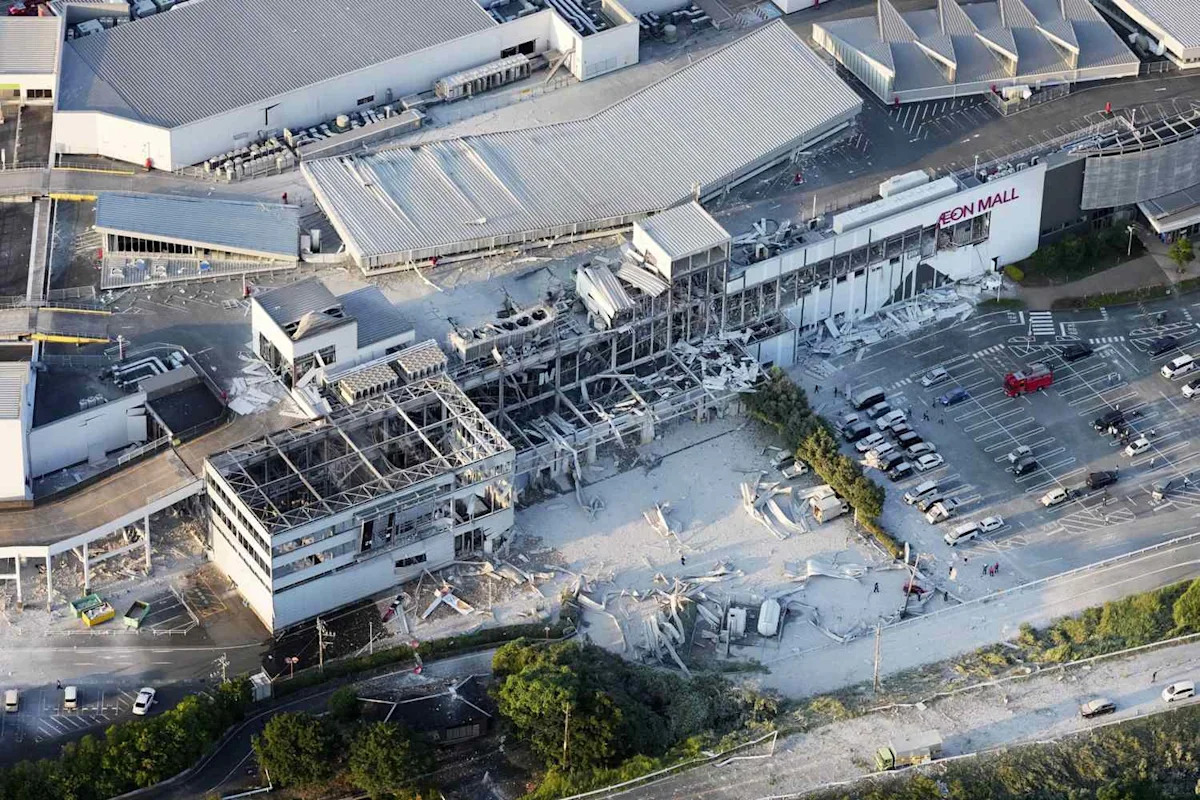
There were reports of an explosion-like sound and white smoke at the mall, and aerial footage showed severe structural damage: exterior walls peeled away, steel framework exposed, and portions of the roof collapsed.
4
The government announced formation of a task force to gather information, assess damage, and coordinate rescue operations, with Prime Minister Sanae Takaichi posting on X about the new measures.
A magnitude 7.1 earthquake struck Kumamoto Prefecture on Japan's southern island of Kyushu on July 28, 2026, trapping shoppers inside a partially collapsed mall and triggering a brief tsunami advisory. The shallow quake — just 6.2 miles deep — hit at maximum intensity on Japan's seismic scale, causing building collapses, fires, and power outages affecting up to 48,000 homes. Yahoo News reported that over 150,000 residents were ordered to evacuate.
The worst scene unfolded at Aeon Mall Kumamoto in Kashima Town, where an explosion-like blast and white smoke were reported roughly 90 minutes after the initial quake. Aerial footage showed sheared exterior walls, exposed steel framework, and a collapsed roof. Police told local media they feared a "considerable number" of fatalities inside the building.
Aeon Mall Collapse Traps Shoppers Inside Damaged Building
The Aeon Mall Kumamoto's second floor partially collapsed after a suspected gas explosion tore through the complex, KEYT reported. Emergency calls described a loud blast and white smoke rising from the building. NHK helicopter footage broadcast live images of the shredded structure, with large sections of the roof caved in and steel beams exposed.
Kumamoto police and fire officials said multiple people remained trapped inside. This directly contradicted a statement from Aeon Co., whose spokesperson claimed all customers and staff had been evacuated to the outdoor parking lot before the explosion. Police told TBS News they were bracing for "many fatalities," though no confirmed death toll had been released at the time of reporting, The Independent noted.
Tsunami Advisory Issued Then Lifted Within Two Hours
The Japan Meteorological Agency issued a tsunami advisory at 4:30 PM local time for western coastal areas, warning of potential 1-meter waves in the Ariake and Yatsushiro Seas. The advisory covered parts of Kumamoto, Nagasaki, Fukuoka, and Saga prefectures. Yahoo News reported the warning was lifted about two hours after it was issued after no significant sea-level changes were detected.
JMA earthquake officer Shinji Kiyomoto warned at a press conference that the shallow depth of the quake meant strong aftershocks were likely. "Be especially cautious over the next two to three days for another big quake," he said. All bullet train and local rail services were suspended, and Aso Kumamoto Airport halted flights for safety inspections.
Government Task Force Mobilized as Tech Giants Halt Operations
Prime Minister Sanae Takaichi posted on X that people's lives were "the top priority" and urged residents to evacuate to safe locations. Chief Cabinet Secretary Minoru Kihara confirmed the deployment of Japan's Self-Defense Forces, fire departments, and the Coast Guard. An emergency task force was formed to gather damage assessments and coordinate rescues.
Taiwan semiconductor giant TSMC, along with Sony and Fujifilm, immediately shut down their regional Kyushu factories as a precaution. TSMC stock slid 2.75% in pre-market trading to $388.10 following the news, The Independent reported. Kihara said no significant damage was initially found at TSMC's Kumamoto chip plant, but any extended shutdown could ripple through global supply chains for companies like Apple and Nvidia.
Kumamoto Hit Hard Ten Years After Devastating 2016 Quakes
The 2026 earthquake struck almost exactly ten years after twin quakes — magnitudes 6.5 and 7.0 — killed 275 people and caused billions in damage across Kumamoto in 2016. Portions of the historic Kumamoto Castle's stone walls, recently restored after that earlier disaster, collapsed again on July 28. Structural engineer Toshihiro Katsura told local media that large open-span buildings like shopping malls remain vulnerable even under modern building codes.
Eyewitness Shayne Bowden, a researcher near Kumamoto Station, said he felt "an initial jolt and then violent shaking" with his laptop skidding across a desk. Local official Hiroki Shimoda said the sound of falling roof tiles "reminded me of the Kumamoto quake ten years ago." This was also Japan's second major earthquake in 2026, following a 7.5-magnitude quake earlier in the year, Yahoo News reported.
Sentiment
Mostly NegativeNEGATIVENEUTRALPOSITIVE
Publishers
160
Articles
495
Reach
655
Topics
A
AnonymousAuthor


