Rupee Gains Against Dollar
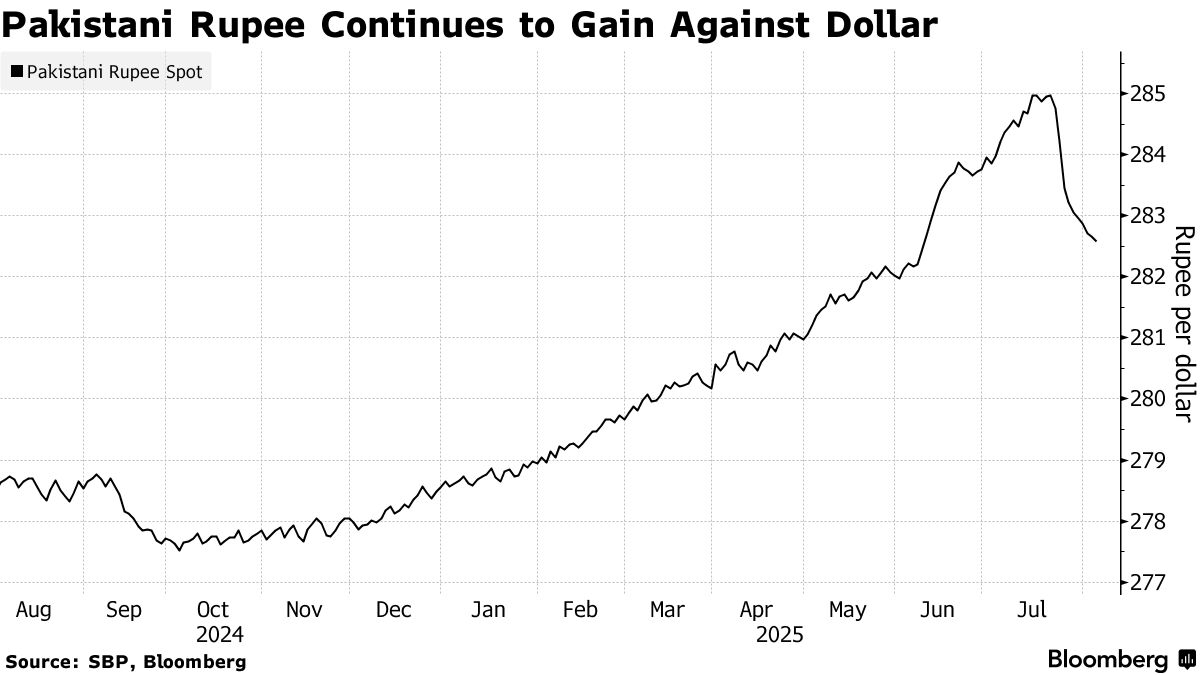
Indian and Pakistani rupees gain against the dollar supported by improved reserves and lower oil prices.
Anonymous
Key Points
1
India’s fully subscribed $2.3 billion NSE initial public offering could help attract foreign institutional inflows, while measures encouraging overseas foreign-exchange deposits and borrowing have helped lift the country’s reserves to about $781 billion.
2
Brent crude fell roughly 2% to $101.70 a barrel as hopes for a diplomatic resolution to the Iran conflict and improving Saudi energy shipments eased concerns about supply disruptions.
3
Pakistan’s total liquid foreign-exchange reserves reached $26.791 billion as of Sept. 11, 2026, including $5.402 billion held by commercial banks, in addition to the $21.389 billion held by the State Bank of Pakistan.
4
Pakistan received international recognition for its CNY1.75 billion, or $258 million, three-year Sustainable Panda Bond, which carried a 2.5% coupon and attracted more than five times the offered demand; officials said the country plans further borrowing from China’s capital market.
5
Goldman Sachs expects the U.S. Federal Reserve to deliver another 25-basis-point interest-rate increase in October, a prospect that could strengthen the dollar and pressure the Indian rupee.
India's rupee and Pakistan's rupee both posted modest gains against the dollar this week, buoyed by lower U.S. Treasury yields, softer crude oil prices, and stronger foreign-exchange reserves. Yet a resilient dollar and ongoing portfolio outflows continue to restrain the currencies' recovery, keeping India's rupee near 95.40–95.75 per dollar and Pakistan's rupee around 277.21–277.25 per dollar Rediff Financial Express.
Both South Asian economies face external headwinds from potential U.S. interest-rate hikes, but capital inflows and oil-price declines have provided near-term support. India's record foreign-exchange reserves of $781 billion and Pakistan's jump to $26.791 billion in total liquid reserves underscore improving financial positions Reuters
India's Rupee Finds Support From Oil Drop and Reserve Strength
Brent crude fell roughly 2% to $101.70 a barrel as hopes for a diplomatic resolution to the Iran conflict and improving Saudi energy shipments eased supply concerns Financial Express. Lower oil prices reduce import costs and ease pressure on India's current account, supporting the rupee. Meanwhile, India's fully subscribed $2.3 billion stock exchange IPO signals strong foreign investor appetite, potentially unlocking further inflows Reuters.
The Reserve Bank of India has also intervened in the foreign-exchange market, with state-run banks likely acting on RBI orders to limit losses The Hindu Business Line. Measures encouraging overseas foreign-exchange deposits and borrowing have lifted India's reserves to about $781 billion, the highest level on record Reuters.
Pakistan's Rupee Steadies After Eurobond and Panda Bond Wins
Pakistan's rupee gained to around 277.21–277.25 per dollar, supported by a sharp jump in reserves. The State Bank of Pakistan's holdings rose to $21.389 billion largely due to Eurobond proceeds, while total liquid reserves reached $26.791 billion as of September 11, 2026 Reuters.
Pakistan secured a significant win with its CNY1.75 billion Sustainable Panda Bond—worth $258 million—which attracted more than five times the offered demand at a 2.5% coupon Reuters. Officials said the country plans further borrowing from China's capital market, signaling a shift toward diversified funding sources beyond traditional multilateral lenders.
Fed Rate Hike Threatens to Reverse Currency Gains
A major headwind looms: Goldman Sachs expects the U.S. Federal Reserve to deliver another 25-basis-point interest-rate increase in October. Higher U.S. rates typically strengthen the dollar and pressure emerging-market currencies like the rupee Financial Express.
Foreign portfolio outflows remain substantial for both countries, offsetting gains from lower oil and stronger reserves. Unless the Fed pauses rate hikes or geopolitical tensions ease further, both rupees could face renewed selling pressure in the coming weeks Reuters.
Pakistan's Central Bank Holds Rates Steady at 11.5 Percent
The State Bank of Pakistan kept its policy rate unchanged at 11.5 percent, maintaining an aggressive anti-inflation stance despite improving reserve positions. This hawkish stance reflects persistent domestic price pressures even as external conditions have stabilized Reuters.
With nearly $27 billion in total liquid reserves and new access to China's bond market, Pakistan has more policy flexibility than six months ago. However, inflationary pressures and debt servicing costs mean rate cuts remain unlikely unless inflation drops significantly Reuters.
Sentiment
Mostly NegativeNEGATIVENEUTRALPOSITIVE
Publishers
15
Articles
13
Reach
28
A
AnonymousAuthor


