Greta crash investigation
Greta bus crash investigation reveals systemic safety failures, driver impairment, and excessive speed.
Anonymous
Key Points
1
The final report shows the roundabout geometry required much lower speeds than the 80 km/h limit, with on-board data indicating the coach traveled about 52.6 km/h before entering the roundabout and 56.48 km/h about 130 metres before the rollover, while the exact rollover speed was not recorded.
2
Investigators found Button had a long history of driving complaints and incidents (27 driving complaints and 11 traffic incidents between 2016 and 2022 with CDC NSW), and warned that driver health oversight and standard drug testing failed to identify or escalate impairment issues.
3
Safety briefing before trips was not provided to passengers, and overall seatbelt usage was very low; authorities stressed the need for a seatbelt culture change, with Jim Modrouvanos noting: 'If you are travelling on a coach and there is a seatbelt fitted, please wear it. It could save your life.' The report also found only one seatbelt-related fine had been issued in NSW in the previous five years.
4
The investigation employed a 3D reconstructive simulation to map the final moments of the collision, helping to understand how the rollover occurred and what safety improvements might have prevented it.
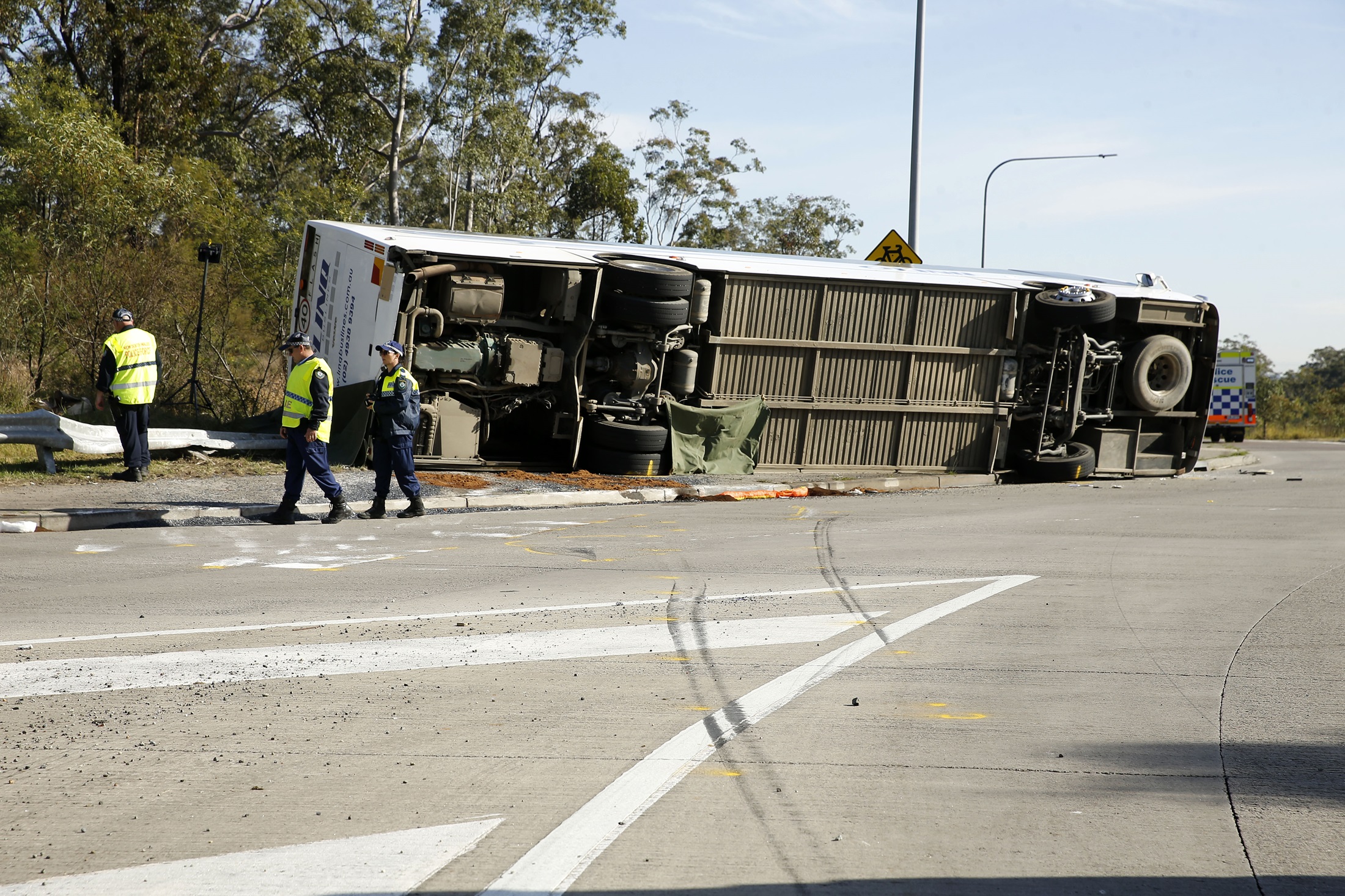
A landmark investigation into Australia's deadliest bus crash in decades has found that driver impairment, excessive speed, and deep safety failures combined to kill 10 wedding guests near Greta in 2023, according to OTSI. The driver, Brett Andrew Button, was likely impaired by tramadol when the coach rolled at a Hunter Valley roundabout, injuring 25 others.
Button has since been sentenced to 32 years in prison. The final report from the Office of Transport Safety Investigations found the tragedy could have been reduced — if not prevented — at multiple points before and during the crash, Newcastle Weekly reported.
How an Impaired Driver Reached a Fatal Speed
On-board data showed the coach was traveling at 52.6 km/h before entering the roundabout and 56.48 km/h about 130 metres before the rollover, according to Newcastle Weekly. The roundabout's geometry required a much lower speed than the posted 80 km/h limit. The exact speed at the moment of rollover was not recorded.
Investigators found Button had accumulated 27 driving complaints and 11 traffic incidents between 2016 and 2022 while working for CDC NSW, Newy reported. Standard drug testing and driver health oversight failed to flag his tramadol use. Authorities warned that no system caught the warning signs in time to pull him off the road.
Seatbelts Were Fitted But Almost Nobody Wore Them
The report found seatbelt use among passengers was very low, and no safety briefing was given before the trip, according to Newcastle Weekly. When the coach rolled, passengers who were not buckled in were ejected or thrown around the cabin. That significantly increased the death toll and injury count.
Jim Modrouvanos, a lead investigator, issued a direct warning: 'If you are travelling on a coach and there is a seatbelt fitted, please wear it. It could save your life.' The report also found that only one seatbelt-related fine had been issued in NSW in the five years before the crash, Newy reported.
Systemic Gaps Left Passengers Exposed Before Crash Began
Investigators identified broad failures across the coach industry, including poor driver health monitoring, weak drug testing, and no system to track complaints across different employers, Standard reported. Those gaps allowed Button to keep driving despite his long record of incidents and complaints.
The report also found design and enforcement problems at the roundabout itself, as well as gaps in coach safety systems that should protect occupants during a rollover. Investigators used a 3D reconstructive simulation to map the crash's final moments and identify what could have changed the outcome.
Report Demands Culture Change Across the Coach Industry
The findings call for stronger enforcement of seatbelt use and sweeping reforms to how the coach industry monitors driver health and behaviour, according to Dungog Chronicle. Investigators said the crash exposed missed opportunities at almost every level — from pre-trip safety briefings to roadside enforcement.
Authorities stressed that a culture shift is needed, not just new rules. Passengers must take responsibility for buckling up, while operators and regulators must enforce the standards that already exist. The report makes clear that lives depend on both sides acting differently.
Sentiment
Mostly NegativeNEGATIVENEUTRALPOSITIVE
Publishers
10
Articles
3
Reach
13
A
AnonymousAuthor


