State Executions and Legal Stays
Texas and Alabama Carry Out Executions While Georgia Court Halts Another
Anonymous
Key Points
1
LeJames Norman pleaded guilty to capital murder, leaving the punishment decision to the court; he was arrested roughly five months after the killings while attempting to cross back into the United States from Mexico.
2
Norman declined to make a final statement before his execution. His sister, two children and a friend watched from the witness room, and he was pronounced dead at 6:44 p.m. after receiving pentobarbital.
3
In Alabama, Lee’s nitrogen-hypoxia challenge argued that the method caused “conscious suffocation” and added terror and pain in violation of the Eighth Amendment; the 11th U.S. Circuit Court of Appeals concluded that the method likely violated the constitutional ban on cruel and unusual punishment.
4
Lee had spent 26 years on death row and had initially agreed in 2018 to be executed by nitrogen gas, before Alabama had carried out an execution using that method.
5
The Alabama shooting also wounded employee Helen King, who survived after playing dead; court records said Lee entered the pawn shop, shouted “Give me your money,” and fired a sawed-off shotgun within six seconds while two accomplices waited in a car.
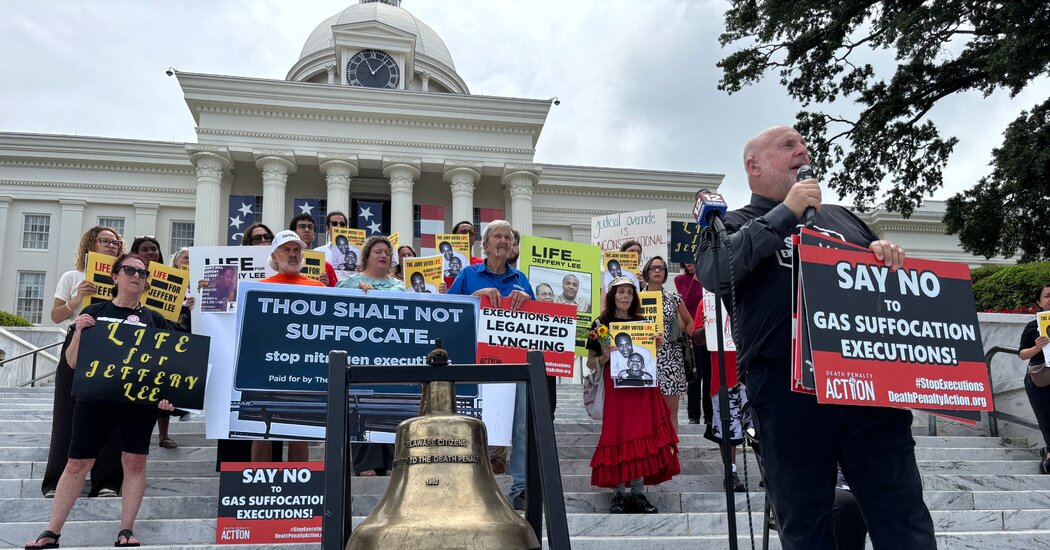
Three states advanced death sentences this week in separate cases. Texas executed LeJames Norman on September 16 for three killings during a 2005 drug robbery. Alabama carried out Jeffery Lee's execution by lethal injection on September 17 for a 1998 pawnshop shooting that killed two people. Georgia halted Stacey Humphreys' scheduled execution while a judge weighs whether severe childhood abuse could reduce his sentence under the state's Survivor Justice Act.
Lee's execution came three months after the U.S. Supreme Court blocked Alabama's plan to use nitrogen hypoxia, a method his legal team argued caused "conscious suffocation" and violated the constitutional ban on cruel and unusual punishment. Lee had spent 26 years on death row and initially agreed in 2018 to be executed by nitrogen gas before Alabama had carried out that method.
Texas Execution Despite Drug Robbery Co-Defendant Still Alive
LeJames Norman was pronounced dead at 6:44 p.m. after receiving pentobarbital, a lethal injection drug. USA Today reported Norman pleaded guilty to capital murder in the 2005 killings, leaving the punishment decision to the court. He was arrested five months after the crimes while trying to cross back into the United States from Mexico. Norman declined to make a final statement before his execution.
Norman's co-defendant, Ker'Sean Ramey, is scheduled for execution the following week. Norman's sister, two children, and a friend witnessed the execution from the witness room, according to Texas state records.
Alabama Inmate Executed After 26 Years Awaiting Death
Jeffery Lee, 49, was convicted of fatally shooting Jimmy Ellis, a famous Elvis impersonator, and Elaine Thompson during a 1998 robbery at a pawnshop in Orrville, Alabama. Court records show Lee entered the shop, shouted "Give me your money," and fired a sawed-off shotgun within six seconds while two accomplices waited in a car. Employee Helen King survived by playing dead after being wounded in the attack.
Lee received the death penalty despite his jury recommending life imprisonment by a 7-5 vote, under Alabama's former judicial-override system. The 11th U.S. Circuit Court of Appeals concluded that nitrogen hypoxia likely violated the constitutional ban on cruel and unusual punishment, leading Alabama to switch to lethal injection for this execution.
Georgia Judge Pauses Execution Over Childhood Abuse Claims
A Georgia judge temporarily halted Stacey Humphreys' execution for the 2003 murders of two real estate agents. The judge is considering whether Georgia's Survivor Justice Act—which recognizes severe childhood abuse as a mitigating factor—could reduce Humphreys' sentence from death to life imprisonment. Prosecutors have appealed the stay, setting up a legal battle over whether the law applies retroactively to cases sentenced before the statute was enacted.
Sentiment
Mostly NegativeNEGATIVENEUTRALPOSITIVE
Publishers
24
Articles
211
Reach
235
A
AnonymousAuthor


