Modern Fitness Trends
Exercise Trends Span Mobility, Strength, and Functional Fitness Across All Age Groups
Anonymous
Key Points
1
The 5/3/1 method uses a “training max” set below the lifter’s true one-repetition maximum, allowing progression without repeatedly training at maximum capacity. Its traditional four-week cycle consists of three progressively heavier loading weeks—focused respectively on sets of five, three, and mixed five/three/one repetitions—followed by a lighter recovery week.
2
The bodyweight routine can be scaled to different ability levels: push-ups may be performed against a wall, countertop or sturdy bench, or from the knees, while difficulty can be increased by slowing the lowering phase or adding repetitions. The article emphasizes maintaining a straight body line rather than allowing the hips to sag or rise.
3
PV Sindhu’s single-leg hip-thrust variation is designed to develop unilateral control relevant to badminton, which involves lunges, jumps, sudden stops, directional changes and single-leg landings. Expert Garima Goyal said the movement strengthens the glutes, hamstrings and hip stabilizers, supporting explosive movement while helping protect the knees and lower back.
4
Baba Ramdev’s Surya Namaskar is described as a flowing sequence of 12 yoga positions coordinated with breathing; performed faster, it can raise the heart rate and add a cardiovascular component while improving flexibility, mobility and muscular endurance.
5
The five-minute stretching routine begins with small, relaxed movements while lying in Savasana, followed by a full-body reach synchronized with inhalation and exhalation before progressing to Bridge Pose, knee rotations, a knee-to-chest hold and shoulder circles.
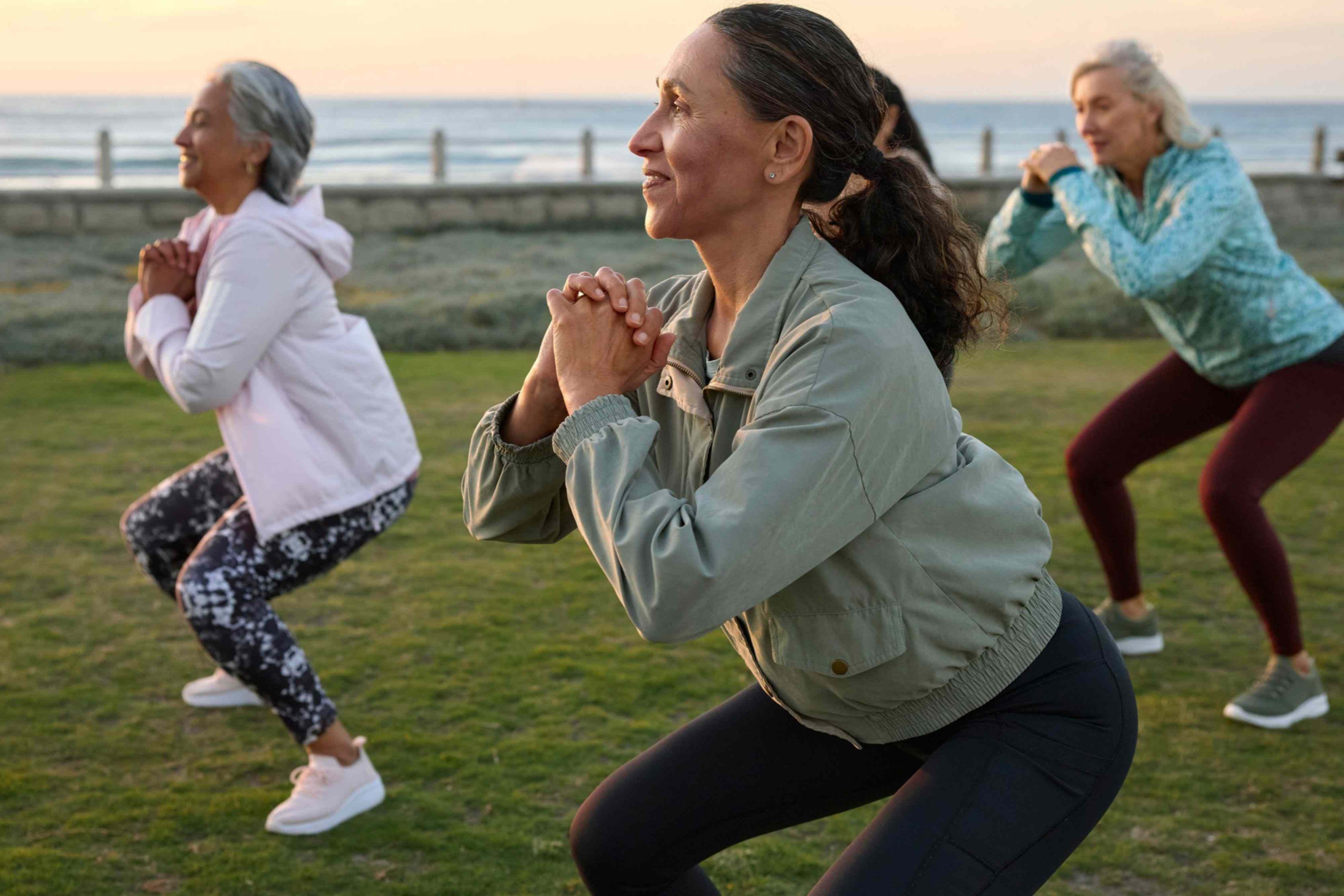
Exercise doesn't require expensive equipment or heavy weights to deliver results. Eat This and Health show that accessible routines spanning mobility, strength and endurance can help people of all ages maintain muscle, balance and independence. From five-minute stretching sequences to bodyweight exercises adapted for different ability levels, fitness experts emphasize safety, proper form and gradual progression over speed or intensity.
Whether you're recovering from prolonged sitting, building lower-body power or preparing for athletic performance, the pattern is consistent: controlled, purposeful movement beats shortcuts. Routines can be scaled down for older adults using chairs and walls, or ramped up through slower tempos and single-leg variations that mimic real-world demands.
Undo Hours of Sitting With Five Minutes of Stretching
Prolonged sitting shortens hip flexors and stiffens the upper back, creating postural imbalances that compound over time. Outside Online recommends a five-minute yoga-inspired routine that begins with small, relaxed movements while lying down, then progresses through full-body reaches synchronized with breathing.
The sequence includes Bridge Pose to activate glutes, knee rotations for hip mobility, knee-to-chest holds to stretch the lower back, and shoulder circles to release upper-body tension. This routine works best as a midday reset during the workday, helping restore mobility and productivity without needing equipment or changing clothes.
Bodyweight Exercises Preserve Muscle and Stability After 50
Health identifies five exercises that maintain muscle mass, balance and stability as people age: push-ups strengthen the chest, shoulders, triceps and core, while pull-ups, squats, split squats and dead bugs work multiple muscle groups simultaneously. Difficulty scales easily—wall or counter push-ups suit beginners, while slowing the lowering phase or adding repetitions increases challenge.
Form matters more than speed. Experts emphasize keeping a straight body line during push-ups, avoiding sagging hips or excessive arching. Progressive difficulty allows people to build strength without jumping to advanced variations, making these movements accessible to older adults while still challenging younger exercisers seeking functional fitness.
Balance and Ankle Strength Become Critical Over 65
Your ankles support body weight and enable everyday movements like walking and climbing stairs. Eat This explains that ankle strength directly impacts balance, fall prevention and lower-limb function, especially as people age past 65 when balance naturally declines.
Five balance-focused exercises outperform basic walking for ankle and lower-limb strength. These routines work the stabilizer muscles that prevent falls and improve proprioception—your body's sense of position in space. Starting with controlled chair sit-to-stands builds confidence in older adults before progressing to standing single-leg variations that demand greater stability.
Bodyweight Shoulder Moves Build Strength Without Barbells
Men's Fitness reveals that three bodyweight moves increase shoulder size and stability without heavy weights. These exercises improve control and upper-body strength, delivering results comparable to traditional barbell overhead presses and dumbbell work—but using only gravity and leverage.
The approach suits people who lack gym access, prefer minimal equipment or seek joint-friendly alternatives. Bodyweight shoulder exercises teach proper movement patterns and control before introducing external load, making them ideal for building foundational strength and preventing injury across age groups.
Sentiment
Mostly NegativeNEGATIVENEUTRALPOSITIVE
Publishers
14
Articles
12
Reach
26
Topics
A
AnonymousAuthor


