NATO Border Air Alerts
Poland and Latvia scramble fighter jets during Russian airstrikes on Ukraine
Anonymous
Key Points
1
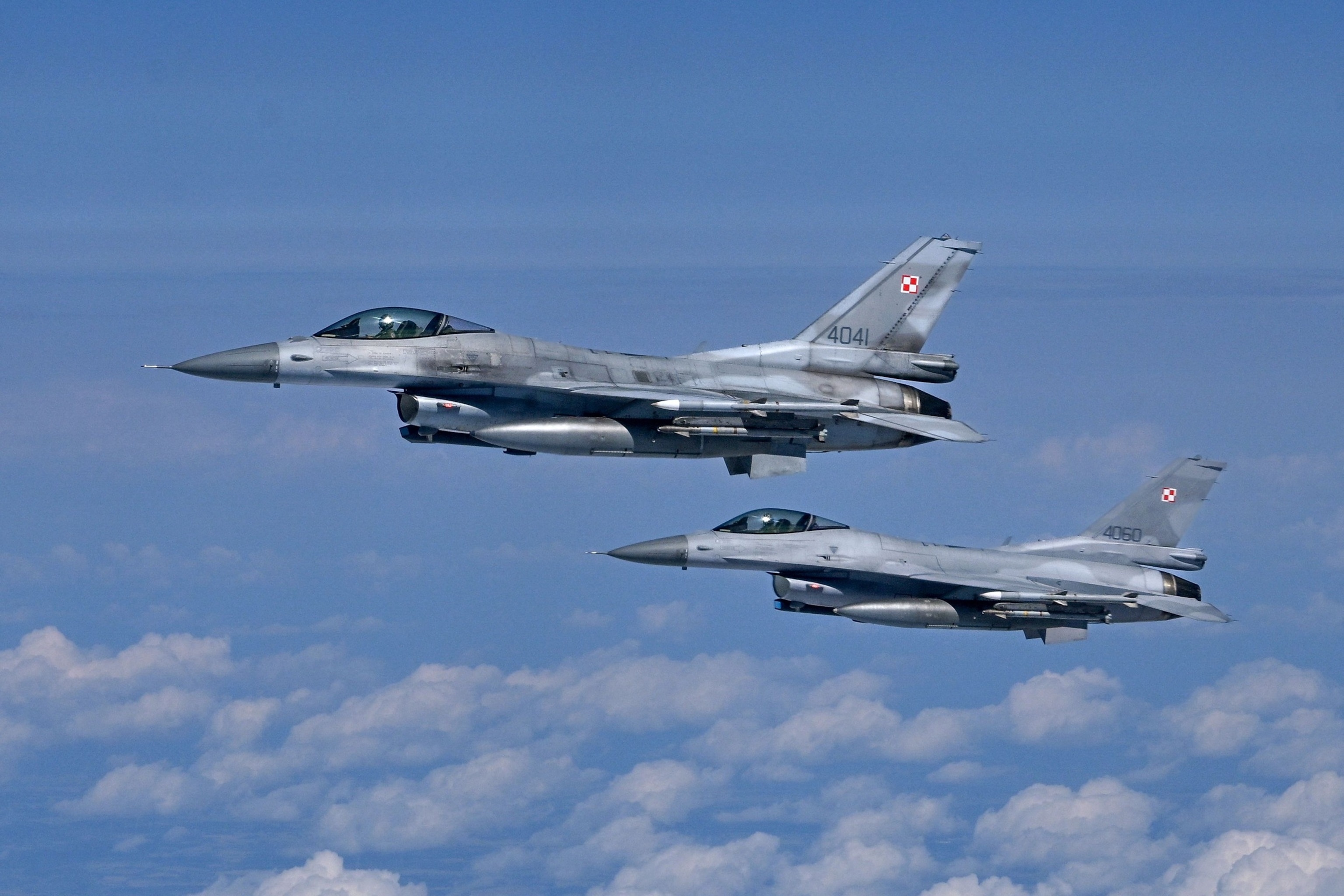
Poland’s Government Security Center sent an emergency alert to residents in 24 districts of Lublin Voivodeship, stating that a Russian air attack was underway in Ukraine and that Polish military aircraft were operating in Polish airspace.
2
The Latvian alert centered on the Krāslava municipality near Belarus, where authorities detected a possible threat; NATO Baltic Air Policing fighters were scrambled, but the alert was later lifted without a confirmed airspace violation.
3
Poland’s response followed several similar incidents: fighter jets were scrambled on September 15 during Russian attacks involving jet-powered drones in western Ukraine, and Russian strikes near the Volyn border region two days later led to military deployments and temporary suspensions at the Lublin and Rzeszów airports.
4
An unmanned aerial vehicle reportedly came down about four kilometers from Poland’s border during the earlier incidents, underscoring the proximity of Russia’s attacks to Polish territory.
5
Poland is also strengthening civil-defense infrastructure along its eastern border, including plans to install more than 1,000 automated sirens.
Poland and Latvia scrambled military jets on September 21 as Russia unleashed missiles and drones at Ukraine, prompting preventive air defense activations along NATO's eastern border devdiscourse. Polish authorities sent emergency alerts to 24 districts in Lublin Voivodeship warning residents that Polish fighter jets were overhead, while Latvia detected a possible air threat near Belarus and activated NATO Baltic Air Policing fighters devdiscourse. Both countries stood down later that night after confirming no airspace violations, but the incident marked the fourth such scramble in seven days as Russian attacks crept dangerously close to NATO territory.
The episode underscores a growing pattern: Russian strikes against western Ukraine are landing within kilometers of Polish borders, forcing NATO allies to maintain constant vigilance devdiscourse. Polish leaders warned that Moscow might deliberately probe NATO airspace while claiming accidents, and officials announced plans to install over 1,000 automated sirens along the eastern border to strengthen civil defense devdiscourse.
A Week of Repeated Military Scrambles
Polish warplanes took to the skies four times between September 15 and September 23 in response to Russian attacks on Ukrainian targets devdiscourse. On September 15, jets scrambled as Russia deployed jet-powered drones against western Ukraine. Two days later, military activation followed explosions near Ukraine's Volyn region just across the border, forcing temporary shutdowns at Lublin and Rzeszów airports. The pattern repeated on September 21 and again on September 23, when F-16s generated sonic booms over Polish regions as new Russian strikes began devdiscourse.
Russian Weapons Dangerously Close to NATO Territory
During earlier September strikes, an unmanned aerial vehicle crashed approximately four kilometers from the Polish border devdiscourse. NATO also intercepted a Russian drone over Lithuania near Kaunas, and fragments of a Russian Gerbera UAV were recovered off the Polish coast. These incidents demonstrate how Russian strikes intended for Ukrainian targets routinely operate in NATO airspace or crash on alliance territory devdiscourse.
Polish Prime Minister Donald Tusk warned that Russia might conduct deliberate missile or drone incursions into NATO while falsely claiming accidents devdiscourse. NATO Deputy Commander in Europe cautioned that Vladimir Putin is growing "increasingly cavalier, dangerous, and risk-accepting" as the conflict continues devdiscourse.
Poland Strengthens Air Defense and Civil Protection
Poland's Defense Minister Władysław Kosiniak-Kamysz confirmed reinforcement of air defense networks and border patrols along NATO's eastern edge devdiscourse. The Operational Command of the Polish Armed Forces described all activations as "preventive in nature and aimed at securing airspace, especially in areas adjacent to threatened zones" devdiscourse.
Long-term upgrades are underway: Poland announced plans to install more than 1,000 automated civil defense warning sirens along its eastern border devdiscourse. Eastern European NATO members are also pushing to establish an integrated "Drone Wall"—a network of anti-drone sensors, electronic warfare systems, and kinetic interceptors spanning Poland, Latvia, Lithuania, and Estonia devdiscourse.
The Economic and Operational Strain on NATO
Frequent military scrambles disrupt civil aviation and increase security costs across the region devdiscourse. Air defense experts noted that firing multi-million-dollar NATO interceptors against low-cost Russian decoy drones creates an asymmetrical economic burden and raises the risk of mid-air miscalculations in crowded airspace devdiscourse.
Air Chief Marshal Sir John Stringer cautioned NATO against "overreaction," noting that Moscow seeks to provoke the alliance within a tense environment devdiscourse. Yet geopolitical analysts argue that Poland and the Baltic states face a genuine dilemma: they must maintain constant readiness while managing the operational and financial strain of repeated activations.
Sentiment
Mostly NegativeNEGATIVENEUTRALPOSITIVE
Publishers
55
Articles
64
Reach
119
A
AnonymousAuthor


