Bosnian War Criminal Dies
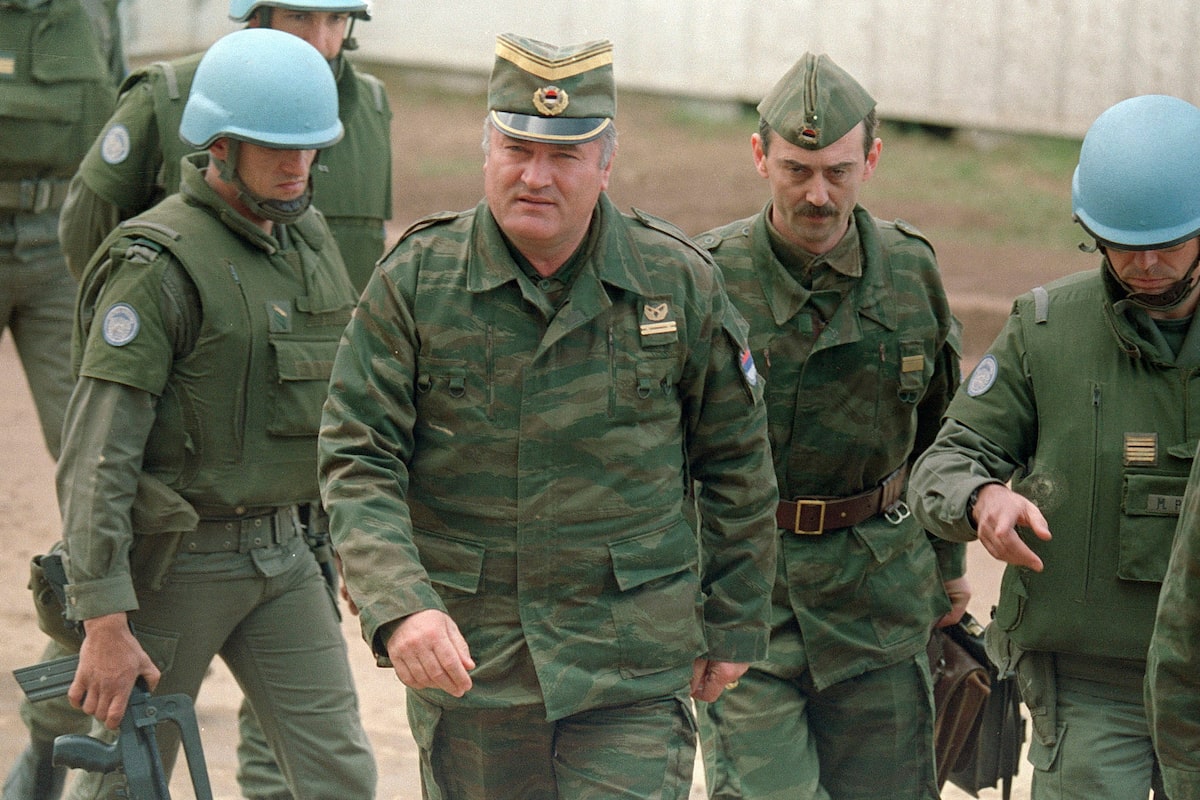
Ratko Mladic, convicted of genocide during the Bosnian War, dies in a Hague prison at 84.
Anonymous
Key Points
1
The Bosnian War (1992-1995) left around 100,000 people dead and about 2.2 million displaced.
2
Serbian state broadcaster RTS reported Mladic's death, which occurred in a Hague prison hospital after several strokes.
3
Documents citing his date of birth list March 12, 1942, but Mladic was actually born on March 8, 1943.
4
Mladic was the military face of a brutal trio that included Slobodan Milosevic and Radovan Karadzic, who led the political side of the campaign.
5
The siege of Sarajevo, attributed to his forces, caused 4,548 military deaths and 4,954 civilian deaths, with about 50,000 wounded.
Ratko Mladic, the Bosnian Serb general known as the 'Butcher of Bosnia,' has died in a Hague prison hospital at age 84 after suffering multiple strokes Daily Mail. Mladic was serving a life sentence for genocide, crimes against humanity, and war crimes tied to the 1992-95 Bosnian War, including the Srebrenica massacre in which approximately 8,000 Muslim men and boys were killed Middle East Eye.
The Globe and Mail reported that Mladic orchestrated the 1995 massacre of at least 8,000 Muslims in a UN-designated safe area—widely regarded as Europe's worst atrocity since World War II. The Bosnian War left around 100,000 people dead and displaced about 2.2 million, with Mladic serving as the military face of ethnic cleansing campaigns alongside political leaders Slobodan Milosevic and Radovan Karadzic.
From Military Commander to War Crimes Conviction
Mladic commanded Bosnian Serb forces during the brutal 1992-95 war, earning his nickname for overseeing atrocities across the region Mirror. The International Criminal Tribunal for the former Yugoslavia (ICTY) convicted him in 2016 of genocide, 5 counts of crimes against humanity, and 4 counts of war crimes. He received a life sentence in 2017, with appeals rejected in 2021.
The Srebrenica Massacre: Europe's Worst Atrocity Since WWII
In July 1995, Bosnian Serb forces under Mladic's command massacred approximately 8,000 Muslim men and boys in the eastern Bosnian enclave of Srebrenica, a UN-protected safe zone Globe and Mail. The massacre remains the single deadliest atrocity in Europe since World War II. Families of victims have sought justice for decades, with Mladic's conviction providing a measure of accountability.
The Siege of Sarajevo: A City Under Terror
Mladic's forces laid siege to Sarajevo for nearly four years, turning the capital into a battleground. The bombardment caused 4,548 military deaths and 4,954 civilian deaths, with about 50,000 wounded according to available records Richmond News. The siege became a symbol of the war's brutality, with ordinary citizens facing daily sniper fire and shelling.
Divided Legacy: War Criminal or National Defender
Mladic's death has sparked conflicting reactions. Many in Serbia view him as a defender of his people, while international bodies and victims' advocates label him a war criminal and architect of ethnic cleansing Middle East Eye. His nine years in prison following conviction underscore the long road to justice for Balkan atrocities. The question of how history remembers him remains contested across the region.
Sentiment
Mostly NegativeNEGATIVENEUTRALPOSITIVE
Publishers
31
Articles
516
Reach
547
A
AnonymousAuthor