Asian Games Evacuation
Record Rain Briefly Evacuates Hundreds of Asian Games Athletes from Temporary Nagoya Housing
Anonymous
Key Points
1
The Games do not have a dedicated athletes’ village; organizers are housing participants across a cruise ship, temporary wooden container units and hotels. About 400 athletes and staff were staying in the converted containers at Nagoya’s Garden Pier area when the evacuation occurred.
2
Nagoya Mayor Ichiro Hirosawa said the leaks were limited and that the rain had not put the opening ceremony or Games at risk: “There has been limited impact like rainwater leaking from the roofs of some buildings, but the situation is not so serious that the opening on the 19th is in jeopardy for now.”
3
The downpour temporarily halted subway and bus services in Nagoya, while the Japan Meteorological Agency issued its highest flood warning for a major river in the area.
4
Nagoya authorities warned residents that the risk of serious rain-related disasters was increasing and urged particular caution around flooding in low-lying areas, rising river levels and water accumulating in underpasses.
5
The expected attendance of more than 17,000 athletes and officials would exceed the number of athletes and officials at the Olympics, according to the AFP report.
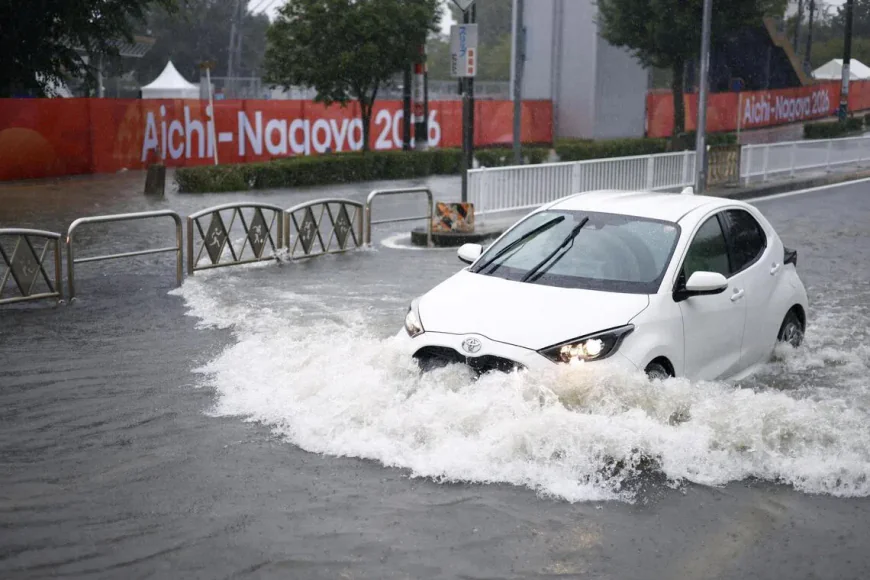
Nearly 400 Asian Games athletes were evacuated from temporary housing in Nagoya after record rainfall of 104 millimeters fell in just one hour, according to ETV Bharat. Rainwater leaked into competition venues and disrupted public transportation, but officials said damage was limited and the Games will proceed as scheduled. The athletes returned roughly two hours later after the evacuation order was lifted.
The 2026 Asian Games, opening September 19, will host more than 17,000 athletes and officials — surpassing Olympic numbers, AFP reported. With no dedicated athletes' village, organizers are housing participants across a cruise ship, temporary wooden containers, and hotels. Nagoya Mayor Ichiro Hirosawa said the situation posed no threat to the opening ceremony: "There has been limited impact like rainwater leaking from the roofs of some buildings, but the situation is not so serious that the opening on the 19th is in jeopardy for now."
One Hour of Rain Overwhelms Nagoya
Fox 26 Medford reported that 104 millimeters of rain — equivalent to four inches — fell in a single hour in Nagoya. The downpour triggered Japan Meteorological Agency alerts and forced authorities to evacuate nearly 400 athletes and staff from temporary housing at Nagoya's Garden Pier area. The converted wooden container units, the primary accommodation site, suffered roof leaks from the intense rainfall.
Transportation Halted, Warnings Issued
The record rainfall temporarily stopped subway and bus service across Nagoya, stranding commuters and disrupting travel networks. Japan Meteorological Agency issued its highest flood warning for a major river in the area as water levels rose dramatically. Local authorities warned residents to exercise caution in low-lying areas and underpasses where water was accumulating.
Games Proceed Despite Housing Challenges
Daily Tribunal 24 noted that the lack of a dedicated athletes' village forced organizers to split housing across multiple locations, creating vulnerability during extreme weather. Mayor Hirosawa confirmed that only limited damage occurred, with roof leaks affecting some buildings but no structural threats to venues or the September 19 opening ceremony. All scheduled competitions are expected to proceed.
Forecasters expect additional rainfall in the coming days as the Games approach. Scientists link such intense downpours to climate change, which is increasing the frequency and severity of extreme weather events worldwide.
Record Rainfall Reflects Broader Pattern in Japan
Seoul Daily reported that record rainfall across Japan has caused widespread flooding and river overflows beyond Nagoya. The Tokyo metropolitan area experienced similar disruptions, highlighting a growing pattern of extreme weather affecting major Japanese cities. Climate scientists warn that such events will likely intensify as global temperatures continue to rise.
Sentiment
Mostly NegativeNEGATIVENEUTRALPOSITIVE
Publishers
21
Articles
36
Reach
57
A
AnonymousAuthor


