West Bank Displacement Warning
UN Report Warns West Bank Camp Displacement May Constitute Ethnic Cleansing
Anonymous
Key Points
1
The operation began in January 2025 and continued through February, with Israeli military, police and other security forces taking full control of the three camps within days, according to the UN report.
2
UN reporting found that by October 2025, 52% of buildings in Jenin camp had been destroyed or damaged, compared with 48% in Nur Shams and 36% in Tulkarm.
3
The UN report said more than 100 Palestinians were killed during the operations, including 21 minors—an additional detail cited in connection with its concerns about possible crimes against humanity.
4
Displaced residents reportedly said Israeli officers told them there would be “no more refugee camps” and that “everyone should go to Jordan,” testimony that the UN included in its assessment of the expulsions.
5
The three affected camps are among 19 Palestinian refugee camps in the West Bank established after the 1948 Nakba and administered by the U.N. agency UNRWA, placing the displacement in the broader history of Palestinian refugee settlements.
The United Nations warned on October 2025 that Israel's military operation in the West Bank may have committed crimes against humanity. UN Human Rights Office said Israeli forces forcibly displaced more than 33,000 Palestinians from three refugee camps—Jenin, Nur Shams, and Tulkarm—during the 2025 "Iron Wall" operation and prevented them from returning home.
The displacement could constitute ethnic cleansing under international law, UN Human Rights Office said. Israeli officials rejected the report as biased, saying it ignored security threats. The findings are likely to intensify global pressure on Israel over its West Bank operations.
Military Operation Left Camps Destroyed and Residents Trapped
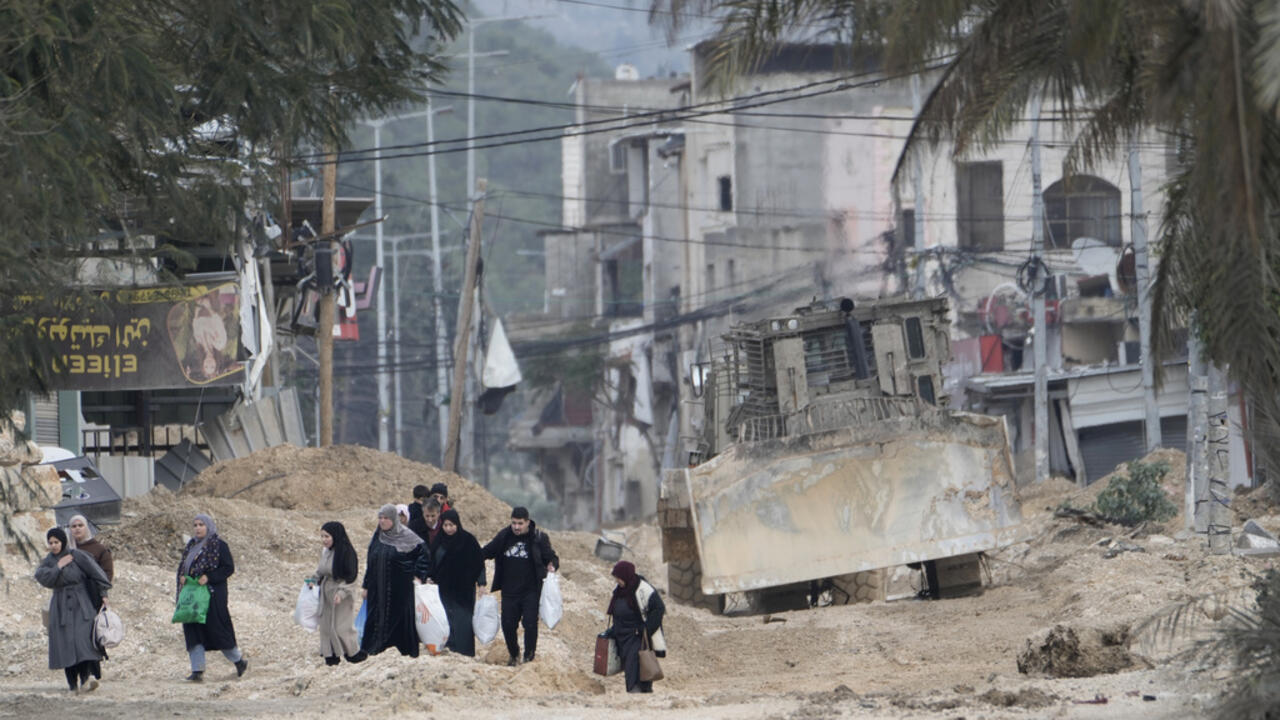
The "Iron Wall" operation began in January 2025 and lasted through February. UN Human Rights Office reported that Israeli military, police, and security forces took full control of all three camps within days. By October 2025, destruction was widespread: 52% of buildings in Jenin camp were destroyed or damaged, compared with 48% in Nur Shams and 36% in Tulkarm.
Israeli forces cut water and electricity to the camps and blocked humanitarian aid from entering. UN Human Rights Office documented door-to-door removals of residents and said residents reported Israeli officers telling them there would be "no more refugee camps" and that "everyone should go to Jordan."
Over 100 Killed, Including 21 Children
UN Human Rights Office reported that more than 100 Palestinians were killed during the operations. Among the dead were 21 minors. The deaths, combined with the forced removals and destruction, form the basis of the UN's assessment that crimes against humanity may have occurred.
The three camps are among 19 Palestinian refugee camps in the West Bank. They were established after the 1948 Nakba and are run by the UN agency UNRWA. The displacement breaks a decades-long status of these settlements as protected refugee communities.
UN Accuses Israel of Ethnic Cleansing and Collective Punishment
UN Human Rights Office said the scale and persistence of the displacement could amount to forcible transfer, a crime against humanity. The report also raised concerns about collective punishment and ethnic cleansing under international law. Forcible transfer occurs when a government removes a population group from an area to change its composition.
France 24 reported that Israel rejected the UN findings as biased and misleading. Israeli officials said the report ignored security threats and attacks that prompted the operation. The dispute over the operation's legality is likely to fuel debates about Israel's conduct in international forums and pressure governments to respond.
Sentiment
Mostly NegativeNEGATIVENEUTRALPOSITIVE
Publishers
14
Articles
22
Reach
36
Topics
A
AnonymousAuthor


