Gas Price Hike
Iran Doubles Gasoline Prices for Heavy Users Amid Severe Economic Pressures
Anonymous
Key Points
1
Government spokeswoman Fatemeh Mohajerani said the 10,000-toman rate was chosen after officials considered several figures, adding that President Masoud Pezeshkian had promised the public a decision on the issue.
2
The rial was trading above 2.2 million to the U.S. dollar on the black market on Sept. 6, compared with about 1.7 million before the Middle East war began on Feb. 28, underscoring the currency pressure accompanying the fuel-price decision.
3
Iran had already partially increased subsidized gasoline prices in December as part of an effort to curb accelerating fuel demand, making the latest move a further step in a broader fuel-policy adjustment.
4
Iranian officials said the latest measure was intended not only to address supply-demand imbalances but also to strengthen “national resilience.”
5
The fuel decision followed a U.S. sanctions strategy described by Treasury Secretary Scott Bessent in late August as “economic asphyxiation,” aimed at increasing financial pressure on Tehran and hastening an end to the war.
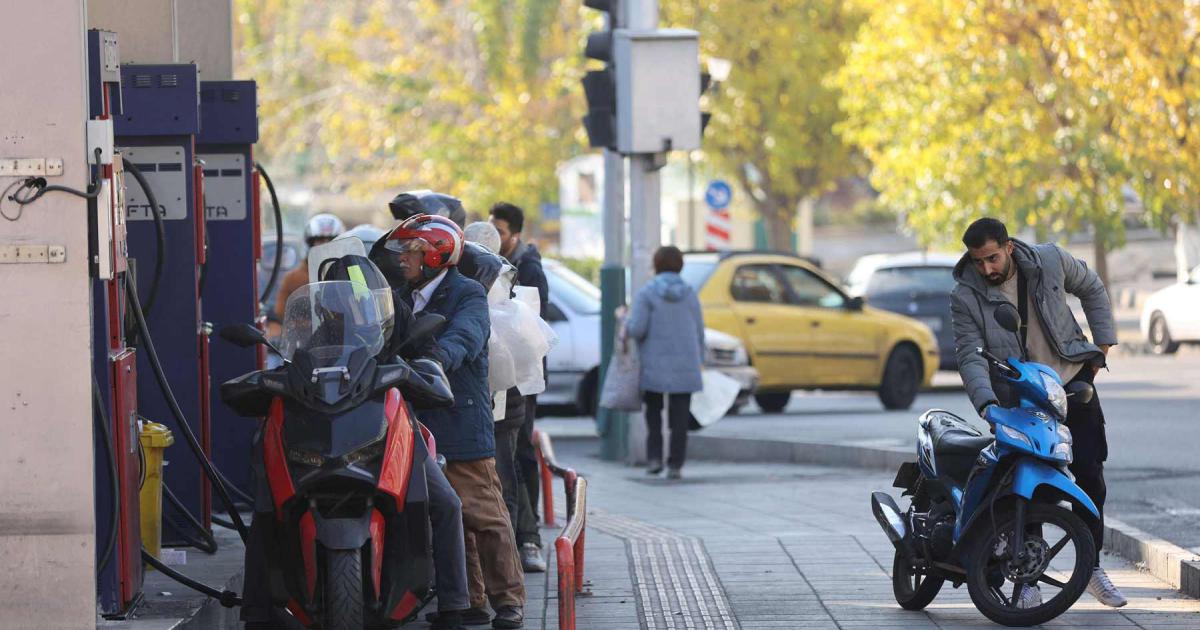
Iran will double gasoline prices for heavy users starting September 8, raising the third-tier rate to 10,000 tomans per liter, according to 24newshd. The move targets drivers who consume more than 110 liters monthly, while keeping the first 60 liters at 15,000 rials (1,500 tomans) and the next 50 liters at 30,000 rials per liter. Dainikjagran reports the government cited U.S. sanctions, wartime pressures, and a daily gasoline shortfall of roughly 14–15 million liters.
The decision comes as Iran's currency weakens sharply and inflation accelerates, intensifying economic hardship for ordinary Iranians. Middle-East-Online notes the rial was trading above 2.2 million to the U.S. dollar on the black market by September 6, compared with about 1.7 million before the Middle East conflict began in February. The government moved cautiously on fuel prices, mindful that a 2019 gasoline-price hike sparked nationwide protests.
Three-Tier Pricing Protects Most Motorists
Iran uses a quota system to distribute subsidized fuel. The first 60 liters monthly stay at 15,000 rials per liter. The next 50 liters jump to 30,000 rials. Anything beyond 110 liters now costs 10,000 tomans—roughly double the prior rate. Citizen reports government spokesperson Fatemeh Mohajerani said officials considered several price points before settling on 10,000 tomans. President Pezeshkian had promised the public a decision on this issue.
Why An Oil Producer Faces Fuel Shortages
Iran pumps crude oil but struggles to refine enough gasoline for domestic demand. Subsidized fuel prices encourage excessive consumption. U.S. sanctions block foreign investment, technology, and refined-product imports that Iran once relied on. Dainikjagran cites a daily shortage of 14–15 million liters, forcing the government to ration, import, or reduce consumption.
The latest price increase follows a partial hike in December meant to curb fuel demand. This new move represents a broader shift in Iran's fuel policy. Officials framed the adjustment as strengthening "national resilience" amid wartime and sanctions pressure.
How Fuel Costs Ripple Through The Economy
Even though the first 110 liters remain subsidized, higher costs for additional fuel will hit taxi drivers, truckers, and farmers hard. These groups pass rising transport expenses to customers. Prices for food, goods, and services climb. Daily Beirut highlights the U.S. strategy, citing Treasury Secretary Scott Bessent's approach of "economic asphyxiation," aimed at increasing financial pressure on Tehran.
The impact amplifies because Iran's rial has weakened sharply and inflation already runs high. A seemingly small fuel-price hike becomes economically large when the currency collapses and prices are rising across the board.
Why The Government Stepped Carefully On Prices
In 2019, Iran raised gasoline prices without warning, triggering protests across the country. This time, authorities announced the increase ahead of time and used a tiered system. By keeping fuel cheap for normal users, the government aims to reduce the risk of mass unrest. The three-tier quota concentrates the pain on heavy consumers—fewer people, less political backlash.
Sentiment
Mostly NegativeNEGATIVENEUTRALPOSITIVE
Publishers
21
Articles
38
Reach
59
A
AnonymousAuthor


