Oprah's Theme Song Flop
Oprah Winfrey reflects on her 1998 theme song "Run On" as a significant career misstep
Anonymous
Key Points
1
The Run On video was a deliberate stylistic departure, featuring a full choir, backup singers, choreographed dancing, high-contrast black-and-white visuals, and running children with butterflies, released as a standalone single with an official music video.
2
Oprah described the late-1990s crossroads as a spiritual moment, recalling that she asked Jesus whether to end the show and was told to keep going, saying, 'you gotta keep going' when discussing Run On.
3
Oprah acknowledged the risk of the track by noting she and her team tried to 'beef up' the piece with a loud church choir to mask her singing after realizing she couldn't carry it.
4
Whitney Houston’s on-air teasing of Oprah about Run On helped amplify the moment’s notoriety, including a later moment in 1999 when Houston herself sang the first line on the show.
5
On KeKe Palmer’s podcast, Oprah’s reflection was dramatized by Palmer’s own quip about performing a 'slave hymn,' underscoring how the moment became a lasting cultural footnote in the show's history.
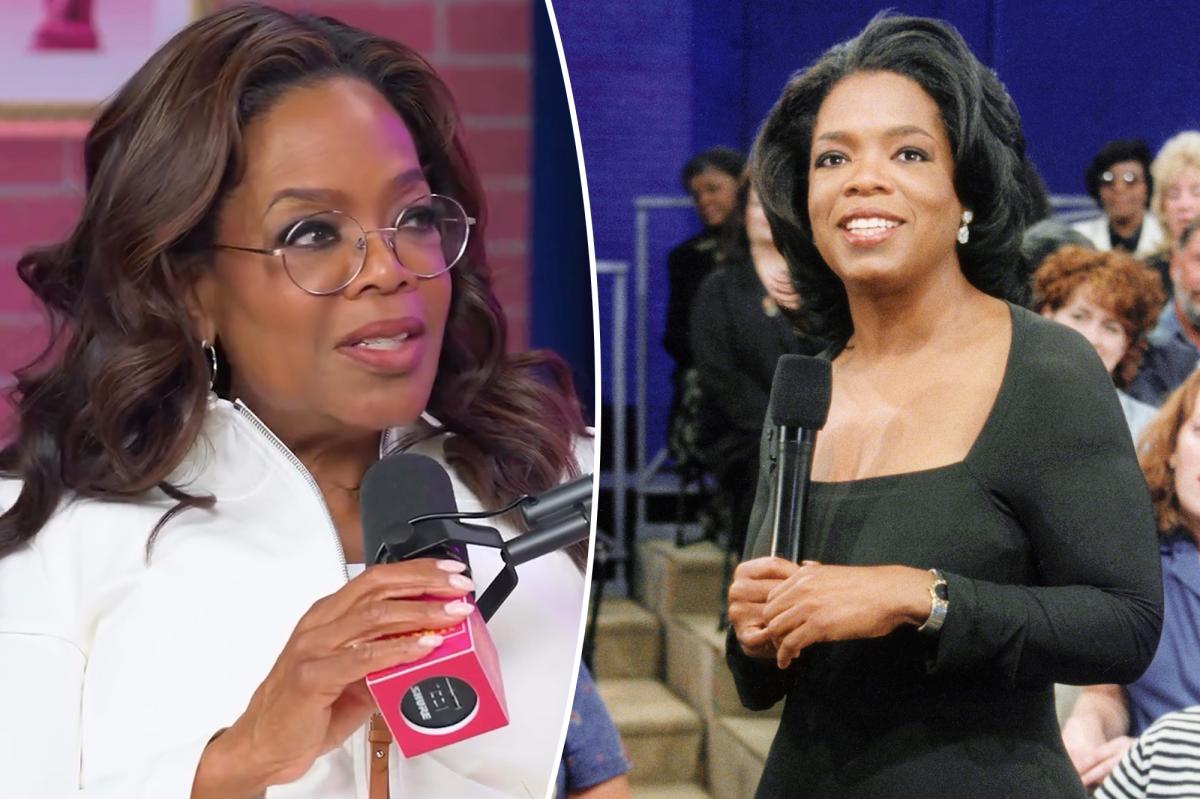
Oprah Winfrey is calling her 1998 attempt to record a theme song for her own show one of the biggest mistakes of her career. The media mogul made the confession on Keke Palmer's podcast, "Baby, This Is Keke Palmer," saying of the song simply: "It was bad." Page Six reported the moment quickly went viral, reviving memories of a quirky chapter in daytime TV history.
The song was called "Run On" — a modern spin on a Black spiritual. It came with a full music video featuring a church choir, backup singers, choreographed dancing, and black-and-white visuals. The track was released as a standalone single, a striking departure for a woman known as a talk-show queen, not a recording artist.
A Spiritual Crossroads Led to the Song
Oprah did not stumble into "Run On" by accident. AOL reported that in the late 1990s, she was seriously weighing whether to end her show entirely. She described the moment as deeply spiritual, saying she asked Jesus directly whether to keep going. The answer she received, as she told it: "You gotta keep going."
That sense of renewed purpose fueled the song. Oprah wanted to mark the decision with something meaningful. She turned to "Run On," a gospel-rooted track meant to capture her spiritual revival. The ambition was real. The execution, she now admits, fell short.
Oprah Tried to Hide Her Voice Behind a Choir
Oprah knew early on that her voice was not strong enough to carry the song alone. Her solution was to "beef it up," as she put it, with a loud church choir and backup singers. The goal was to bury her lead vocals inside the bigger sound. Page Six noted that even with the full production, the result did not land the way she hoped.
The video leaned heavily into the aesthetic: running children, butterflies, high-contrast black-and-white footage. It was theatrical and ambitious. But viewers and critics found it ill-fitting for the woman they knew from daytime television. Oprah herself now agrees.
Whitney Houston Made It Even More Memorable
The song's notoriety got an unexpected boost from Whitney Houston. Houston teased Oprah about "Run On" on-air. Then in 1999, Houston herself sang the opening line of the song during an appearance on the show. Mahoning Matters noted the moment helped cement "Run On" as a lasting cultural footnote in the show's long run.
The Houston connection gave the song a second life in pop culture memory. A clip of a superstar singer gently roasting Oprah's musical side project was simply too good to forget. Decades later, it still draws laughs — and now, Oprah is laughing too.
Keke Palmer's Podcast Brought the Moment Back to Life
The renewed attention came after Oprah appeared on Palmer's podcast in 2024. Palmer did not let Oprah off easy. When Oprah described "Run On," Palmer quipped about performing a "slave hymn" on national TV. The News Tribune reported the exchange highlighted just how far outside her comfort zone Oprah had ventured.
Oprah's show ran for 25 seasons nationally, from 1986 to 2011, and became one of the most watched programs in television history. "Run On" remains a tiny but memorable footnote in that legacy — proof that even a media empire can stumble when it steps too far outside its lane.
Sentiment
Mostly NegativeNEGATIVENEUTRALPOSITIVE
Publishers
19
Articles
44
Reach
63
A
AnonymousAuthor


