Stopping Crypto Kiosk Fraud.
Minnesota bans crypto kiosks after $1 million in losses, disrupting major scam pipeline.
Anonymous
Key Points
1
Minnesota's new law shuts down cryptocurrency kiosks starting August 1, aiming to disrupt a 'major scam pipeline' after nearly $1 million in losses and 134 complaints over two years; officials say removing kiosks reduces a rapid, hard-to-intervene funds flow. As BCA superintendent Drew Evans put it, removing kiosks 'closes an important pathway that allows them to receive funds rapidly, with limited opportunity for intervention.'
2
Texas hosts roughly 4,000 crypto kiosks and suffered about $56.8–$57 million in losses in 2025; the state accounted for 1,179 of the FBI's 13,460 complaints that year, underscoring its central role in kiosk-enabled scams and fueling talk of an outright ban in the 2027 session. Rep. Cole Hefner has already signaled plans to push a full ban.
3
The broader policy landscape is tightening: a federal Crypto ATM Fraud Prevention Act is under consideration, while about 30 states have enacted related legislation since 2023; observers note that Interpol now treats scam networks as an industry akin to drug or human trafficking.
4
Recovery of stolen funds is extraordinarily difficult once money moves through kiosks; officials say funds often go to unhosted wallets and mixers, making return nearly impossible, with warnings that criminals exploit anonymity and overseas pathways to launder proceeds.
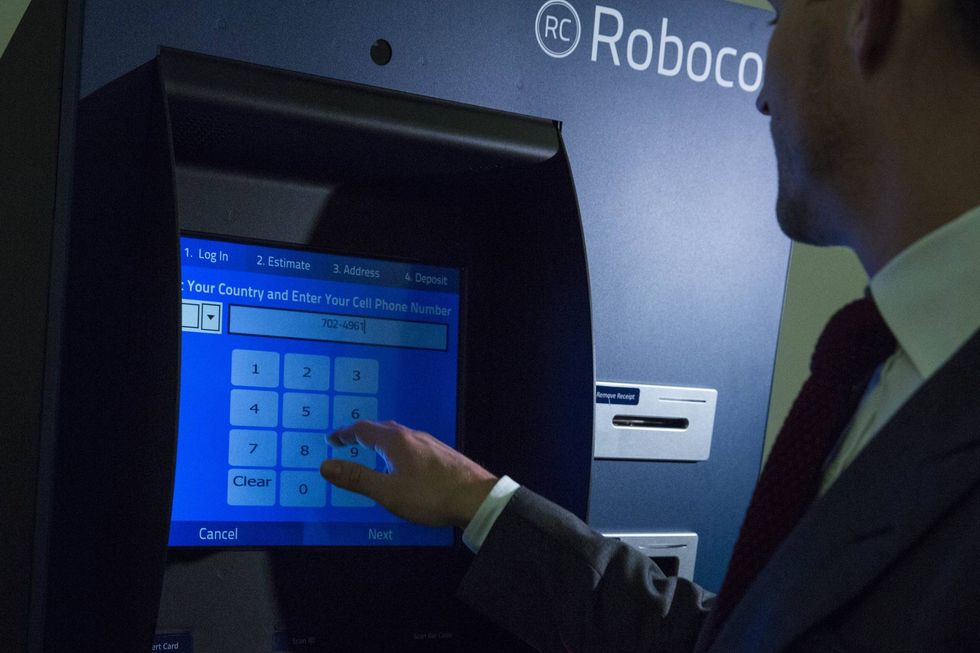
Minnesota has enacted a law banning cryptocurrency kiosks starting August 1, shutting down what officials call a major scam pipeline responsible for nearly $1 million in losses and 134 complaints over two years, according to Audacy. The ban aims to stop scammers from converting victims' cash into cryptocurrency within minutes — a process so fast that law enforcement has almost no time to intervene.
The move puts Minnesota among a growing list of states cracking down on crypto kiosks. Nationally, the FBI logged 13,460 complaints in 2025 with $389 million in losses tied to these machines, according to Crypto News.
Minnesota's August Ban Closes a Rapid Scam Pathway
Minnesota's Bureau of Criminal Apprehension superintendent Drew Evans explained the core problem. Removing kiosks "closes an important pathway that allows them to receive funds rapidly, with limited opportunity for intervention," he said, according to Audacy. Once a victim feeds cash into a kiosk, funds move to a scammer's digital wallet in seconds. There is almost no way to reverse the transfer.
State officials recorded 134 complaints and nearly $1 million in losses over two years before the law passed. The ban takes full effect August 1. Officials say the speed and anonymity of kiosk transactions make them uniquely dangerous compared to other payment methods.
Texas Lost $56.8 Million — More Than Any Other State
Texas is the hardest-hit state in the country. Residents lost roughly $56.8 million to crypto kiosk scams in 2025 alone, according to Crypto Economy. Texas accounted for 1,179 of the 13,460 complaints the FBI received nationwide that year. The state hosts around 4,000 kiosks — one of the largest concentrations in the US.
Texas lawmakers are now weighing a full ban of their own, according to Crypto Briefing. Representative Cole Hefner has already signaled plans to push for a complete prohibition in the 2027 legislative session. Three other states have already outlawed the machines entirely, adding pressure on Texas to act.
Stolen Funds Almost Never Come Back
Once money leaves a kiosk, recovering it is nearly impossible. Scammers move funds into unhosted wallets and mixers — tools designed to scramble transaction trails. Officials say these pathways lead overseas, where US law enforcement has little reach. Interpol now treats scam networks as an organized industry, similar in scale to drug or human trafficking, according to Value the Markets.
The irreversibility is what makes kiosks so attractive to criminals. Banks can freeze wire transfers. Credit card companies can reverse charges. Crypto kiosks offer neither protection. Victims are typically elderly people targeted by romance scams or fake government impersonators who direct them to the nearest machine.
Federal Law and 30 States Move Toward Prohibition
The crackdown is not just happening at the state level. Congress is weighing the Crypto ATM Fraud Prevention Act, which would set national rules for kiosk operators, according to Crypto Briefing. About 30 states have passed related legislation since 2023. The trend is clear: regulators are moving from warning labels and transaction limits toward outright bans.
Critics warn that bans alone will not stop scammers, who may shift victims toward wire transfers or gift cards instead. But proponents argue that removing the machines at least slows the pipeline. As Value the Markets noted, fraud networks are expanding internationally, and every barrier added at the local level buys victims more time to recognize a scam before their money is gone.
Sentiment
Mostly NegativeNEGATIVENEUTRALPOSITIVE
Publishers
10
Articles
4
Reach
14
A
AnonymousAuthor


