Treasury Yields Top 5%
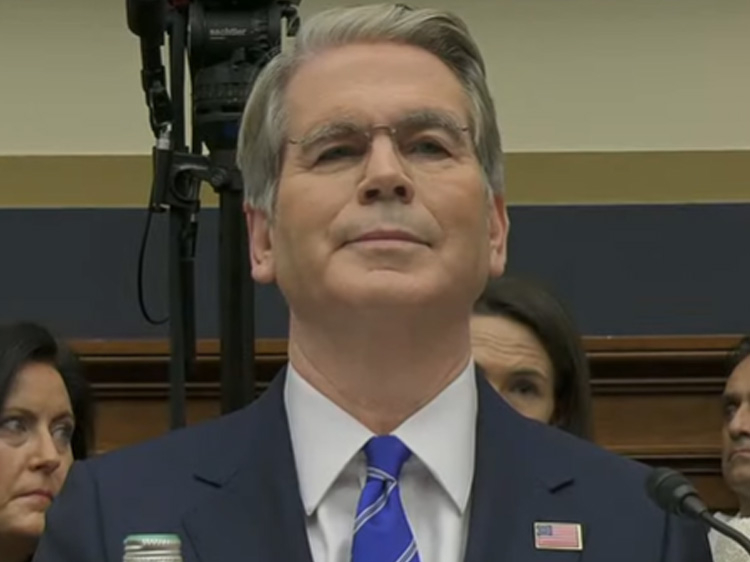
Treasury Secretary Scott Bessent Faces House Hearing as 10-Year Yields Surpass 5%
Anonymous
Key Points
1
Bessent’s appearance is his annual testimony before the House Financial Services Committee, rather than a special or emergency hearing.
2
The hearing was scheduled to begin at 10 a.m. on Capitol Hill.
3
Coverage of the hearing specifically frames lawmakers’ examination around international financial conditions alongside the challenges facing the U.S. economy.
Treasury Secretary Scott Bessent testified before the House Financial Services Committee on September 15 as the U.S. bond market delivered an unwelcome message: 10-year Treasury yields topped 5% for the first time since late 2023, undercutting the administration's goal of bringing them below 4%. NDTV Profit reported that Bessent blamed the surge on "global issues" without naming specific causes. The higher yields raise borrowing costs for mortgages, corporate debt, and federal spending—pressuring an already strained fiscal outlook.
The yield spike came despite Treasury's aggressive intervention. In September, the Treasury tripled its standard bond buyback operation to $6 billion, purchasing 10- and 20-year securities to push prices up and yields down. RealClearPolitics noted the effort failed—yields kept climbing. Lawmakers pressed Bessent on whether administration policies—including tariffs, spending proposals, and the ongoing Iran conflict—were fueling market anxiety and worsening the Treasury's ability to borrow at lower rates.
The Bond Market Rejects Bessent's Intervention Efforts
Treasury launched expanded buyback operations to drive down long-term borrowing costs. Starting in August, Bessent doubled the buyback floor to $4 billion per operation. On September 9, Treasury deployed a $6 billion purchase—triple the usual $2 billion—targeting 10- and 20-year bonds. Miami Herald reported Bessent previously told traders: "I am the house now." Yet markets didn't listen. The 10-year yield surged to 4.85%, then broke through 5.00% on September 14–15, its highest in nearly two years.
Wall Street dealers were unimpressed. Elias Haddad of Brown Brothers Harriman said Treasury "brought a pea shooter to a tank battle." Alex Pelle of Mizuho noted Bessent faces "an uphill battle" against the market's momentum. Analysts observed that buyback programs merely shift duration risk—they don't reduce overall debt supply or lower yields across the board. Instead, they attempt to reduce some yields at the expense of others, leaving structural pressures intact.
Inflation and Energy Shocks Limit Federal Reserve Rate-Cut Options
The Fed's ability to lower rates—as President Trump has demanded—remains constrained. August's Consumer Price Index report showed 3.4% annual inflation, cooling only slightly from prior readings. Brent crude oil trades above $100 per barrel following the escalation of Iran tensions. National gas averages $4.32 per gallon, and diesel reaches $6.23. These persistent cost pressures limit Fed Chair Kevin Warsh's room to cut rates without stoking more inflation.
Head Topics reported that Bessent's comments came during congressional questioning where lawmakers voiced concerns about the Iran conflict's impact on energy markets. Higher energy costs ripple through the economy, pushing up food and transportation expenses. This dynamic creates friction: Trump wants lower rates to boost growth and refinance existing debt, but inflation won't fall enough to justify deep Fed cuts. Warsh must navigate this tension between presidential demands and economic reality.
Tariffs and Deficits Push Borrowing Costs Higher
Administration policies are widening the fiscal gap. The "One Big Beautiful Bill Act" and sweeping import tariffs are expected to leave annual budget deficits above $2 trillion. Higher deficits mean the Treasury must borrow more, flooding bond markets with fresh debt supply. When supply outpaces demand, prices fall and yields rise. National debt now tops $40 trillion—the highest ever. Congressional critics argue these self-inflicted pressures are driving up long-term interest rates, not global conditions.
Each percentage point increase in the 10-year yield adds billions to annual federal interest payments. Higher yields also raise mortgage rates, car loans, and credit card costs for middle-class Americans. Argaam reported Bessent linked rising yields to global factors, but economists point out that U.S. fiscal expansion and tariff uncertainty are unique to Trump administration policy. The borrowing burden falls directly on households and businesses struggling with affordability pressures.
Bessent Defends Dollar Strength and Treasury Market Confidence
Bessent pushed back on criticism, emphasizing that a strong dollar and continued foreign buying of Treasury bonds signal underlying confidence in U.S. assets. Transaction volumes remain high, and capital inflows persist. Bessent told lawmakers that "a strong dollar is not a price on a screen; it is a set of behaviors," pointing to regulatory certainty, tax policy, trade stability, and energy security as the true drivers of confidence. He framed buybacks as routine structural support, not emergency intervention.
Yet the Treasury's credibility hinges on fiscal outcomes. Lawmakers questioned whether deficits above $2 trillion and yields approaching historic highs square with claims of stability. Rising borrowing costs threaten to crowd out private investment, slow economic growth, and force painful budget choices. Bessent's testimony was his annual statutory appearance before the House Financial Services Committee, but the stakes were unusually high—bond markets are sending a clear signal that investors are losing patience with U.S. fiscal direction.
Sentiment
Mostly NegativeNEGATIVENEUTRALPOSITIVE
Publishers
34
Articles
110
Reach
144
A
AnonymousAuthor


