MapQuest Defies Lake Rename
MapQuest Surges to Top of App Store After Refusing Lake Ontario Rename
Anonymous
Key Points
1
MapQuest reached the top of Apple's App Store in the weekend, becoming the No. 1 navigation app and No. 8 overall free app, its highest-ever chart position in 30 years, with usage reportedly about 50x normal levels.
2
Google Maps renamed Lake Ontario to Lake America for U.S. users, while Canada continues to show Lake Ontario; Apple Maps has not yet updated, reflecting divergence between private map providers and government naming.
3
MapQuest’s resurgence is strongest outside the U.S., with Canada ranking the app No. 2 overall and roughly 184,000 global downloads in the week of Aug. 24, signaling broad international traction beyond U.S. users.
4
MapQuest added a feature allowing users to create and download custom lake names (for example, a user-chosen 'Lake Hormuz'), leveraging the controversy to boost engagement and customization.
5
Private mapping platforms are not legally bound to government rename changes; the Gulf of Mexico and other earlier name changes illustrate that private services can diverge from official naming even as federal sources update.
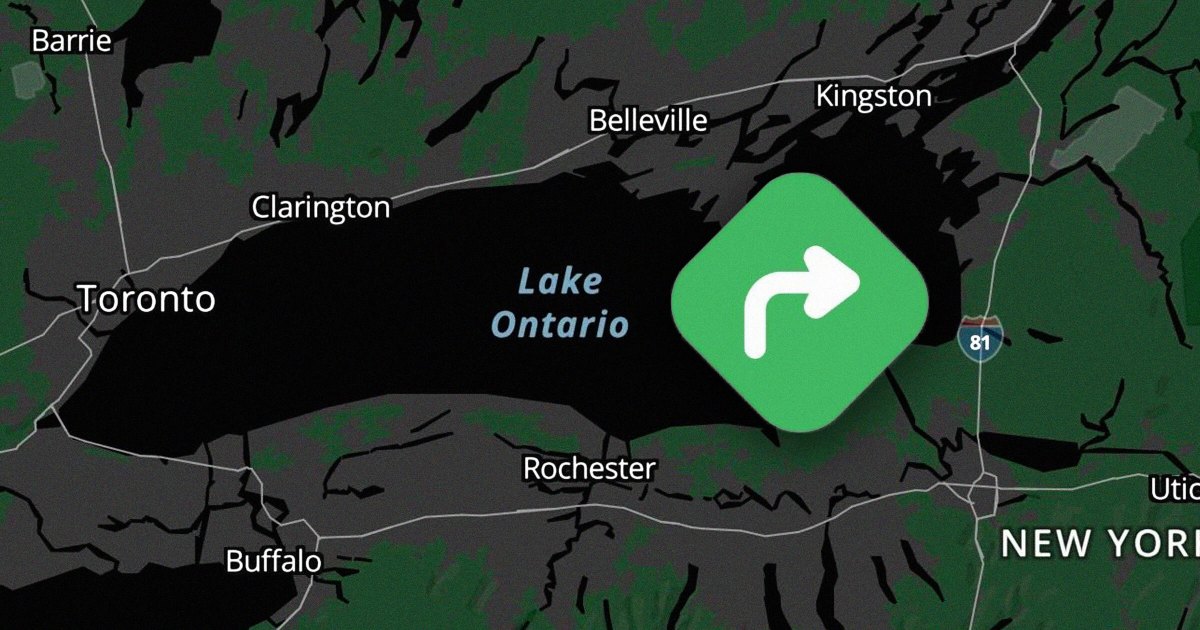
MapQuest has shot to the top of Apple's App Store after refusing to rename Lake Ontario to Lake America, defying a Trump administration order that sparked a geopolitical standoff with Canada. The Independent reports the navigation app surged to No. 1 in the US charts, with usage jumping about 50 times normal levels and 184,000 global downloads in a single week.
The move positioned MapQuest as a digital rebel while Google Maps quickly relabeled the lake for US users only. Business Insider notes the app's resurgence taps into nostalgia for the 1990s mapping pioneer, as MapQuest branded itself the "OG of online mapping" and even rolled out a custom naming feature letting users create their own lake names.
MapQuest's Unlikely Comeback to the Top Charts
MapQuest reached a historic peak this weekend. Business Insider states the app hit No. 1 navigation app and No. 8 overall free app—its highest position in 30 years. Usage spiked roughly 50 times normal, with particularly strong momentum in Canada, where the app became No. 2 overall. The surge caught even longtime observers by surprise.
The viral momentum came from MapQuest's public stance. While competitors caved to pressure, MapQuest held firm: Lake Ontario stays Lake Ontario. Futurism highlighted that Google's competitor refused to rename the lake despite Trump's decree. This defiance became the app's calling card.
Google Maps Bows to Rename While MapQuest Holds Ground
Google Maps took a different path. The Independent reports Google renamed Lake Ontario to Lake America for US users only, while Canada's version kept the original name. Apple Maps has not yet updated its labels. This fragmentation shows how private mapping firms can diverge from official orders. Yahoo Canada notes Google made the change after trade talks between the US and Canada fell apart.
Private companies face no legal requirement to adopt government naming changes. Futurism explains that mapping services retain autonomy outside federal mandates. This freedom allowed MapQuest to chart its own course while competitors bent to pressure.
Custom Lake Names Turn Controversy Into Engagement
MapQuest seized the moment to launch a new feature. Users can now create and download custom lake names—turning the rename debate into an interactive tool. This move doubled down on MapQuest's irreverent brand. The feature lets anyone assign their own versions, from Lake Hormuz to whatever users choose.
The strategy worked. Yahoo Canada reports 184,000 downloads in the week of August 24 alone, with MapQuest climbing charts globally. The app's nostalgia appeal combined with its defiant stance created a perfect viral moment. MapQuest proved that staying true to facts—and having a sense of humor—can outsell corporate compliance.
Sentiment
Mostly NegativeNEGATIVENEUTRALPOSITIVE
Publishers
14
Articles
25
Reach
39
A
AnonymousAuthor