China's Lithography Shift Rocks Chip Market
China Begins Mass Production of DUV Lithography, Sending ASML Shares and Chip Stocks Lower
Anonymous
Key Points
1
The Shanghai-based, state-backed firm reportedly assembled DUV development teams from several Chinese semiconductor companies, including Shanghai Yuliangsheng Technology, to accelerate the domestic lithography effort.
2
China's share of ASML's sales remains substantial (29.1% of last year’s net sales and about 36.1% projected for 2024), underscoring how domestic competition could impact ASML’s core revenue in China.
3
The market reaction extended beyond ASML: major Chinese and Western semiconductor-equipment and chipmakers saw sizable moves, with ASML down more than 6%, Nvidia around -4%, AMD about -7%, Micron roughly -6%, and SK Hynix about -8% in response to the report.
4
The domestic DUV initiative is still in early stages, with targets cited as five machines this year and roughly 20 next year, highlighting the gap in performance and maturity versus ASML’s established systems.
5
ASML has previously noted that export restrictions prevent shipping its EUV systems to China, a factor driving China’s push toward self-sufficiency in lithography.
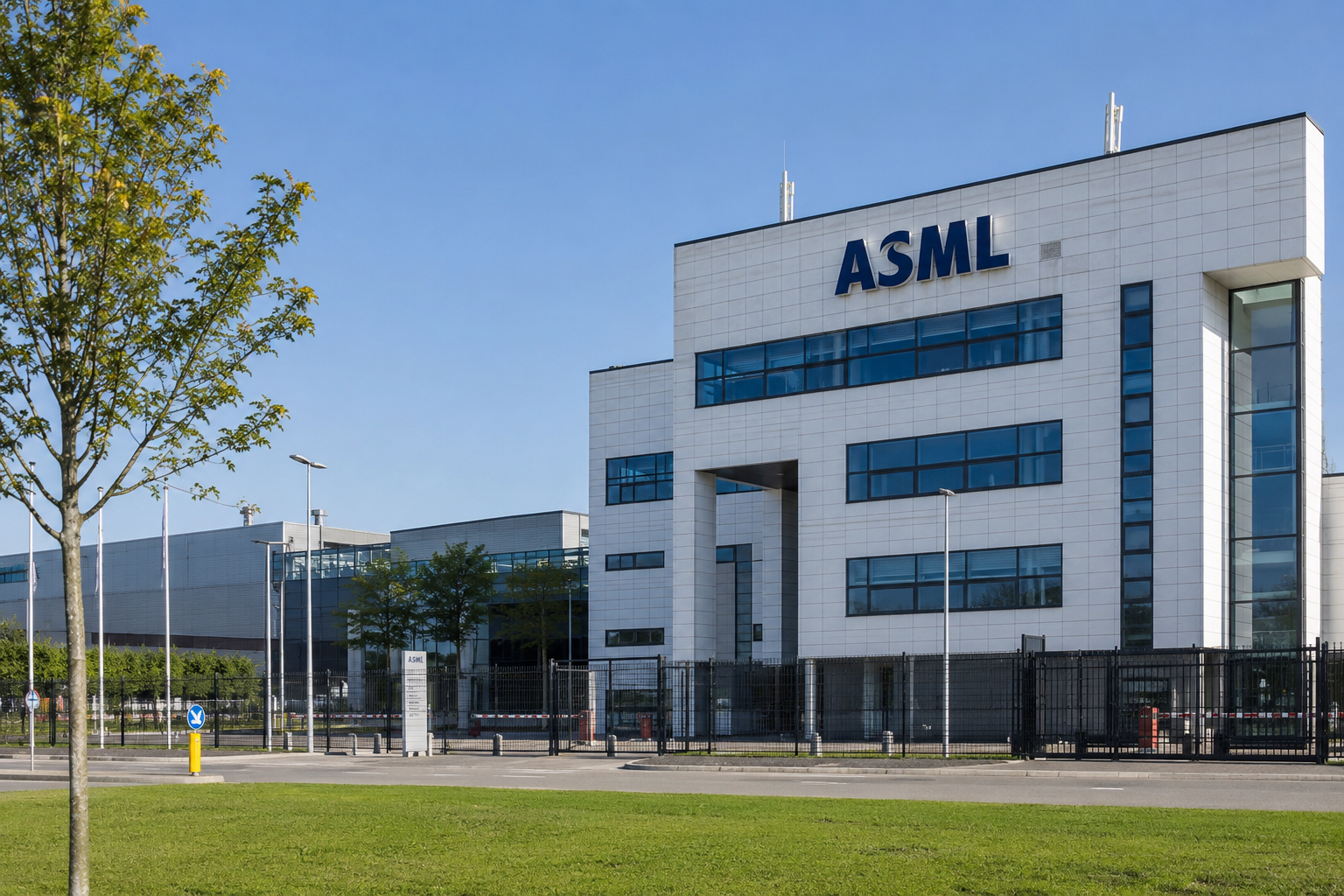
A Shanghai-based, state-backed company has begun mass-producing its own immersion DUV lithography machines — the tools used to etch circuits onto computer chips. The news sent shares of Dutch chip-equipment giant ASML tumbling more than 6% on Thursday, according to The Next Web and Invezz.
DUV, or deep ultraviolet, lithography is a critical step in making semiconductors. ASML has long dominated this market. China's move to build its own machines signals a direct challenge to that dominance — and rattled investors across the entire chip industry.
China's Secret DUV Program Comes Into View
The Shanghai firm assembled its development teams by pulling engineers from several Chinese semiconductor companies, including Shanghai Yuliangsheng Technology, according to Invezz. The company is state-backed, though its name has not been fully disclosed. It is targeting delivery of five machines to Chinese chipmakers this year, with roughly 20 more planned for next year.
The machines being built are immersion DUV systems. These tools use liquid between the lens and the chip wafer to print finer circuit patterns. ASML has been blocked from selling its most advanced EUV machines to China under Dutch export rules. China is now trying to build DUV tools at home to sidestep that barrier entirely.
ASML Faces Real Revenue Risk in Its Biggest Market
China is not a small market for ASML. The country made up 29.1% of ASML's net sales last year and was projected to reach 36.1% in 2024, according to MarketScreener. If Chinese chipmakers start buying homegrown machines instead, ASML could lose a major slice of its business.
ASML shares fell more than 6% on the news, with some outlets reporting drops as steep as 8%, according to Morningstar. The company has already been squeezed by export bans that block it from shipping EUV tools to China. Domestic Chinese competition in DUV would tighten that squeeze further.
Chip Stocks Slide as Investors Weigh a New Competitive Threat
The selloff spread well beyond ASML. Nvidia dropped roughly 4%. AMD fell about 7%. Micron slid around 6%. South Korean memory giant SK Hynix lost approximately 8%, according to Invezz. Investors feared that a stronger Chinese lithography industry could shift the balance of power in global chip manufacturing.
The concern is straightforward: if China can make its own chip-printing machines, it needs less from Western suppliers. That cuts revenue across the whole equipment chain — not just ASML.
China's DUV Tools Are Real, But Still Far Behind
Analysts caution that China's domestic machines are still early in development. They trail ASML's systems in performance and production readiness, according to The Next Web. Building a lithography machine that works in a lab is very different from shipping reliable tools at scale to chipmakers.
Still, the direction of travel is clear. China is accelerating its push for semiconductor self-sufficiency. Even five machines delivered this year would mark a symbolic and practical milestone. Analysts say the program bears close watching as targets for 2025 and beyond come into focus.
Sentiment
Mostly NegativeNEGATIVENEUTRALPOSITIVE
Publishers
25
Articles
47
Reach
72
Topics
A
AnonymousAuthor


