Cobre Panamá Closure Talks
Panama Panel Recommends Formal Talks to Manage Closure of Cobre Panamá Mine
Anonymous
Key Points
1
The ministerial committee was composed of three ministers and assessed the mine’s economic, environmental, legal and social implications before making its recommendations.
2
President Mulino stressed that the Supreme Court ruling invalidated the mining contract but did not decide the fate of the mine site itself: “The ruling closed the contract, but did not resolve what to do with the site.”
3
First Quantum is processing previously mined stockpiled ore at Cobre Panamá under a government-approved program, but says that activity does not constitute reopening mining operations.
4
Before it was shut, Cobre Panamá produced up to 1.5% of global copper, according to First Quantum; the shutdown followed local protests over the mine’s tax contributions and environmental impact.
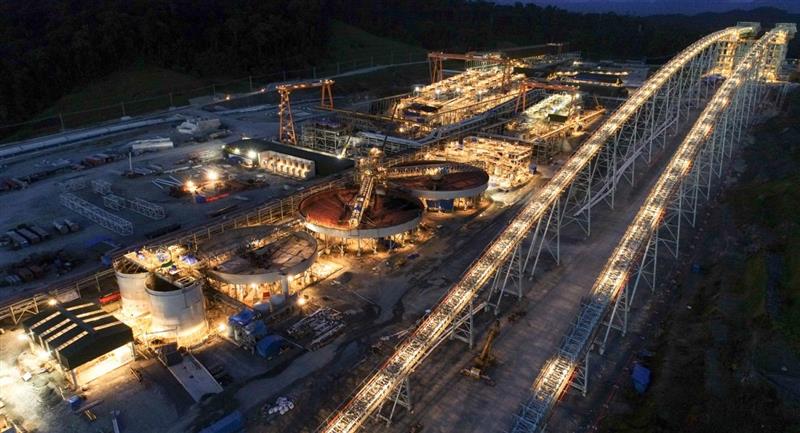
Panama's government commission has recommended formal talks with First Quantum Minerals over a new framework for Cobre Panamá, the world's largest open-pit copper mine that was shuttered in 2023 after a Supreme Court ruling invalidated its mining contract. Stockhouse reported that the proposal would allow limited operations to generate revenue for an orderly, permanent closure at no cost to the state. The deal explicitly prevents extending the mine's life and requires resolving international arbitration disputes while prioritizing environmental and social interests.
President José Raúl Mulino stressed that the court ruling closed the mining contract but did not decide the mine site's fate: "The ruling closed the contract, but did not resolve what to do with the site." Benzinga noted that First Quantum said it would engage in good faith with the government, though the company's stock fell 31% immediately after the announcement, signaling investor skepticism about the plan's viability.
A Mine Closed, Not Forever Settled
Cobre Panamá produced up to 1.5% of global copper before its shutdown, First Quantum reported. The mine was idled after local protests over tax contributions and environmental damage escalated into a legal challenge. The Supreme Court's 2023 ruling invalidated the mining contract entirely, but this left a critical question unanswered: what happens to the site itself?
The ministerial commission, composed of three cabinet ministers, spent weeks assessing the mine's economic, environmental, legal and social implications. Their conclusion: limited operations could fund responsible closure rather than leaving the site abandoned and unmanaged. This distinction is crucial—the government is not approving full-scale mining resumption, only a pathway to a controlled shutdown.
Revenue Generation Without Contract Extension
The proposal ties any operational activity directly to closure costs. Stocktitan explained that limited mining would generate revenue specifically to fund an orderly decommissioning process. Critically, the agreement would include no provisions to extend the mine's operational life beyond what is needed for closure planning and execution.
First Quantum is already processing previously mined stockpiled ore under a government-approved program, though the company maintains this does not constitute reopening mining operations. The new framework would formalize and expand limited activities while locking in a permanent end date—a safeguard designed to address public fears about the mine's indefinite return.
Investor Skepticism and Arbitration Risks
First Quantum's stock tumbled 31% after the announcement, Benzinga reported, reflecting market concern about execution risks and the company's ability to recover losses from years of idleness. The sharp decline suggests investors doubt whether limited "closure operations" will ever materialize into profitable activity or meaningful arbitration settlements.
The commission's recommendation also calls for resolving pending international arbitration disputes between First Quantum and Panama. These claims could cost the government billions if the company wins damages. Consolidating operational terms and legal disputes into a single framework is meant to reduce overall liability, though success depends on both parties' willingness to compromise significantly.
Presidential Review Before Any Decision
President Mulino has not approved the commission's recommendation; he said he would review it before deciding. Freedom 96.9 reported on the commission's recommendation to reopen the mine as a pathway to orderly closure. This review period creates uncertainty for all stakeholders—the government could reject the framework, demand modifications, or approve talks with additional conditions.
Sentiment
Mostly NegativeNEGATIVENEUTRALPOSITIVE
Publishers
13
Articles
9
Reach
22
Topics
A
AnonymousAuthor


