UK Military Sites Record 340 Drone Incidents
UK Military Sites Record 340 Drone Incidents
Anonymous
Key Points
1
Armed forces minister Louise Sandher-Jones said the government was “taking the threat posed by hostile drones to Defence sites extremely seriously.” She attributed part of the increase to improved monitoring and reporting after restricted-airspace zones were created over 44 strategic military sites in February.
2
Russia summoned the UK’s deputy head of mission in Moscow, Danae Dholakia, over Britain’s support for Ukraine and warned that Moscow could take “retaliatory measures.” The Foreign Office rejected the warning, saying Russia was trying to “deflect attention” from its invasion and that Britain would continue arming Kyiv.
3
The UK has a range of air-defence capabilities operated by the Royal Navy, British Army and Royal Air Force, according to the Ministry of Defence.
4
Polish Prime Minister Donald Tusk warned that Russia could conduct missile strikes presented by the Kremlin as “accidental” in an effort to test NATO’s resolve. Reports also described concerns about intensified drone and missile activity against NATO territory and hybrid attacks on critical infrastructure, pipelines and communications cables.
5
French President Emmanuel Macron announced a plan aimed at protecting France’s critical infrastructure and defence industries from sabotage, highlighting the broader European response to suspected hybrid threats.
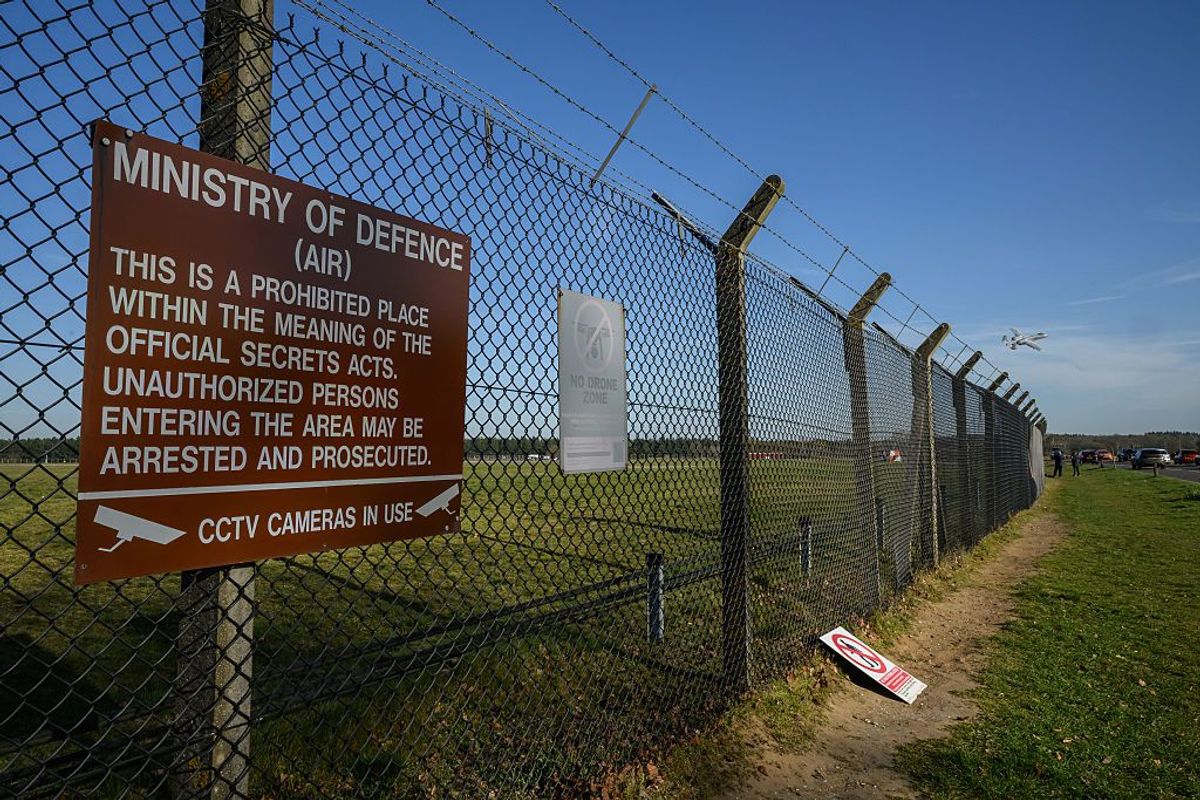
British military sites recorded 340 drone security incidents in the 12 months through August 2026, nearly triple the 126 incidents from two years prior, according to Kyiv Independent. The spike reflects both heightened surveillance of restricted airspace around 44 strategic bases and growing tensions with Russia and Iran. Armed forces minister Louise Sandher-Jones said the government was "taking the threat posed by hostile drones to Defence sites extremely seriously."
The increase comes as Russia warns that British military facilities supporting Ukraine could become legitimate targets. Express reported that Britain faces heightened security threats from both Russia and Iran. Officials have not identified who is behind the incidents, though Moscow has ramped up military posturing near NATO borders and testing allied defenses.
Drone Incidents Spike Threefold in Two Years
The 340 incidents in the 12-month period ending August 2026 represent a dramatic jump from previous years. There were 250 incidents in 2025 and just 126 the year before, according to Kyiv Independent. The figures came from a Freedom of Information request. Part of the increase reflects better monitoring after the Ministry of Defence created restricted-airspace zones over 44 strategic military sites in February.
Some incidents may reflect heightened awareness and improved reporting rather than actual attacks. Still, the near-daily frequency of drone activity around military bases has alarmed British defense officials. Express noted that Britain now faces a heightened security threat from Russia and Iran simultaneously.
Russia Warns UK Over Ukraine Support
Moscow summoned the UK's deputy head of mission in Moscow, Danae Dholakia, to protest Britain's military aid to Ukraine. Russia warned it could take "retaliatory measures" against British interests. The Foreign Office rejected the warning, saying Russia was trying to "deflect attention" from its own invasion of Ukraine. Britain vowed to continue arming Kyiv.
The Russian warning carries weight given Moscow's history of hybrid warfare against NATO allies. Polish Prime Minister Donald Tusk warned that Russia could conduct missile strikes disguised as "accidental" to test NATO's resolve. Kyiv Independent reported broader European concerns about intensified drone and missile activity against NATO territory and attacks on critical infrastructure.
Former Defense Minister Warns of Lethal Adaptation Risk
Tobias Ellwood, a former UK defense minister, cautioned that surveillance drones could be modified to carry weapons. Such adaptation would transform monitoring tools into direct threats. The warning underscores why British officials treat the spike in drone incidents near military bases as a serious national security issue.
The UK operates air-defense systems through the Royal Navy, British Army, and Royal Air Force. However, the sheer volume of drone incidents—nearly one per day—strains detection and response capabilities. Kyiv Independent reported that European governments are now adopting broader protective measures against suspected hybrid threats.
Europe Mobilizes Defense Against Hybrid Threats
France announced a plan to protect its critical infrastructure and defense industries from sabotage, signaling a broader European response. President Emmanuel Macron acknowledged the widening threat posed by hostile drones and potential attacks on pipelines and communications cables. Kyiv Independent reported that NATO allies are increasingly vigilant about Russian and Iranian probing of Western defenses.
The UK government maintains that Russia is "continually probing" British defenses but is not believed to be seeking direct confrontation with NATO. Still, the frequency of drone incidents and Russian rhetoric suggest Moscow is testing Allied resolve. European capitals are adopting stricter airspace controls and upgrading air-defense systems in response.
Sentiment
Mostly NegativeNEGATIVENEUTRALPOSITIVE
Publishers
17
Articles
21
Reach
38
Topics
A
AnonymousAuthor


