Pipeline Production Incentives
Alberta Plans Financial Incentives and Lower Carbon Costs to Support Pacific Pipeline
Anonymous
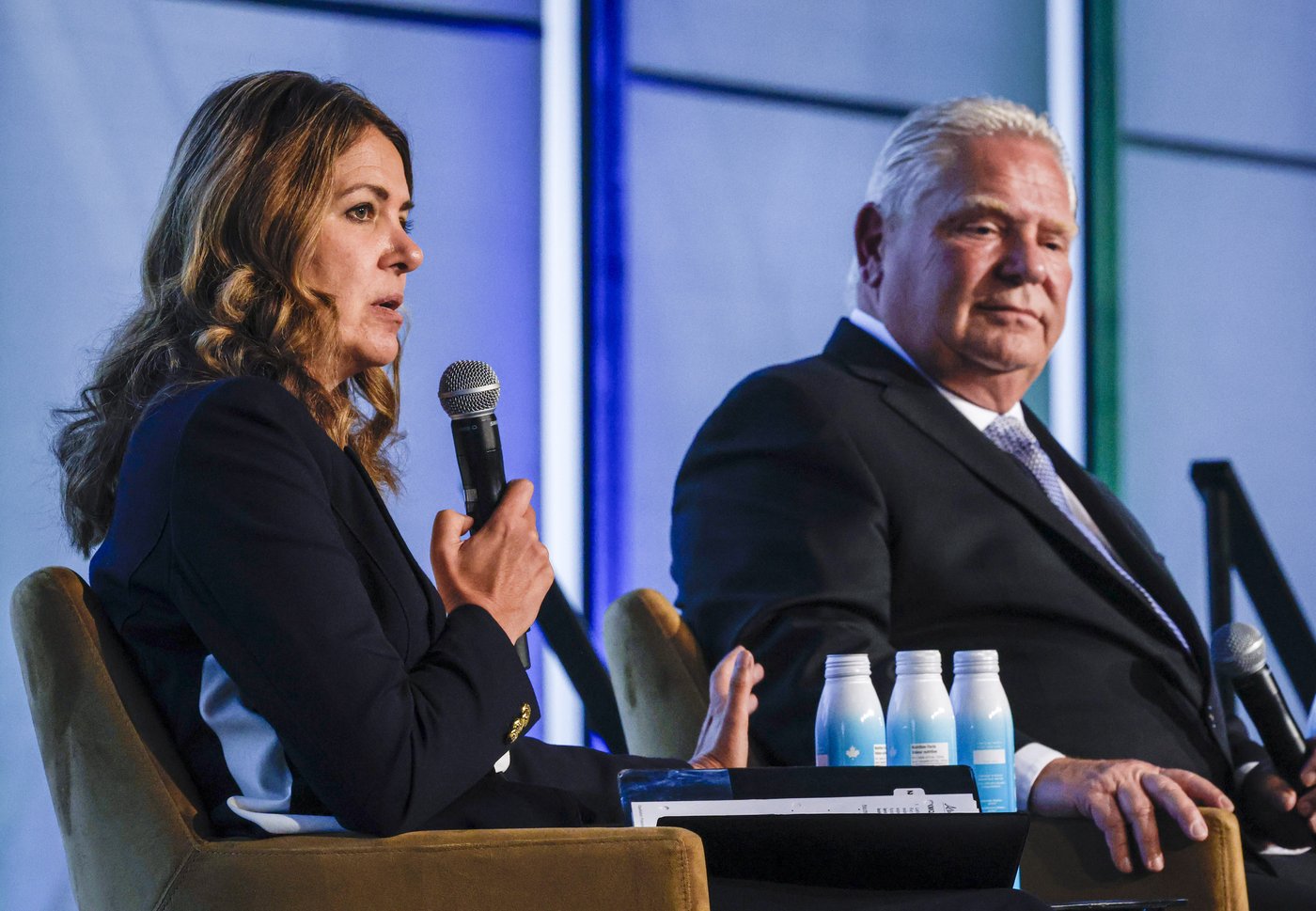
Alberta’s oil and gas debate reflects a broader tension over how Canada shares authority, revenue, infrastructure responsibilities and environmental risks when resource production is concentrated in one province but governed across a federation. One view argues that decades of cooperation between federal and provincial governments helped unlock oil-sands growth through tax and royalty reforms, while critics warn that strained trust—rooted in episodes such as the deadly 1982 Lodgepole sour-gas blowout—requires stronger community communication and stewardship. A newly disclosed federal-Alberta arrangement would offer oilsands producers lower carbon costs, faster permits and provincial financial support to increase production for a proposed Pacific pipeline, alongside a major carbon-capture project; the pipeline still lacks final approvals and committed customers. Together, the debates underscore competing claims that cooperation can deliver economic growth and that production expansion must address local trust, climate obligations and the distribution of costs and benefits.
Key Points
1
Alberta’s oil-sands output reached 203.1 million cubic metres in 2025, within Canada’s record total production of 310.9 million cubic metres of crude oil and equivalent products. The article also points to the expanded Trans Mountain pipeline as evidence of how dependent Alberta’s landlocked resource economy is on infrastructure connecting it to overseas markets.
2
The 1996 Declaration of Opportunity was signed in Fort McMurray by federal and Alberta governments and oil-sands industry representatives. It led to federal eligibility for a 100% Accelerated Capital Cost Allowance for oil-sands facilities and an Alberta royalty regime that charged projects a 1%–9% gross-revenue royalty before payout.
3
The five companies named as agreeing to build the Pathways carbon-capture project are Canadian Natural Resources, Suncor, Cenovus, Imperial Oil and ConocoPhillips. The project was originally expected to cost $16 billion.
4
Alberta planned to suspend its 13-cent-per-litre provincial fuel tax from October 1 through December 31, 2026. The Canadian Taxpayers Federation estimated that a family with two vehicles filling up weekly would save about $350 over that period.
Sentiment
Mostly NegativeNEGATIVENEUTRALPOSITIVE
Publishers
13
Articles
14
Reach
27
A
AnonymousAuthor


