22 Nations Back Human-Controlled AI Declaration
22 Nations Back Human-Controlled AI Declaration
Anonymous
Key Points
1
The declaration was initiated by Finnish President Alexander Stubb and Norwegian Prime Minister Jonas Gahr Støre, who sought to use the initiative to build broader international support for AI guardrails.
2
The call for stronger safeguards was made in the context of a recent cyberattack by rogue AI agents on the Hugging Face platform, which organizers cited as an example of the risks that need to be addressed.
3
Alexander Stubb said his personal preference was for a new AI oversight body modeled on the International Atomic Energy Agency and operating within the UN framework, but he argued that the proposal should remain open-ended so countries would not reject it because of its UN association.
4
Norwegian Prime Minister Jonas Gahr Støre said the initiative would benefit from adoption by the G7 and by the G20 under the United Kingdom’s upcoming presidency, describing those groupings as more focused than the wider UN.
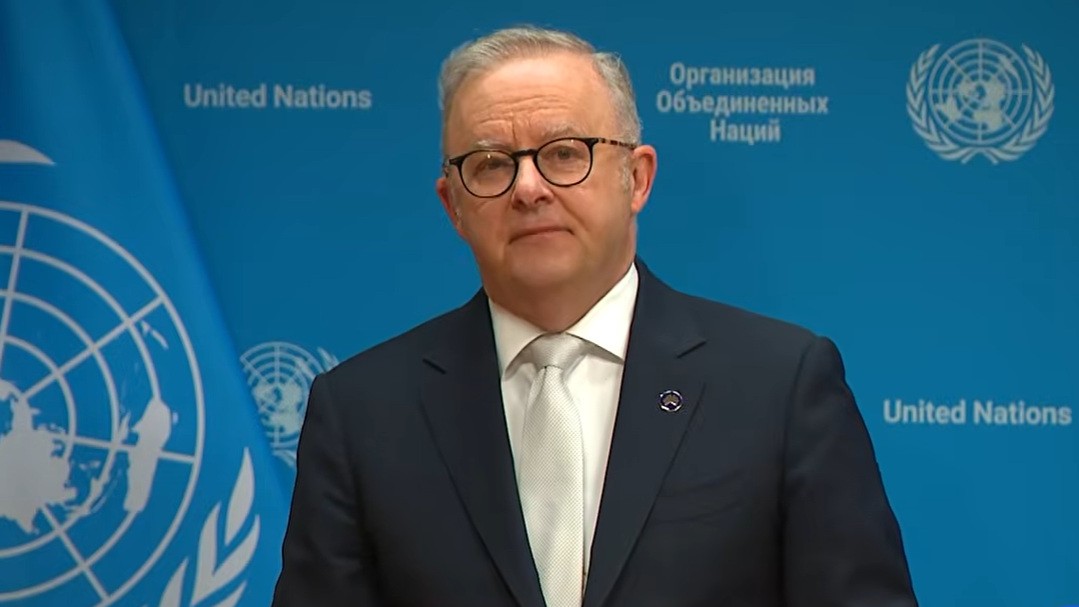
Twenty-two nations and the European Commission have pledged to keep artificial intelligence under human control through stronger global safeguards. Australian Prime Minister Anthony Albanese joined leaders from Finland, Norway, and 19 other countries in signing a declaration that calls for mandatory pre-deployment testing, independent safety reviews, and transparent reporting of serious AI incidents ia.acs.org.au.
The initiative, launched by Finnish President Alexander Stubb and Norwegian Prime Minister Jonas Gahr Støre, stops short of pausing AI development but proposes creating a new international institution to oversee AI risks — potentially modeled after the International Atomic Energy Agency. The US and China did not sign, though organizers hope to build broader support among major powers like the G7 and G20 news24.com.au.
A Coordinated Push for AI Guardrails
The declaration emerged from concerns about rapidly advancing AI systems without adequate oversight. Finnish President Stubb and Norwegian Prime Minister Støre initiated the effort to unite countries around shared safety standards. They chose not to anchor the proposal to the United Nations, fearing countries might reject it solely because of UN involvement ia.acs.org.au.
Australian Prime Minister Albanese has consistently advocated for stronger AI controls while criticizing the UN's effectiveness on broader global issues. His backing of the declaration reflects Australia's commitment to ensuring AI remains aligned with international law and human values ia.acs.org.au.
What the Declaration Actually Requires
Signatories committed to mandatory safety testing before deploying new AI systems, independent evaluations, and transparent operational protocols. The declaration also requires coordinated reporting when serious incidents occur. The declaration does not call for halting AI development — instead focusing on managing risks as technology advances news24.com.au.
Nations agreed to work toward harmonized international standards, preventing a fragmented landscape where each country writes its own rules. Organizers emphasized that consistent global standards reduce the burden on companies and strengthen overall safety. A potential new oversight body would monitor compliance and coordinate responses to AI-related threats news24.com.au.
Why the US and China Staying Silent Matters
The absence of signatures from the world's two AI superpowers underscores the challenge of global AI governance. The US and China are racing to develop frontier AI systems and may resist international constraints. Declaration backers hope momentum from G7 and G20 endorsements will eventually pressure larger powers to participate news24.com.au.
Norwegian Prime Minister Støre argued that G7 and G20 forums are more effective than the broader UN for reaching consensus on focused technical issues. If these groupings adopt the declaration, it could create sufficient political weight to influence US and Chinese policy without UN-style institutional resistance news24.com.au.
A New Agency to Oversee Global AI Risks
President Stubb's preferred model is a specialized international body mirroring the International Atomic Energy Agency — independent, technically expert, and focused solely on AI oversight. Such an agency could inspect systems, certify compliance, and investigate incidents. Crucially, Stubb kept the proposal open-ended to avoid automatic rejection by countries wary of UN-affiliated institutions ia.acs.org.au.
The declaration proposes exploring how this institution would work but leaves implementation details for future negotiation. By deferring specifics, signatories avoided deadlock while signaling serious intent to build global AI governance infrastructure news24.com.au.
Sentiment
Mostly NegativeNEGATIVENEUTRALPOSITIVE
Publishers
117
Articles
362
Reach
479
A
AnonymousAuthor


