West Bank Trade Sanctions
UK and Arab Nations Back West Bank Trade Curbs and Sanctions
Anonymous
Key Points
1
A group of prominent Israelis—including the president of the Israel Academy of Sciences and Humanities, a former prime minister, a former army chief and former ministers and diplomats—said the sanctions were an “inevitable consequence” of the government’s policies and security failures. They argued the measures targeted “Jewish terrorists, and not … the legitimacy of the state of Israel.”
2
The sanctions were amplified by parallel moves from France and Canada and support from 10 other European countries; the Guardian reported that no senior Trump administration official, despite being briefed in advance, criticized the British measures.
3
A poll cited by the Guardian found that nearly three-quarters of Jewish Israelis favored partial or total annexation of the occupied West Bank, underscoring the domestic political environment surrounding the settlement dispute.
4
Pakistan’s Foreign Office said the measures should send “a clear and unequivocal message of rejection of illegal actions” in the occupied Palestinian territory and reaffirmed Islamabad’s support for Palestinians’ “just struggle for self-determination.”
5
The eight ministers also emphasized that Gaza is an integral part of the Occupied Palestinian Territory and called for the full and immediate implementation of a plan to end the Gaza conflict, linking the settlement issue to the broader Palestinian territorial question.
Britain's ban on imports from Israeli settlements in the occupied West Bank has ignited a diplomatic firestorm, with eight Arab and Muslim-majority countries endorsing the move while Israel closed its consulate in East Jerusalem in retaliation. UK Foreign Secretary Ed Miliband announced the restrictions on September 8, citing illegal settlement expansion and what he called "ethnic cleansing of Palestinians" by settlers. The ban targets construction services, real estate, and infrastructure linked to West Bank settlements and will take up to nine months to enter law.
The coordinated action by Britain, Canada, and France marks a shift in Western policy enforcement against settlements. The Guardian reported that senior US officials did not publicly criticize the measures despite advance notice. Meanwhile, prominent Israeli figures—including a former prime minister and retired army chief—backed the sanctions as an "inevitable consequence" of government failures, arguing they target "Jewish terrorists, and not … the legitimacy of the state of Israel."
Eight Arab Nations Rally Behind Britain's Settlement Trade Ban
Foreign ministers from Egypt, Qatar, Jordan, the United Arab Emirates, Indonesia, Pakistan, Türkiye, and Saudi Arabia issued a joint statement on September 9 welcoming Britain's restrictions. The National reported they called the measures a "clear and unequivocal message of rejection of illegal actions" in occupied Palestinian territory. The ministers linked settlement curbs to the broader Gaza conflict, emphasizing that Gaza is part of the Occupied Palestinian Territory and demanding full implementation of a plan to end the Gaza war.
Pakistan's Foreign Office specifically stated the sanctions send a powerful signal about rejecting unlawful activities on Palestinian land. The eight nations also endorsed a supporting statement from 12 Western countries—the UK, Canada, France, and nine European nations—reinforcing that economic restrictions uphold international law and the two-state solution framework.
Prominent Israelis Break Ranks to Support Settlement Sanctions
A coalition of Israel's most respected figures—including the president of the Israel Academy of Sciences and Humanities, former Prime Minister Ehud Olmert, and retired Army Chief Dan Halutz—publicly backed Britain's move. The Guardian reported they called the sanctions an "inevitable consequence" of Israeli government and security failures. Their statement emphasized the measures do not target Israel's legitimacy but rather "Jewish terrorists" driving settlement expansion and violence.
This internal Israeli support creates political space for policy change but faces a hostile domestic backdrop. A JPPI poll showed nearly 75% of Jewish Israelis favor partial or total annexation of the West Bank, according to CNA.al. Yet the prominent dissenters argue that external economic pressure reflects predictable reactions to government actions, not hostility toward Israel itself.
Israel Retaliates With Consulate Closure and Travel Bans
Within hours of Britain's announcement, Israeli Foreign Minister Gideon Sa'ar ordered the closure of Britain's consulate in East Jerusalem within 30 days. The Irish Times reported Israel also banned a dozen UK lawmakers from entry, including former Labour leader Jeremy Corbyn, and halted British training of Palestinian Authority security forces. Sa'ar called the UK policy "blatant interference" in Israel's upcoming elections and "morally distorted."
Meanwhile, US responses diverged sharply. The Guardian reported that Secretary of State Marco Rubio adopted a milder tone, saying Washington would not follow suit but urged stability. However, US Ambassador Mike Huckabee criticized the sanctions as "discrimination against the Jewish people." The escalating retaliation signals Israel's determination to isolate Britain diplomatically over the settlement measures.
E1 Development Spurs Western Action on Two-State Solution
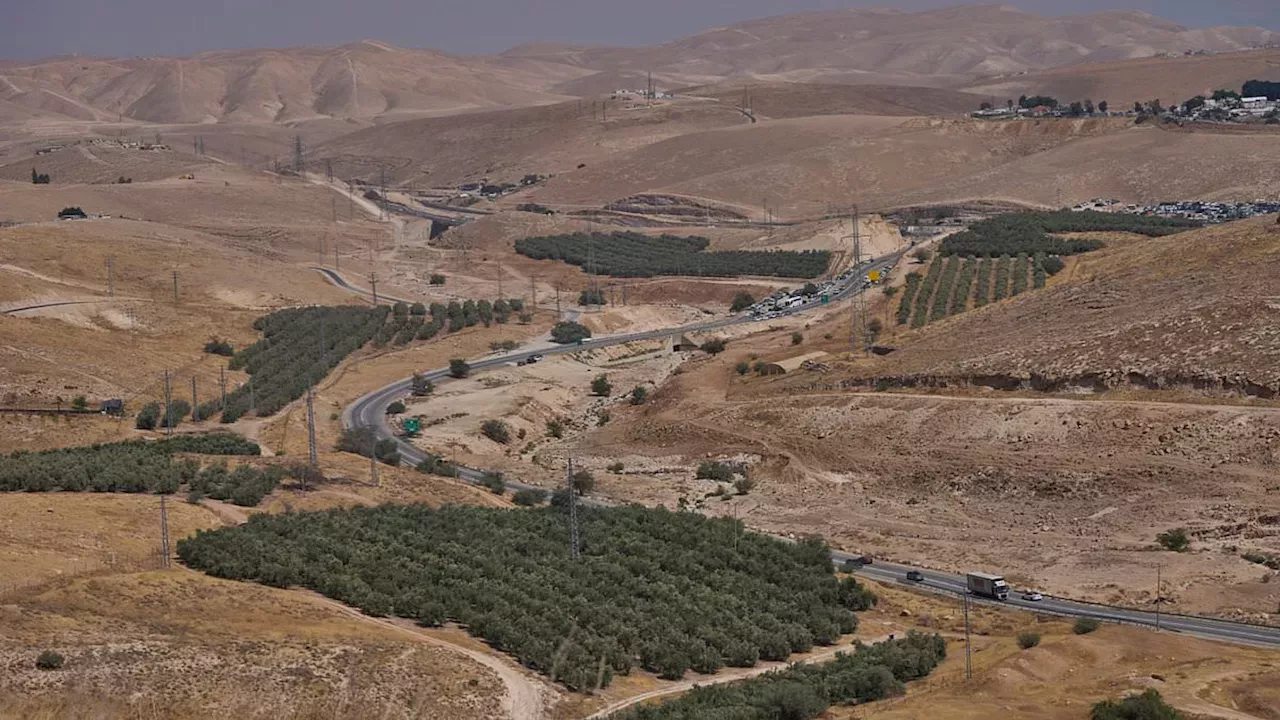
Britain's restrictions follow Israeli advancement of construction plans in the sensitive E1 area connecting Jerusalem to Ma'ale Adumim. TIME and GOV.UK reported critics contend E1 development effectively splits the West Bank in two and severs East Jerusalem from any future Palestinian state. The moves align with UN Security Council Resolution 2334 and a 2024 International Court of Justice advisory opinion declaring Israel's occupation unlawful.
The ban prohibits UK businesses from providing construction, infrastructure, real estate, and advertising services to settlements over the next nine months as legislation enters law. Enforcement focuses on dismantling economic relationships that normalize territorial changes. UN OHCHR data cited by TIME showed 80 settler attacks occurred in mid-August 2026 alone, with over 1,040 Palestinians injured and 79 killed by Israeli forces or settlers through September.
Sentiment
Mostly NegativeNEGATIVENEUTRALPOSITIVE
Publishers
34
Articles
26
Reach
60
A
AnonymousAuthor


