Charter's Broadband Woes
Analysts Trim Charter Price Targets Amid Persistent Broadband Subscriber Losses and Rising Costs
Anonymous
Key Points
1
RBC Capital highlighted Charter's Q2 2026 broadband metrics as a primary concern, noting 172,000 broadband net losses versus 145,000 expected, a 1.7% year-over-year ARPU decline, and an EBITDA miss, with free cash flow of $1.0 billion (about 12% below consensus) despite a 26% trailing FCF yield. Capex ran $2.9 billion (about 3% above consensus) and share buybacks were $838 million (below consensus). RBC also signals a large cost-cutting program as the next logical step and expects the Cox transaction to close in August.
2
TD Cowen cut Charter's price target to $380 from $413 while maintaining a Buy rating, noting ongoing deleveraging and a potential tie-up with Comcast. The firm pointed to in-line revenues and slight EBITDA downside in Q2 2026, with 172,000 broadband losses and ARPU declines; management has tempered expectations for 2026 EBITDA growth, and Starlink is being monitored (Charter says there is no meaningful share loss, including in rural areas).
3
Wells Fargo trimmed Charter's price target to $101 and assigned an underweight rating, emphasizing downside risk amid ongoing subscriber declines and cost pressures.
4
Bernstein reduced its Charter target to $150 from $170 while keeping a Market Outperform rating, signaling a cautious near-term view but suggesting around a 10% upside potential from current levels under typical market conditions.
Charter Communications is under growing pressure from Wall Street, as multiple analysts slashed their price targets following a disappointing second quarter. The cable giant lost 172,000 broadband subscribers in Q2 2026 — well above the 145,000 losses analysts had expected — while revenue per user fell 1.7% year over year, according to Benzinga.
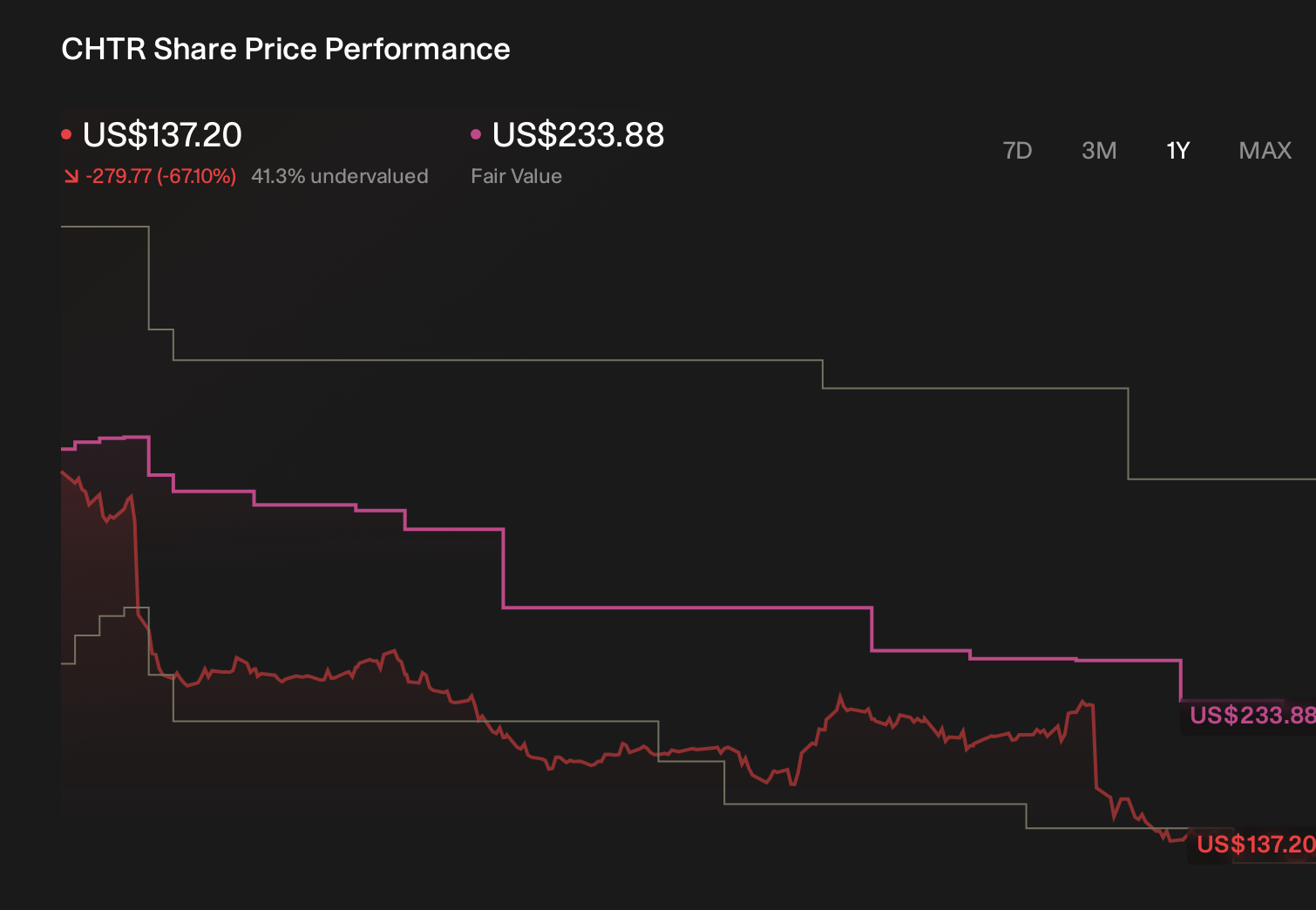
The cuts are broad and deep. Wells Fargo dropped its target all the way to $101 with an underweight rating, while RBC Capital trimmed to $150 and Bernstein cut to $150 from $170. Charter shares have fallen roughly 60% over the past year, per Investing.com.
Broadband Losses Drive a Wave of Target Cuts
RBC Capital maintained its sector perform rating but cut Charter's price target from $160 to $150, according to Watchlist News. The firm flagged 172,000 broadband net losses versus a 145,000 consensus estimate. EBITDA missed expectations, and free cash flow came in at $1.0 billion — about 12% below consensus.
Capital spending ran $2.9 billion, roughly 3% above consensus, while share buybacks of $838 million fell short of what analysts expected. RBC now says a large cost-cutting program is the next logical step for the company.
Wells Fargo Sees the Most Downside at $101
Wells Fargo issued the most bearish call, slashing its price target from $160 to $101 and stamping Charter with an underweight rating. That implies further downside from current trading levels. The firm cited ongoing subscriber declines and rising cost pressures as the core risks, according to Ticker Report.
By contrast, Bernstein trimmed its target from $170 to $150 but kept a Market Outperform rating. That suggests about 10% upside from current levels under normal market conditions. The gap between Wells Fargo and Bernstein shows how divided Wall Street is on Charter's near-term path.
TD Cowen Still Sees a Buy Case, Eyes Comcast Tie-Up
TD Cowen cut its target from $413 to $380 but held onto a Buy rating. The firm pointed to in-line revenues and a slight EBITDA miss in Q2 2026. It sees Charter's ongoing debt reduction and a possible partnership with Comcast as key upside drivers. Management has tempered its expectations for 2026 EBITDA growth.
On the competitive threat from Starlink, Charter's management pushed back firmly. The company said there is no meaningful subscriber loss to the satellite service, including in rural areas where Starlink is most active. TD Cowen said it is continuing to monitor that dynamic closely.
BofA Cuts Too, but the Stock Looks Cheap on Paper
Bank of America also reduced its price target on Charter, cutting from $200 to $160 while keeping a Buy rating, according to Investing.com. The firm acknowledged broadband concerns but still sees long-term value. Charter's stock now trades around $123, down about 60% over the past year.
On a price-to-earnings basis, Charter trades at just 3.24 times earnings — a level some analysts call undervalued. The Cox transaction is expected to close in August, which could reshape the company's scale and cost structure. Investors will watch subscriber trends, cost cuts, and any strategic moves closely in the months ahead.
Sentiment
Mostly NegativeNEGATIVENEUTRALPOSITIVE
Publishers
15
Articles
39
Reach
54
A
AnonymousAuthor


