Russia Aids Niger Loyalist Forces
Russia-backed forces help loyalists suppress a military mutiny in Niger's capital city.
Anonymous
Trending on XFailed coup attempt in Niger
Key Points
1
Russia's Africa Corps provided aerial and ground support to Niger's loyalist forces during the Niamey mutiny, according to Niger's ambassador to Niamey; the Africa Corps is described as the Wagner successor.
2
The mutiny targeted the Bravia Hotel in Niamey, where Russian embassy staff were staying and where members of the AES mutual-defence group were reportedly present, highlighting foreign officials' proximity to the unrest.
3
The episode began with a hostage situation at Base 101 in Niamey, with officials describing the actions as a breach of military discipline and indicating that dozens of soldiers were detained and then either killed or arrested as security forces regained control.
4
The airport in Niamey is a strategic military hub housing Niger's air force base and the joint force headquarters with Burkina Faso and Mali, and it was the focal point of the mutiny with attacks on bases around the site.
5
Turkish drones were reportedly present at the airport as part of broader security ties, underscoring the international dimension of Niger's stability environment during the incident.
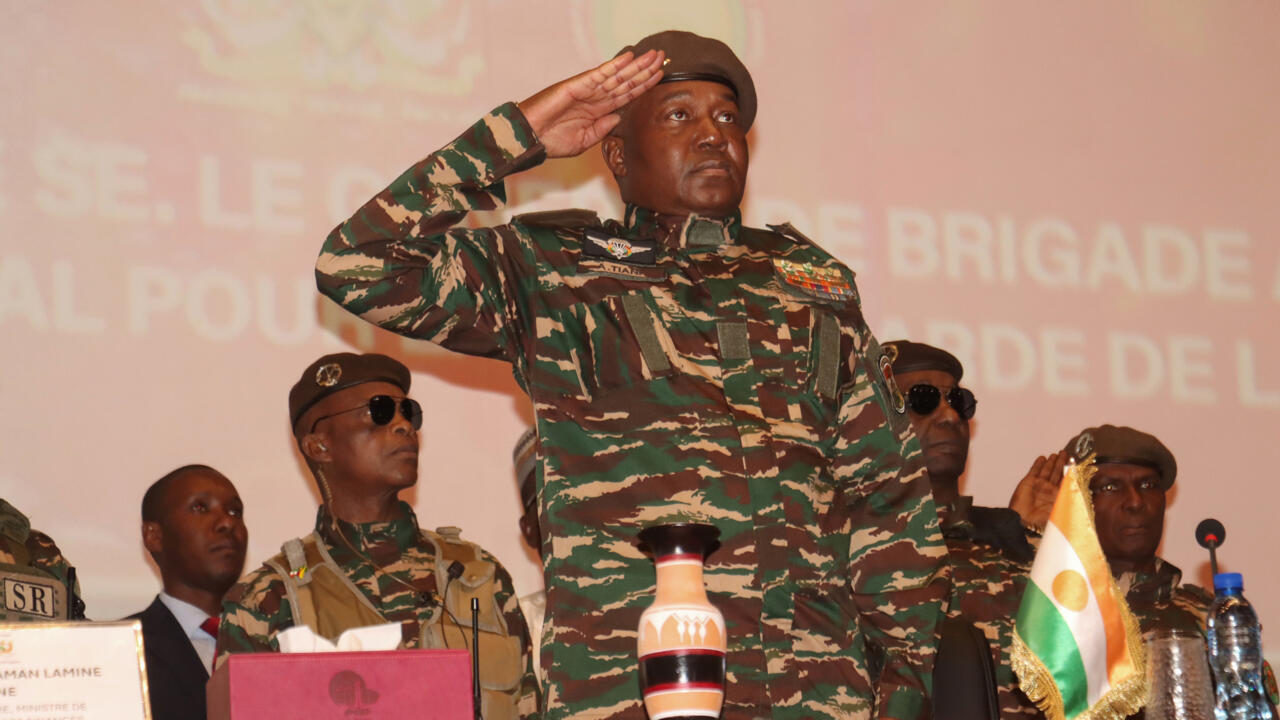
Niger's military junta suppressed a mutiny in the capital Niamey on August 28-29, 2026, after soldiers attacked key military sites including the airport, presidential palace, and state broadcaster. RFI reported that Russia's Africa Corps—the successor to the Wagner Group—provided crucial aerial and ground support to loyalist forces, marking a direct intervention by Moscow to prop up the regime of General Abdourahamane Tchiani.
Dozens of soldiers were killed or arrested during the clashes around Air Base 101 and Diori Hamani International Airport. The mutiny, led by junior officers disgruntled over mounting battlefield losses and poor conditions, represents the third major assault on Niamey's airport complex this year and exposes deep fractures within Niger's armed forces.
Russia's Africa Corps Intervenes to Save the Junta
When mutineers stormed Air Base 101 on Friday night, Niger's command immediately called for help from Russia's Africa Corps. RFI confirmed that Russian ground troops and aircraft moved in alongside Niger's Presidential Guard to suppress the uprising. Russian Ambassador Viktor Voropaev told state media that mutineers tried to break into the Bravia Hotel, where Russian diplomats and regional leaders were staying, but "was successfully repelled" by the combined forces.
On Saturday evening, Niger's Defense Minister Gen. Salifou Mody announced on national television that security forces had "gradually control[led] the situation." Moscow formally confirmed the Africa Corps intervention the next day. The rapid Russian response underscores the junta's complete dependence on foreign military support—just one year after expelling French and U.S. forces from the country.
Junior Officers Revolt Over Battlefield Losses
The mutineers were young officers from Tillabéri and Dosso regions angry over unacknowledged deaths, poor conditions, and mounting casualties in the fight against JNIM and ISIS-Sahel jihadists. These soldiers had been bleeding in the Sahel for months while the junta received little credit for their sacrifice. Their assault on the airport, presidential palace, and state broadcaster RTN signaled an attempt to shake up the regime itself—not just a minor disciplinary breach.
The fact that this was the third major attack on Niamey's airport military complex in 2026 alone suggests a pattern of internal unrest. Associated Press quoted analyst Wassim Nasr from the Soufan Center noting that while loyalists retained control, the event "highlights severe vulnerabilities inside the ranks" of Niger's armed forces.
Strategic Sites and Uranium at Risk During Clashes
The mutiny targeted three critical infrastructure points: Diori Hamani International Airport (home to Niger's air force base and joint headquarters with Mali and Burkina Faso), the presidential palace, and the state TV station RTN. Mutineers briefly seized the broadcaster before loyalist forces reclaimed it. The airport remained the focal point of fighting, with civil aviation authorities suspending all flights during the crisis.
Air Base 101, the heart of the mutiny, stores approximately 1,000 tonnes of uranium concentrate—a fact that raised alarm among international observers watching internal Niger unrest unfold. The presence of Turkish drones at the airport and Russian forces on the ground underscores how many foreign powers now have a stake in keeping Niger's junta in power and its uranium secured.
Junta's Control Depends Entirely on Foreign Forces
The swift suppression of the mutiny exposed a hard truth: General Tchiani's regime cannot survive without Russia. Since taking power in July 2023, the junta expelled France and the United States, betting everything on Moscow. An estimated 200 to 300 Africa Corps personnel now operate inside Niger, providing security that the junta's own officers increasingly cannot guarantee.
Regional allies Mali and Burkina Faso issued statements of solidarity through the AES (Alliance of Sahel States), while Algeria sent SU-30 fighter jets and aerial refueling tankers to support Niamey. Yet none of these partners deployed troops to suppress the mutiny—only Russia did. This dynamic raises a critical question: how long can a military regime survive when its own soldiers openly rebel and foreign mercenaries must save it?
Sentiment
Mostly NegativeNEGATIVENEUTRALPOSITIVE
Publishers
27
Articles
54
Reach
81
A
AnonymousAuthor


