Advanced Rocket Funding
Venus Aerospace Secures $90M Series B to Accelerate Next-Gen Rocket Engine Development
Anonymous
Key Points
1
The Aether-1 engine claims a specific impulse of 345 seconds and a thrust-to-weight ratio of 180:1, surpassing SpaceX's Merlin 1D (318 s) and Blue Origin's BE-4 (322 s).
2
Aether-1 reportedly uses tungsten-rhenium alloy in the combustion chamber capable of withstanding temperatures above 3,000°C, enabling more than 100 reuse cycles (a significant improvement over the 30–70 cycles typical for Merlin 1D and BE-4).
3
Venus is leveraging additive manufacturing for critical components like the nozzle and combustion chamber, with a MIT engineer noting this approach reduces the part count by about 40%.
4
Venus is open-sourcing its engine control software via a developer portal to spur interoperability, but policy experts warn that open platforms can fragment industry standards.
5
The company faces competition from Vector Space Systems, which has developed a 3D-printed methane engine, highlighting a crowded field of next‑gen propulsion startups.
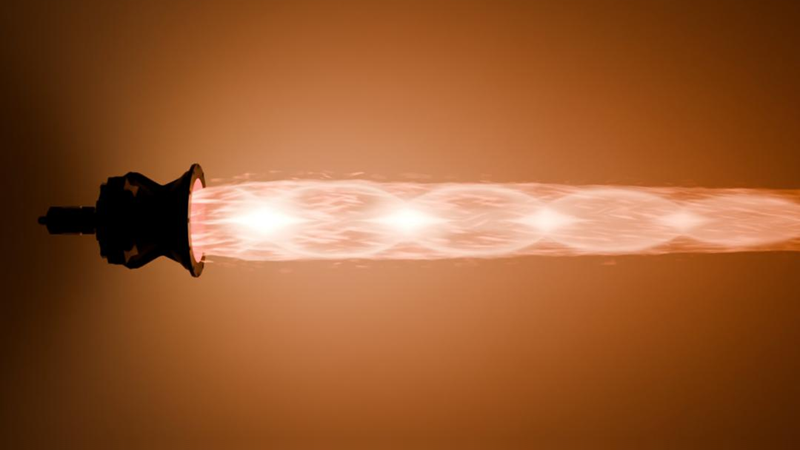
Venus Aerospace has raised $90–91 million in a Series B round to build what it calls a breakthrough rocket engine, according to TechCrunch and Finsmes. The Houston-based startup says its Rotating Detonation Rocket Engine — or RDRE — delivers higher thrust and better fuel efficiency than engines used by SpaceX and Blue Origin.
The round was led by Mercury Fund, with money from Lockheed Martin Ventures, MESH, and PEAK6, among others, Finsmes reported. The funds will go toward testing and scaling the RDRE for defense, space, and high-speed flight.
How the RDRE Outperforms SpaceX and Blue Origin Engines
Venus's Aether-1 engine claims a specific impulse of 345 seconds — a measure of fuel efficiency. That beats SpaceX's Merlin 1D at 318 seconds and Blue Origin's BE-4 at 322 seconds. Its thrust-to-weight ratio hits 180:1, also higher than both rivals.
The combustion chamber uses a tungsten-rhenium alloy that can handle temperatures above 3,000°C. That allows the engine to run more than 100 reuse cycles. By comparison, the Merlin 1D and BE-4 typically manage 30 to 70 cycles. The RDRE works by spinning a continuous supersonic detonation wave inside a rotating chamber, squeezing more energy from each burn.
3D Printing Cuts Parts and Costs in Production
Venus uses additive manufacturing — commonly called 3D printing — to build critical parts like the nozzle and combustion chamber. An MIT engineer noted the approach cuts the total part count by about 40%. Fewer parts mean lower costs and faster production, TechCrunch reported.
The company says this also supports domestic manufacturing and reduces reliance on foreign-sourced components. Founders Sassie Duggleby and Andrew Duggleby have framed the RDRE as a practical engine — one built for efficiency, throttling, reusability, and real-world production at scale.
Defense Contracts, Mars Missions, and a May 2025 Flight Test
Venus reported a May 2025 flight test as a key milestone. The company is also working toward a 2027 Mars sample-return partnership with the European Space Agency. The FAA and ESA are both reviewing its launch operations, according to Head Topics.
Defense applications are a major target. Lockheed Martin Ventures — the investment arm of one of the world's largest defense contractors — joined this round, signaling military interest in the RDRE technology. Venus says the engine fits a range of mission types, from satellite launches to hypersonic flight.
Open-Source Software Push Draws Both Interest and Warnings
Venus is open-sourcing its engine control software through a developer portal. The goal is to make the RDRE easier to integrate with other systems. But policy experts warn that open platforms can fragment industry standards, creating compatibility problems across the sector.
The company also faces stiff competition. Vector Space Systems has developed its own 3D-printed methane engine, and the broader market for next-generation propulsion startups is crowded. Venus will need to move fast — its Series B cash is meant to get the RDRE from testing to production-ready hardware.
Sentiment
Mostly PositiveNEGATIVENEUTRALPOSITIVE
Publishers
17
Articles
11
Reach
28
A
AnonymousAuthor


