Huawei Chip Roadmap
Huawei unveils accelerated AI chip roadmap to reduce reliance on U.S. technology
Anonymous
Key Points
1
Huawei said the Ascend 960DT’s launch was accelerated by nine months to the first quarter of 2027, with the chip designed for AI training and expected to deliver “performance doubling.”
2
Huawei introduced near-packaged optics (NPOs) to its SuperPoD architecture for the first time, saying the technology can increase connection speeds while reducing energy use.
3
Analyst George Chen said the timing of Huawei’s announcement, shortly before an expected meeting between Donald Trump and Xi Jinping, underscored “Beijing’s confidence and ambition in technology and innovation.”
4
U.S. President Donald Trump has framed the competition in particularly stark terms, saying: “Whoever wins in AI, wins,” while analysts cautioned that China’s advanced AI development still frequently relies on U.S. chips, including Nvidia processors.
5
Huawei’s domestic push is part of a broader Chinese chip-industry response: Tencent-backed AI-chip startup Enflame Technology recently listed in Shanghai, with its shares nearly tripling on the first day of trading.
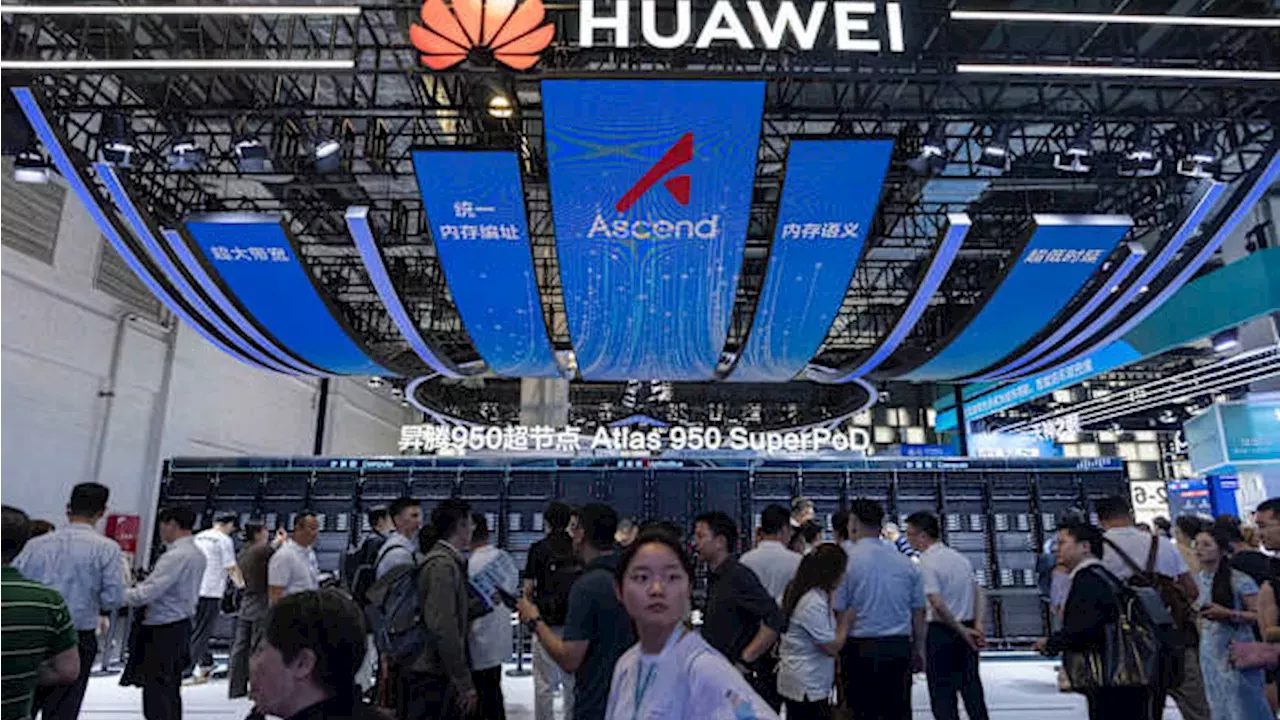
Huawei announced a new lineup of AI chips aimed at challenging Nvidia, as China races to build semiconductors free from U.S. restrictions. The company will launch the Ascend 960DT for AI training in the first quarter of 2027—nine months earlier than originally planned—followed by the Ascend 960PR for inference in the third quarter Bloomberg Law. Future chips like the Ascend 970 and 980 are slated for 2028 and 2029.
Huawei has already shipped more than 1,000 linked AI systems to over 370 customers, signaling rapid adoption of its technology stack TelanganaToday. The timing—just before expected U.S.-China trade talks—underscores Beijing's confidence in its AI ambitions, though analysts warn that Chinese AI development still partly depends on U.S. chips.
Accelerated Chip Timeline Targets Nvidia's Dominance
Huawei moved up the Ascend 960DT launch by nine months, aiming to shrink the gap with Nvidia's lead Bloomberg Law. The 960DT is built for AI training and promises "performance doubling" compared to earlier generations. The follow-up 960PR chip for inference will arrive later in 2027, creating a complete product stack.
This acceleration reflects mounting pressure from U.S. export controls that have blocked China's access to cutting-edge semiconductors and manufacturing tools Archynetys. Huawei's roadmap extends to the Ascend 970 and 980, mapping out chip releases through 2029 to sustain momentum.
SuperPoD Systems Link Thousands of Processors Together
Huawei introduced near-packaged optics (NPOs) to its SuperPoD architecture for the first time, speeding up connections between processors while cutting energy use TelanganaToday. The upgraded SuperPoD can now connect up to 4,000 processors, a major jump from prior limits. Huawei is developing systems capable of linking up to 1 million processors.
The UnifiedBus technology ties multiple processors into large AI clusters, mimicking the scale and performance of Nvidia's GPU systems Archynetys. These systems let companies train frontier AI models at home, reducing reliance on buying chips from foreign suppliers.
China's Broader Push for Chip Self-Sufficiency
Huawei's move fits a wider Chinese strategy to build an independent semiconductor industry. Tencent-backed AI-chip startup Enflame Technology recently listed on the Shanghai exchange, with shares nearly tripling on day one TelanganaToday. The momentum signals investor confidence in homegrown alternatives to U.S. chip makers.
Analyst George Chen said the timing of Huawei's announcement, before expected talks between Donald Trump and Xi Jinping, showed "Beijing's confidence and ambition in technology and innovation" Archynetys. Yet experts caution that China's most advanced AI labs still rely partly on U.S. chips, including Nvidia processors, limiting how quickly the shift can happen.
Sentiment
Mostly PositiveNEGATIVENEUTRALPOSITIVE
Publishers
70
Articles
367
Reach
437
A
AnonymousAuthor


