German Auto Workers Protest Nationwide Job Cuts
German Auto Workers Protest Nationwide Job Cuts
Anonymous
Key Points
1
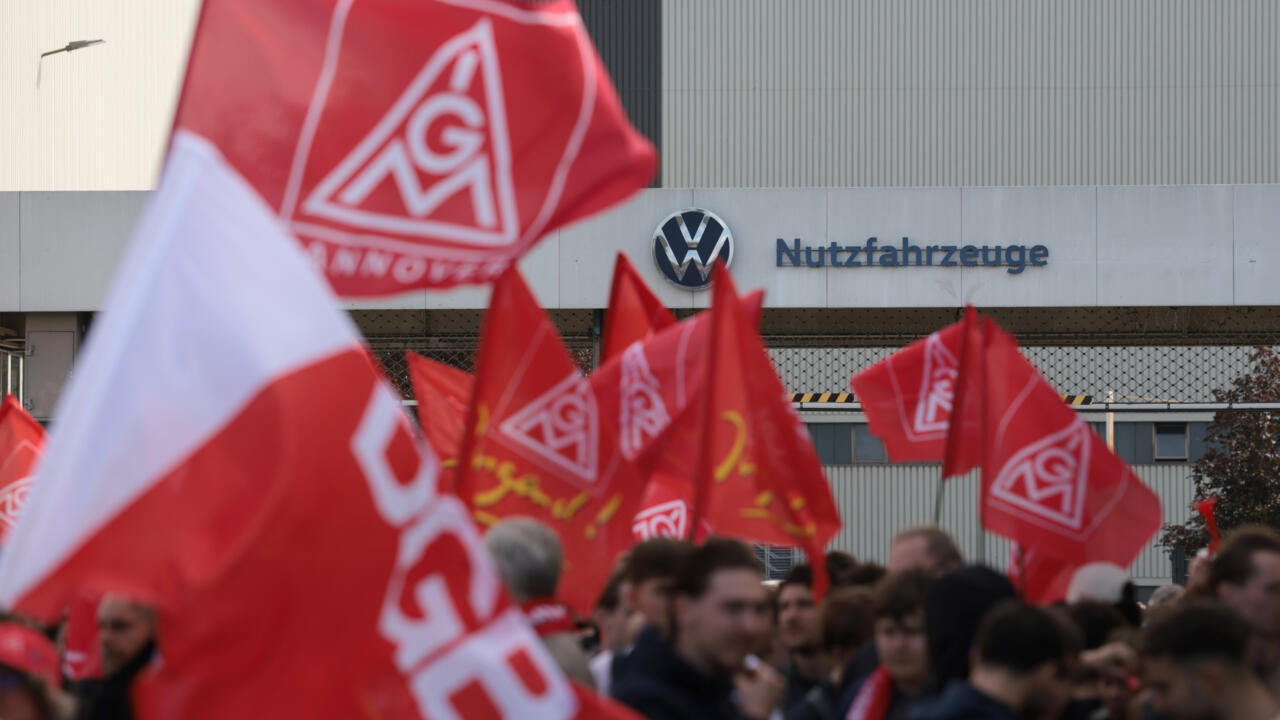
IG Metall organized more than 200 workplace meetings, extended lunch-break protests, marches and rallies across Germany, with participation expected to exceed 100,000 people. The action was held under the slogan “Future instead of devastation — solidarity is our strongest brand.”
2
The protests came less than three days after Volkswagen’s profit warning and coincided with the results of two German state elections, underscoring the broader political significance of the automotive-sector crisis.
3
Volkswagen attributed its reduced 2026 margin outlook not only to weak Chinese demand but also to higher provisions for retirements and more pessimistic expectations for its Porsche sports-car business.
4
The profit warning immediately affected listed companies: Volkswagen shares fell 0.6%, Porsche shares dropped 2.3%, and Porsche SE, Volkswagen’s largest shareholder, declined 2.9%.
Tens of thousands of German auto workers staged nationwide protests demanding job protection as Volkswagen, BMW, Bosch and other manufacturers face a deepening crisis. Bloomberg Law reported that the demonstrations, held under the banner "Future instead of devastation — solidarity is our strongest brand," involved more than 200 workplace meetings and rallies across Germany, with participation expected to exceed 100,000 people. The action came less than three days after Volkswagen warned that its 2026 profit margin could fall to just 1%, the lowest in years.
Head Topics noted the protests reflected growing desperation over Chinese competition, weak domestic demand, and U.S. tariffs that are squeezing Europe's auto sector. IG Metall union leaders blamed management failures in electric vehicles, software and battery technology for leaving German manufacturers behind competitors in Asia. Workers are demanding lower electricity costs, reduced bureaucracy, stronger European subsidies, and protection for the 35-hour workweek.
Why Volkswagen's Profit Warning Triggered the Crisis
Volkswagen's announcement that 2026 profit margins could drop to 1% sent shockwaves through German industry. Bloomberg Law reported the warning reflected weak Chinese demand, higher retirement provisions, and bleaker expectations for the Porsche sports-car division. The company plans to cut 50,000 jobs — its largest workforce reduction ever.
The profit alert immediately hit stock prices: Volkswagen shares fell 0.6%, Porsche dropped 2.3%, and Porsche SE, VW's largest shareholder, declined 2.9%. Strategic News Global noted the job cuts signal management's desperation to restore margins under intense pressure.
Chinese Competition and Excess Capacity Crush Margins
German automakers face a perfect storm of challenges. France24 reported that growing Chinese competition, combined with weak domestic demand and U.S. tariffs, has created a structural crisis. Volkswagen's excess production capacity and inability to compete on price or technology in key markets have left the company scrambling.
IG Metall leaders argued management made strategic mistakes that allowed Asian competitors to gain ground in electric vehicles and battery technology. The union says reinvestment in German plants and stronger government support are the only way to reverse the decline and protect employment across the supply chain.
Union Demands: Investment, Subsidies and Job Protection
Workers are pushing a four-part agenda: lower electricity prices to reduce manufacturing costs, reduced bureaucracy to speed decision-making, stronger European subsidies to compete with Asian and American support, and U.S. tariffs to level the playing field. Head Topics reported the protests emphasized that government action is as critical as corporate strategy.
The union also demands preservation of the 35-hour workweek and phased-retirement programs. IG Metall frames these protections not as nostalgia but as necessary measures to keep plants operating in Germany rather than relocating production to lower-cost regions.
Sentiment
Mostly NegativeNEGATIVENEUTRALPOSITIVE
Publishers
15
Articles
43
Reach
58
A
AnonymousAuthor