Renewed Tigray Conflict
Internet Blackout Reported in Tigray Amid Renewed Fighting in Northern Ethiopia
Anonymous
Key Points
1
The 2020–2022 civil war killed an estimated 600,000 people, underscoring the stakes of renewed fighting.
2
A humanitarian source reported heavy overnight fighting near Abala, on the Tigray–Afar border, and said federal forces pushed rebel fighters back from entering the town using a drone.
3
Clashes in Amhara included fighting around Lalibela, a UNESCO World Heritage site known for its rock-hewn churches.
4
Analysts suggested the TPLF’s push into Afar could be intended to disrupt supply routes from Djibouti, which handles almost all of Ethiopia’s international trade cargo, including fuel. Verisk Maplecroft’s Edward Bach said the wider alliance may be targeting settlements along key infrastructure routes to weaken federal supply capacity.
5
The federal government retains a substantial military advantage, including an army of about 500,000, a large drone arsenal and support from external actors, notably the United Arab Emirates.
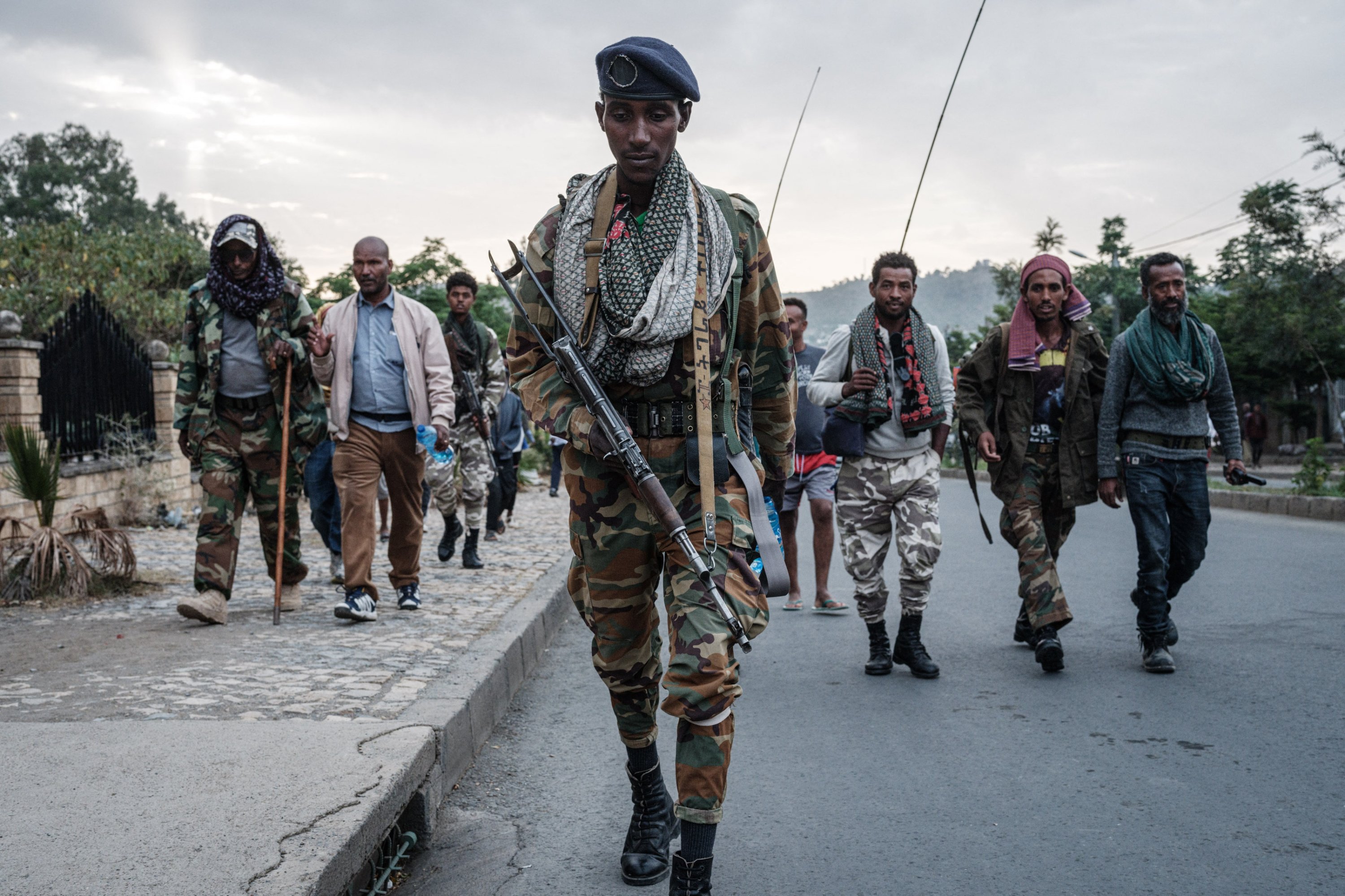
Internet and telecommunications services went dark across Ethiopia's Tigray region as the Tigray People's Liberation Front declared all-out war against the federal government, according to NetBlocks. The blackout coincides with heavy fighting on multiple fronts — rebels seized regional airports, clashed with federal forces in neighboring Afar and Amhara, and residents fear a return to the devastating communications isolation of the 2020–2022 civil war that killed an estimated 600,000 people.
The cause of the internet disruption remains unclear, but the timing is significant. Deutsche Welle reported that the blackout makes it harder for journalists to contact sources in the region, potentially obscuring the true scale of renewed violence along critical supply routes from Djibouti, which handles nearly all of Ethiopia's international trade cargo including fuel.
TPLF Seizes Airports, Expands Fighting Into Two States
The Tigray People's Liberation Front launched coordinated attacks across multiple regions after declaring a "full-blown war." Daily Sabah reported that rebels seized several local airports in Tigray and launched strikes into neighboring Afar and Amhara. A humanitarian source told The Hindu that heavy overnight fighting erupted near Abala on the Tigray–Afar border, where federal forces used drones to push rebel fighters back from entering the town.
Clashes spread to UNESCO World Heritage sites. Communications Today noted that fighting around Lalibela in Amhara region endangered the ancient rock-hewn churches that draw pilgrims worldwide. The TPLF's strategy appears designed to test the federal government's ability to respond on multiple fronts simultaneously.
Rebels May Target Supply Lifeline From Djibouti
Military analysts say the TPLF's push into Afar could be intended to cut off federal supply routes. Edward Bach from Verisk Maplecroft warned that the wider rebel alliance may be targeting settlements along key infrastructure routes to weaken federal supply capacity. Djibouti's port handles almost all Ethiopian international trade cargo, including fuel shipments critical to the capital Addis Ababa.
If rebels succeed in disrupting these supply lines, Ethiopia's economy could face severe shortages. Streamline Feed reported that residents fear a return to the communications and supply blockade imposed during the 2020–2022 war, when the region was cut off for months.
Federal Government Maintains Military Edge Despite Alliance
Despite the TPLF's coordinated offensive and its alignment with other armed groups, the federal government retains substantial advantages. Ethiopia's army numbers about 500,000 troops. The federal government also controls a large drone arsenal and receives external military support, notably from the United Arab Emirates, giving it significant firepower.
This military imbalance suggests the federal forces can likely contain the initial rebel surge. However, the 2020–2022 war showed that numerical superiority alone cannot guarantee quick victory in Ethiopia's complex terrain. Prolonged fighting would again isolate Tigray from the world and deepen humanitarian suffering across the region.
Sentiment
Mostly NegativeNEGATIVENEUTRALPOSITIVE
Publishers
21
Articles
134
Reach
155
A
AnonymousAuthor


