SpaceX AI Revenue Projection
Analyst projects SpaceX AI computing agreements could reach $54 billion in annualized revenue.
Anonymous
Key Points
1
SpaceX reported $7.81 billion in second-quarter revenue, including $4.29 billion from Connectivity. Connectivity generated $1.66 billion in operating income, while the Space segment recorded a $542 million operating loss.
2
Starship Flight 14 was described as the rocket’s first revenue-generating flight. A premature shutdown of one main engine cut the planned 10-hour mission to about three hours, according to Reuters.
3
SpaceX reported 12 million Starlink subscriber service lines as of June 30, double the 6 million reported a year earlier.
4
Korea Aerospace Industries space chief Seo Hyun-seok said AI-enabled satellites could filter out unneeded imagery, such as cloud-covered images, before transmission and analyze data in orbit for uses including forest monitoring, agriculture and disaster observation.
SpaceX's AI-computing contracts could generate roughly $54 billion in annualized revenue, according to Needham Equity Research, potentially bringing the company closer to its $100 billion annual revenue goal for 2026. However, Needham Equity Research analyst Ryan Koontz warned that these contracts will ramp up gradually and may not renew, tempering long-term projections.
The AI push comes as SpaceX's Starship rocket achieved a major milestone on September 28, reaching orbit and deploying 26 Starlink V3 satellites despite an engine shutdown that cut the mission short. The flight marked Starship's first revenue-generating launch and advances SpaceX's plan to use the rocket for larger satellite deployments Reuters.
AI Datacenter Deals Could Reshape Space Economics
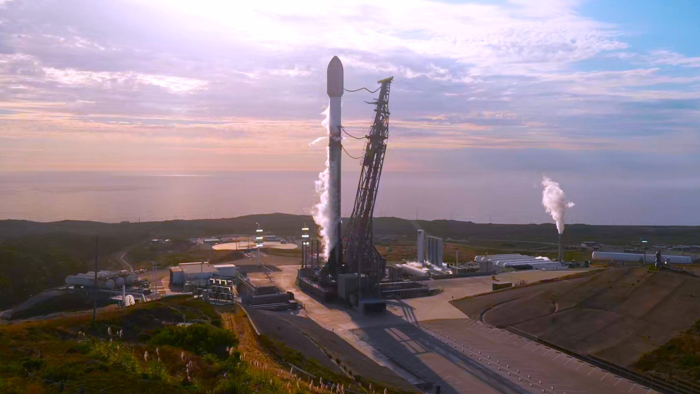
SpaceX is leveraging its rocket and satellite infrastructure to enter the booming AI computing market. ZeroHedge reported that SpaceX will launch Google's specialized AI chips into low Earth orbit from Vandenberg Space Force Base aboard a Falcon 9 rocket. Crypto Briefing also disclosed that SpaceX held talks with Microsoft about leasing computing capacity to the software giant.
The $54 billion revenue projection reflects SpaceX's broader shift toward on-orbit data processing. Rather than transmitting massive amounts of raw data to Earth, AI-enabled satellites can filter and analyze information in space, reducing transmission costs and latency significantly.
Starlink's Profitability Offsets SpaceX's Launch Losses
SpaceX's connectivity business remains a bright spot financially. In Q2, Starlink generated $4.29 billion in revenue and $1.66 billion in operating income, while the Space segment recorded a $542 million operating loss. Starlink's subscriber lines have roughly doubled year-over-year to 12 million as of June 30.
This profitability cushion matters because SpaceX's launch and satellite operations remain capital-intensive and unprofitable. As Starship scales up and the company pursues AI revenue, Starlink cash flow provides the runway SpaceX needs to invest in new markets without sacrificing near-term valuations.
Starship's First Revenue Flight Shows Progress
Starship Flight 14 proved the rocket can reach orbit and deploy payloads despite technical setbacks. Reuters reported that a premature engine shutdown reduced the planned 10-hour mission to roughly three hours. Despite the cutback, all 26 Starlink V3 satellites deployed successfully into orbit.
The flight demonstrates why Yahoo Finance framed Starship as central to SpaceX's $2 trillion valuation. Each successful orbital flight brings SpaceX closer to using Starship as a dedicated AI-datacenter launch vehicle and reduces costs for larger satellite deployments.
Space-Based AI Transforms Earth Observation
Satellites equipped with AI can now perform intelligence in orbit rather than simply collecting raw data. Spaceflight Now covered how AI prototypes launched aboard SpaceX's Transporter-18 mission represent a new class of space-based computing. Korea Aerospace Industries space chief Seo Hyun-seok explained that AI satellites can filter cloud-covered imagery and analyze data for agriculture, forest monitoring, and disaster response.
This shift reduces the volume of data transmission costs and enables faster decision-making in critical applications. Combined with SpaceX's low-cost launch capability, on-orbit AI processing could unlock entirely new use cases for satellite operators and drive demand for SpaceX's launch and computing services.
Sentiment
Mostly PositiveNEGATIVENEUTRALPOSITIVE
Publishers
20
Articles
57
Reach
77
A
AnonymousAuthor


