Memory Production Expansion
CXMT Begins Fifth-Generation DRAM Production and Considers Strategic NAND Memory Expansion
Anonymous
Key Points
1
The G5 platform is offered in 496-ball and 245-ball package configurations. It also uses a 45:1 array-capacitor aspect ratio, a DRAM-optimized high-k metal-gate process and new material integration to reduce the core-cell array height to 6,762 nanometers.
2
CXMT said it developed a digital-twin system covering the full product lifecycle—from design and development through manufacturing and maintenance—to shorten research-and-development cycles. The company also cited progress in interface engineering, saddle-fin structures and low-k spacer bitlines.
3
The reported NAND expansion initially lifted CXMT shares 3.4% to 55.29 yuan, underscoring the market’s reaction to the company’s potential move beyond DRAM into flash memory.
4
AI data-center investment has led major memory manufacturers to prioritize high-margin products such as high-bandwidth memory (HBM), while capital spending on DRAM and HBM has limited additions to NAND capacity. That shift has contributed to supply bottlenecks and rising prices for general-purpose DDR4 and DDR5 memory.
5
CXMT is positioning itself primarily as a high-volume, cost-effective supplier for mainstream consumer and server hardware, while Samsung, SK Hynix and Micron continue to lead in cutting-edge process nodes and advanced AI memory.
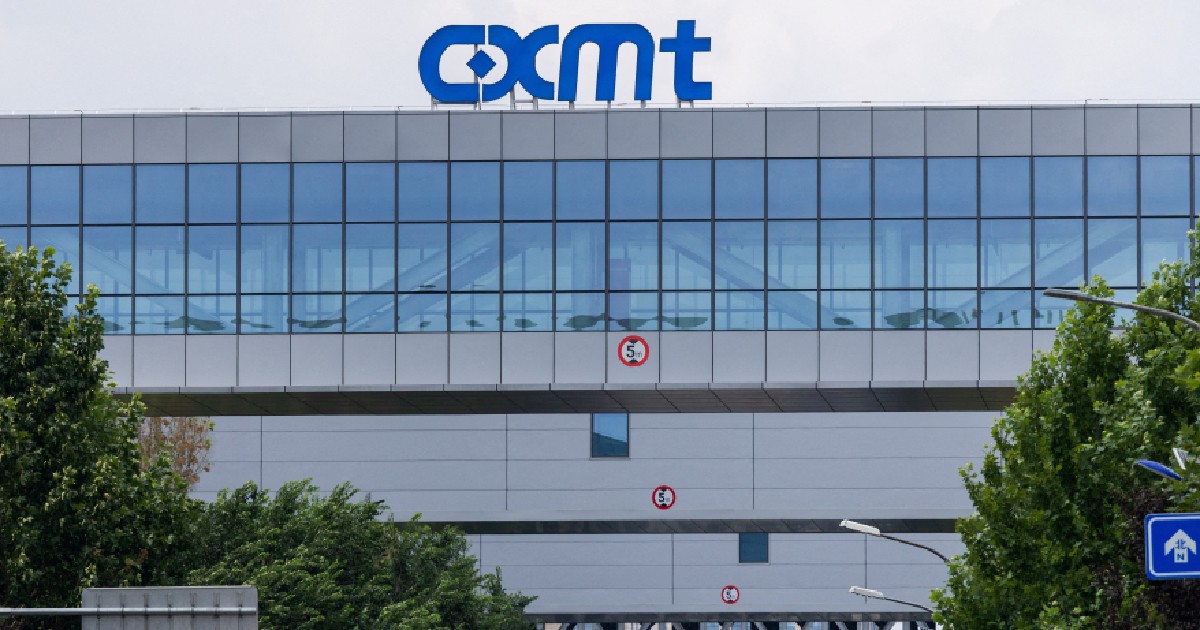
Chinese memory maker CXMT has begun mass production of its fifth-generation DRAM platform, introducing two 24Gb LPDDR5X chips that pack 50% more capacity than the previous generation Trendforce. The achievement marks a major step toward challenging Samsung, SK Hynix, and Micron in the global memory market, backed by an $8.6 billion IPO and a reported $3 billion supply deal with Tencent Reuters.
CXMT's G5 process uses self-aligned quadruple patterning to reach an 11.95-nanometer half-pitch while boosting output by at least 50% per wafer Trendforce. The company plans to ramp monthly production from roughly 300,000 wafers today to 375,000 by year-end 2026, capitalizing on AI-driven demand and persistent memory shortages expected through 2027 Reuters.
G5 Platform Delivers Density Leap Without Advanced Lithography
CXMT engineered the G5 to achieve significant miniaturization without relying on extreme ultraviolet (EUV) lithography, a technology restricted by US export controls TheRegister. The design cuts the core-cell array height to 6,762 nanometers and uses a 45:1 array-capacitor aspect ratio, along with high-k metal-gate processing and saddle-fin structures Pandaily. The 24Gb LPDDR5X chips come in 496-ball and 245-ball package options for smartphones and portable electronics.
CXMT Launches Digital-Twin System to Speed Chip Development
To accelerate research cycles, CXMT built a digital-twin platform covering the entire product lifecycle—from design and manufacturing through maintenance Pandaily. The system simulates production processes and yield challenges before chips reach the fab, reducing costly trial-and-error cycles. CXMT also advanced interface engineering and low-k spacer bitline designs to optimize performance and power efficiency in the G5 platform.
Potential NAND Expansion Signals Major Strategic Shift
CXMT is exploring a 3D NAND flash production line at a planned Beijing facility, a move that would pit it against China's Yangtze Memory Technologies and global NAND leaders Reuters. The company has held preliminary discussions with potential customers, including an AI-focused storage firm, though commercial-scale production remains years away. News of the plan lifted CXMT shares 3.4% to 55.29 yuan, signaling investor appetite for diversification beyond DRAM Reuters.
AI Memory Boom Creates Opening for Mainstream DRAM Suppliers
Samsung, SK Hynix, and Micron are pouring capital into high-bandwidth memory for AI data centers, leaving supply gaps in standard DDR4 and DDR5 for consumer and server hardware Reuters. CXMT is filling that void as a high-volume, cost-effective alternative. The company increased monthly wafer output from about 40,000 in 2020 to roughly 300,000 today, supported by its $8.6 billion IPO and the multi-year Tencent supply pact worth approximately $3 billion Reuters.
Sentiment
Mostly PositiveNEGATIVENEUTRALPOSITIVE
Publishers
35
Articles
100
Reach
135
A
AnonymousAuthor


