Apology Over Offensive Remarks
Journalist Rula Jebreal Apologizes After Using Offensive Language Toward Hakeem Jeffries
Anonymous
Key Points
1
Podcast host Wajahat Ali intervened after the remark, acknowledging that calling a Black person a “monkey” carries “terrible racial connotations” while noting that Jebreal said she did not intend racial animosity.
2
Jeffries had not publicly responded to Jebreal’s comments at the time of the reports.
3
Jebreal’s criticism of Israel predates the controversy: she has called for sanctions and an arms embargo against Israel and argued that the Gaza war reflects broader violations of international law.
4
Jebreal has worked as a foreign-policy analyst for multiple publications and previously worked with MSNBC, providing context about her public media background beyond her role as a critic of Israel.
5
The reports say Jeffries has received substantial donations linked to AIPAC over the course of his political career, the financial relationship Jebreal cited in attacking his pro-Israel stance.
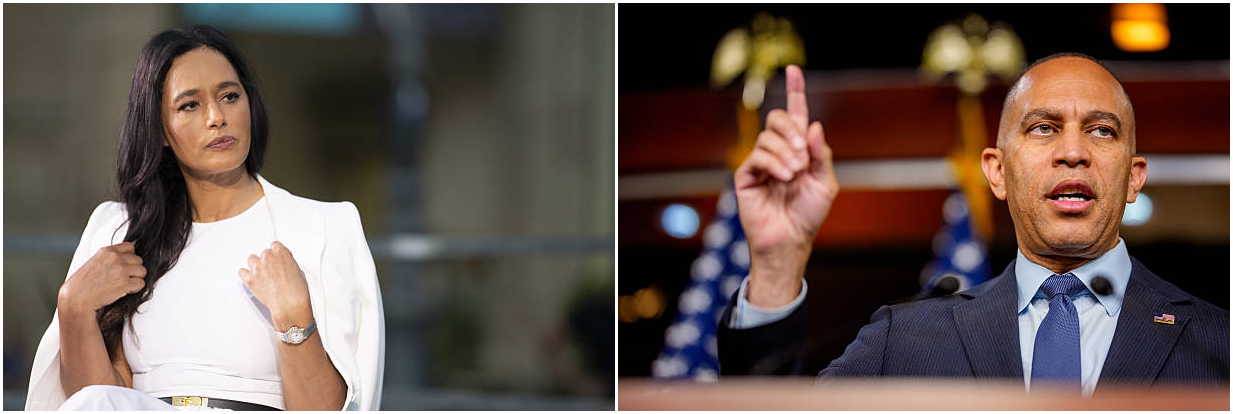
Palestinian-Italian journalist Rula Jebreal apologized after calling House Minority Leader Hakeem Jeffries an "AIPAC monkey" and "errand boy" on a podcast, sparking backlash from the Congressional Black Caucus and other Democratic leaders. TheGrio reported that Jebreal said she did not intend the remark racially and explained she was referencing the "three wise monkeys," but lawmakers said no context makes such language acceptable when directed at a Black official.
The clash exposes deep fractures within the Democratic Party over Israel policy, AIPAC's political influence, and competing accusations of racism. Jebreal's criticism of Jeffries centers on his support for Israel and campaign donations linked to pro-Israel groups, while opponents argue that calling a Black person a "monkey" carries "terrible racial connotations" regardless of intent according to Wajahat Ali, the podcast host who intervened during the exchange.
What Jebreal Said and Why It Triggered Backlash
On The Left Hook podcast, Jebreal attacked Jeffries for his pro-Israel stance and alleged financial ties to AIPAC, the main pro-Israel lobbying group. ThyBlackMan reported that she used the phrase "AIPAC monkey" and called Jeffries an "errand boy." The language drew immediate criticism because "monkey" is a slur historically used to dehumanize Black people.
Jebreal later said she meant no racial insult and was alluding to the "three wise monkeys" folk tale, which represents the idea of ignoring wrongdoing. The Congressional Black Caucus rejected this explanation, stating: "People get comfortable being openly bigoted." Rep. Ritchie Torres and other Democratic leaders said no amount of intent erases the term's racial meaning when directed at a Black lawmaker.
A Long Record of Jebreal's Israel Criticism
Jebreal's attack on Jeffries reflects years of public opposition to Israeli government policy. She has called for international sanctions against Israel, an arms embargo, and argues that Israel's war in Gaza violates international law. Her work as a foreign-policy analyst at major publications and her previous role with MSNBC positioned her as a high-profile voice on Middle East issues and Israeli-Palestinian conflict.
Jebreal's criticism focuses on Jeffries' voting record and fundraising. According to available reports, Jeffries has received substantial campaign donations from donors linked to AIPAC throughout his political career. Jebreal used this fact to argue that he prioritizes pro-Israel lobbying interests over other Democratic priorities, particularly regarding Gaza.
Democrats Divided Over Israel and Political Influence
The controversy reveals fractures within Democratic foreign policy that cross traditional lines of ideology and race. Established Democrats like Jeffries maintain strong support for Israel. Progressive activists and some New York politicians demand tougher criticism, sanctions, and arms embargoes. The Congressional Black Caucus and others argue that these policy debates must remain separate from slurs or dehumanizing language.
The episode highlights a collision between three concerns: legitimate criticism of Israel's conduct, accountability for AIPAC's political spending, and protection against racist speech. Demonstrating that a lawmaker receives donations or aligns with a lobby group is not the same as proving they are controlled by that group. Evidence requires comparing funding, voting records, public statements, and policy choices over time—not assumptions based on campaign contributions alone.
Jebreal's Apology and Remaining Questions
After days of criticism, Jebreal apologized and called her language "inappropriate and offensive." AOL and Yahoo reported that she acknowledged crossing a line while maintaining her broader critique of Jeffries' support for Israel. Jeffries has not publicly responded to Jebreal's original comments or her apology as of the latest reports.
The episode leaves unresolved questions about how Democrats debate Israel policy without deploying racist language, and how to distinguish legitimate criticism of political influence from conspiracy thinking. Both matters remain live issues within the party as divisions over Gaza continue.
Sentiment
Mostly NegativeNEGATIVENEUTRALPOSITIVE
Publishers
18
Articles
22
Reach
40
A
AnonymousAuthor


