AI Food Safety Tools
Hacktoberfest Challenge Inspires Developers to Build Practical AI Food and Wellness Tools
Anonymous
Key Points
1
SafePlate’s developer said the small model could still suggest shrimp to someone allergic to shrimp or return malformed output, so the project adds deterministic guardrails around its responses.
2
Meal Planner for a Friend adds a post-generation allergen check: it scans suggested meals for listed allergens and related foods—for example, treating paneer, curd, ghee, butter and cheese as milk-related—and displays a warning if it finds a match.
3
Wellness AI Lens is also presented as a broader tracking companion, with meal and activity tracking, step and sleep logs, reminders, daily summaries, weekly reports, and a follow-up dietitian chat.
4
SafePlate’s author reported that Gemma 3 4B ran through llama.cpp on an ordinary Windows laptop without a GPU, at roughly 5–10 tokens per second.
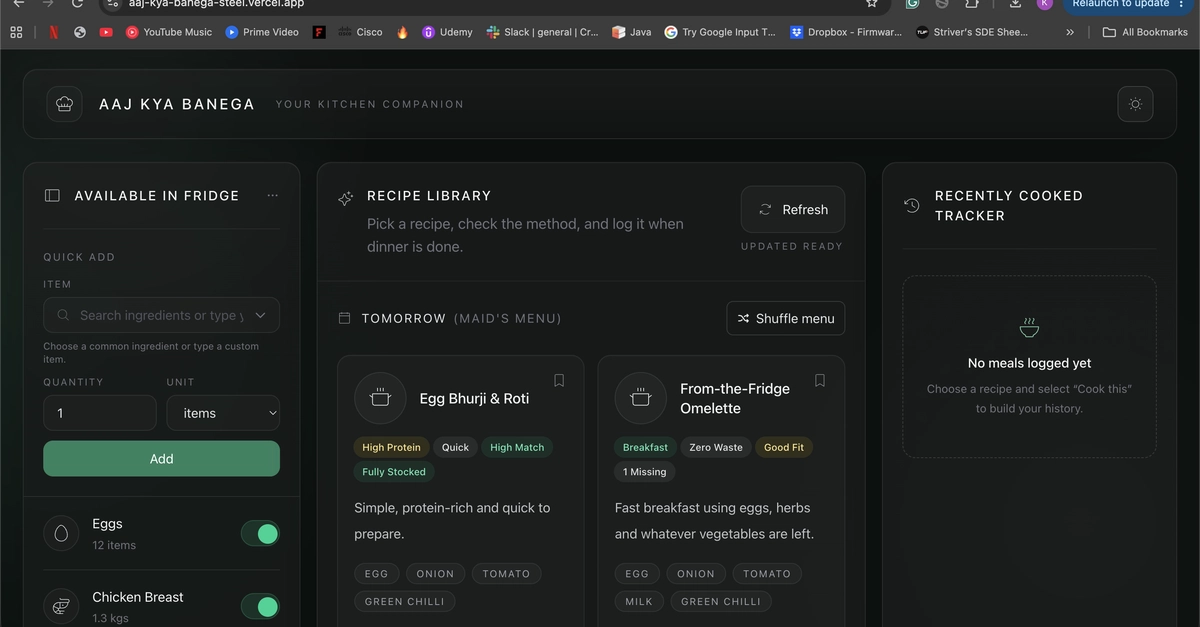
Hacktoberfest's "Build for a Friend" challenge sparked a wave of practical AI tools designed to solve real food and wellness problems. Dev.to showcased projects like SafePlate, which uses AI to identify foods from photos and flag allergens, plus recipe recommenders and allergy-aware meal planners that generate shopping lists. Most developers chose open-weight AI models that run locally on ordinary computers—avoiding data privacy concerns and per-use API charges.
These tools share a common theme: they adapt to how real people eat. Recipe apps factor in budget, cooking time, available equipment, dietary preferences, and serving size. Meal planners scan suggested menus for allergens and related foods—treating paneer, curd, ghee, butter and cheese as milk-related items. Developers tested features with friends and family, but all warn that users must verify AI suggestions for safety and check ingredient labels themselves.
AI Photo Tools That Identify Foods and Flag Dangers
SafePlate lets users snap a photo of their meal, and the AI identifies what they're eating and highlights potential allergens. But the developer acknowledged a hard truth: even small AI models make mistakes. The model might suggest shrimp to someone allergic to shrimp, or produce malformed output. To protect users, SafePlate wraps its AI responses with guardrails that catch and prevent unsafe suggestions before they reach the user. Dev.to highlighted this as a critical design choice.
Menu Planners That Double-Check for Hidden Allergens
Meal Planner for a Friend takes a different approach: it generates a full week of suggested meals, then scans every suggestion against a user's known allergens. If the AI suggests a dish with milk or milk-related products—paneer, curd, ghee, butter, or cheese—the app displays a warning. This two-step safety check catches allergens the AI might have missed in its original recommendations. Dev.to noted this design reflects real feedback from users.
Running Powerful AI on Your Own Computer, No Internet Needed
Many developers chose to run AI models locally on ordinary laptops, with no GPU or fancy hardware. SafePlate's creator reported that Gemma 3 4B—a lightweight but capable model—ran smoothly through llama.cpp on a standard Windows laptop, producing output at roughly 5–10 tokens per second. This approach lets users keep their meal and allergy data private. No personal information leaves their machine, and there's no per-request API charge.
Beyond Meals: Tracking Activity, Sleep, and Health Goals
Wellness AI Lens expanded the scope beyond meal planning. It tracks meals and activity, logs steps and sleep, sends reminders, and delivers daily summaries and weekly reports. Users can also chat with a follow-up dietitian feature for personalized guidance. Dev.to positioned these tools as daily companions for people juggling work, school, and wellness—not just quick recipe lookups.
Sentiment
Mostly NegativeNEGATIVENEUTRALPOSITIVE
Publishers
16
Articles
5
Reach
21
Topics
A
AnonymousAuthor


