Greece Wildfire Crisis.
Greece Battles Devastating Wildfires: Death Toll Rises, Evacuations Continue Amid Challenging Winds.
Anonymous
Key Points
1
Gale-force winds gusting up to 73 kph (45 mph) were reported near Porto Germeno, severely hindering firefighting efforts and making aircraft water drops unreliable.
2
A new wildfire broke out on the Ionian Island of Cephalonia late Saturday, adding to the strain on Greece’s firefighting operations.
3
On Crete, authorities reported about 8,000 people evacuated from the Agia Galini area as precautionary measures amid heavy smoke and advancing flames.
4
In the Porto Germeno area, around 500 firefighters were deployed to battle the blazes, with about 100 more fighters operating on a separate fire in Aigialia.
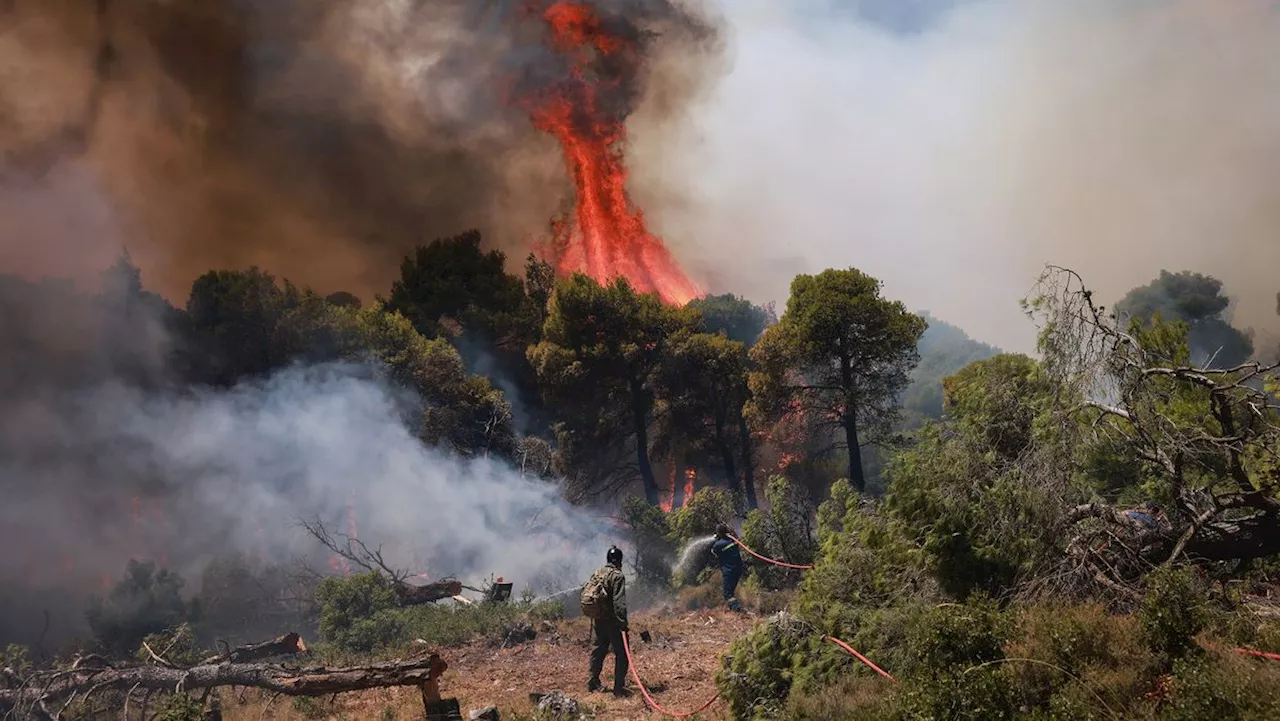
Greece is fighting some of the worst wildfires in years, with more than 12,000 hectares of forests and farmland burned and three firefighters killed this week. Gale-force winds gusting up to 73 kph (45 mph) have grounded aircraft and pushed flames deeper into communities, forcing mass evacuations across the country. Manchester Evening News described the destruction as "total."
Fires are burning near Porto Germeno on the Gulf of Corinth, on Crete, on the island of Paros, and now on the Ionian island of Cephalonia, where a new blaze broke out late Saturday. Authorities warn that large parts of Greece remain at extreme wildfire risk, and emergency services are stretched to their limits.
Gale-Force Winds Ground Aircraft Near Porto Germeno
The fire near Porto Germeno, west of Athens, has been the most intense. Around 500 firefighters are on the ground there, according to Express and Star. Winds topping 73 kph have made aircraft water drops unreliable or impossible, forcing crews to fight the flames almost entirely on foot.
Flames driven by the wind pushed into western Attica, the region that includes Athens, threatening several villages and an industrial district outside the city of Megara. A separate fire in the Aigialia area has kept another 100 firefighters busy. Officials say the fire department has been pushed to its absolute limits.
Thousands Evacuated by Sea and Land Across Multiple Islands
In Agios Vasilios, 254 people were evacuated by sea. Another 12 were pulled out of Porto Germeno by boat, according to Express and Star. Evacuations by water became necessary after roads were cut off by fire or smoke, leaving boats as the only safe exit.
On Crete, about 8,000 people were evacuated from the Agia Galini area as a precaution, according to Hunts Post. Heavy smoke and advancing flames forced the move. Crete has seen some improvement since, but officials warn the situation is still volatile. Tourism areas on the island had already pushed thousands of visitors out in the days before.
New Cephalonia Blaze Adds to Greece's Firefighting Crisis
A fresh wildfire broke out on the Ionian island of Cephalonia late Saturday night. The new blaze added more pressure to a fire department already overwhelmed across multiple fronts. Greece is now battling simultaneous fires on the mainland, two large islands, and smaller island locations at the same time.
Three firefighters have died this week fighting these blazes. Authorities have repeatedly noted that wind-driven conditions make standard aerial firefighting — dropping water from planes and helicopters — nearly useless during peak gusts. The window for effective air drops has been narrow, forcing dangerous ground operations instead.
Greece's Fires Reflect a Broader Mediterranean Climate Crisis
Greece's disaster is not happening in isolation. Across Europe, extreme heat and dry conditions have fueled wildfires in Spain and France. France's largest wildfire, the Gironde megafire, remained contained but still active, according to Irish News. Spain has also faced significant fire threats this summer season.
Scientists and officials say climate change is making these events more frequent and more intense across the Mediterranean. Hotter temperatures dry out vegetation faster, turning forests into fuel. Greece's summer of 2025 is already being compared to its worst fire seasons on record, and the season is not yet over.
Sentiment
Mostly NegativeNEGATIVENEUTRALPOSITIVE
Publishers
47
Articles
343
Reach
390
Topics
A
AnonymousAuthor


