Ramayana First Song Released
Nitesh Tiwari’s mythological epic Ramayana releases its first song, Jai Jai Ram, for Diwali 2026.
Anonymous
Key Points
1
Lyricist Dr Kumar Vishwas said the song’s three-word refrain was intended to function as “a complete prayer,” expressing devotees’ relationship with Shri Ram as their guide, strength and refuge rather than attempting to define him.
2
Producer Namit Malhotra said the song was chosen to begin the film’s musical journey because the makers wanted the project’s large scale to remain grounded in emotion, values and devotion, presenting Rama as a protector, guide and source of strength.
3
The film’s trailer was unveiled worldwide at 4:15 a.m. IST on July 30 during the auspicious Brahma Muhurat; its release had reportedly been postponed from an earlier July 24 date.
4
Before its public release, the trailer had already been screened for audiences at San Diego Comic-Con, indicating an international promotional strategy for the two-part epic.
Nitesh Tiwari's two-part mythological epic Ramayana unveiled its first song, Jai Jai Ram, on Ganesh Chaturthi, September 14. Composed by A.R. Rahman and sung by Arijit Singh and Shreya Ghoshal, the devotional track centers on Lord Rama's compassion and commitment to dharma Loktej. The project carries a reported combined budget of Rs 4,000 crore ($500 million) across both installments, making it the most expensive Indian film production in history.
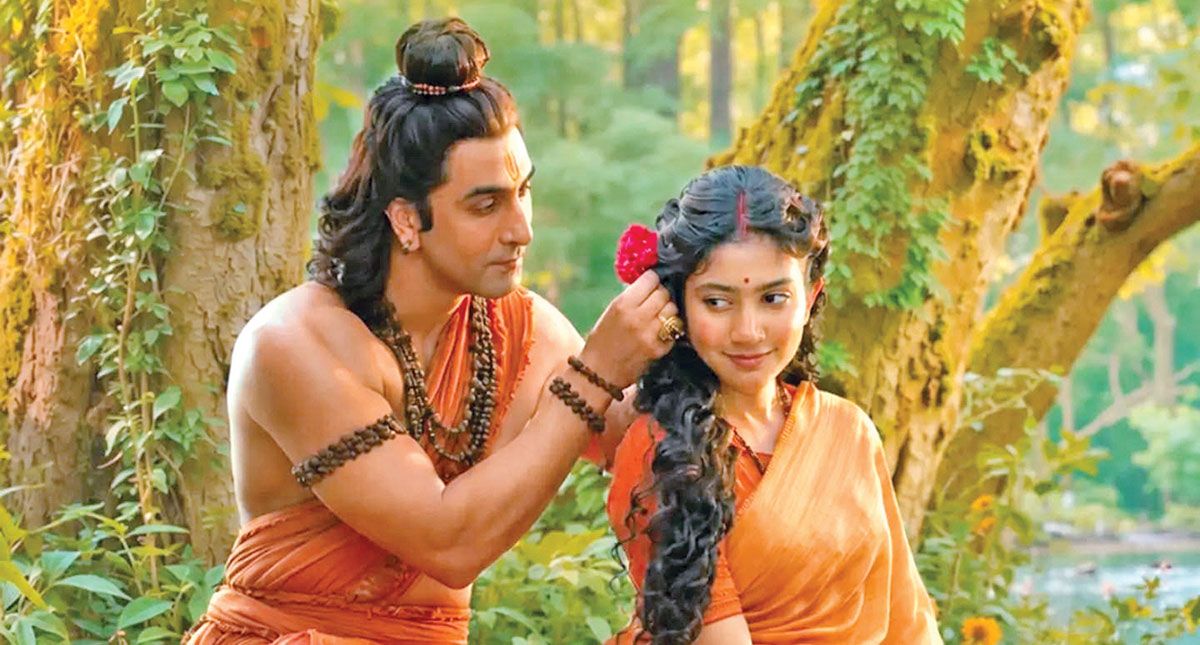
The official worldwide trailer premiered on July 30 at 4:15 a.m. IST during the sacred Brahma Muhurat window Ahmednagar Mirror. Ramayana: Part 1 is scheduled for a Diwali 2026 theatrical release, with Part 2 expected in Diwali 2027. The film stars Ranbir Kapoor as Rama, Sai Pallavi as Sita, Yash as Ravana, and Sunny Deol as Hanuman.
A Prayer, Not a Description, Through Music
Lyricist Dr. Kumar Vishwas explained that the song's three-word refrain was crafted as a complete prayer CineBuster. "My endeavor was not to describe Shri Ram, because his meaning cannot be contained in words," Vishwas said. Instead, the refrain expresses the relationship every devotee shares with him as their guide, strength and refuge. A.R. Rahman added: "Musically, the intention was to preserve the purity and intimacy of a prayer while allowing the composition to grow into a cinematic song."
Producer Namit Malhotra chose this song to launch the musical journey because the makers wanted the project's massive scale to remain grounded in emotion, values and devotion CineBuster. The track balances the intimacy of an aarti (Hindu prayer ritual) with a cinematic scope. Visuals feature moments including Rama and Sita's wedding, their arrival in Ayodhya, Dasharatha's death, and Rama's reunion with Bharat.
A Global Rollout Strategy Begins
The film's worldwide promotion strategy extends beyond traditional markets. Behind-the-scenes footage was screened exclusively at San Diego Comic-Con in July, signaling an international push for the two-part epic Daily Jagran. The official trailer premiered during the auspicious Brahma Muhurat window—a culturally intentional choice that aligned the film's launch with Hindu spiritual tradition. The release had been postponed from a July 24 date, though the reason was not publicly disclosed.
Hollywood-Scale Production Mounted on Indian Foundations
The Rs 4,000 crore budget is split roughly equally between the two installments—approximately $250 million per movie, placing Ramayana on par with major Hollywood tentpoles like Avatar (2009) Times of India. Actor Yash, who plays Ravana, defended the financial commitment, saying: "Cinema is a soft power. All of us have to work really hard towards it." The production uses cutting-edge CGI and VFX from Oscar-winning studio DNEG, with Hans Zimmer collaborating with A.R. Rahman on the score.
The film employs AI-assisted dubbing technology for multi-language regional distribution—a first for Indian cinema Times of India. This marks Hans Zimmer's full-scale feature film debut in Indian cinema. Principal photography took place at Film City, Mumbai, spanning April 2024 through July 2025. The theatrical rollout begins November 8, 2026 in India for Diwali.
Sentiment
Mostly NegativeNEGATIVENEUTRALPOSITIVE
Publishers
101
Articles
43
Reach
144
A
AnonymousAuthor