Rare two-headed turtle found.
Wildlife veterinarians monitor a rare two-headed diamondback terrapin found on Cape Cod.
Anonymous
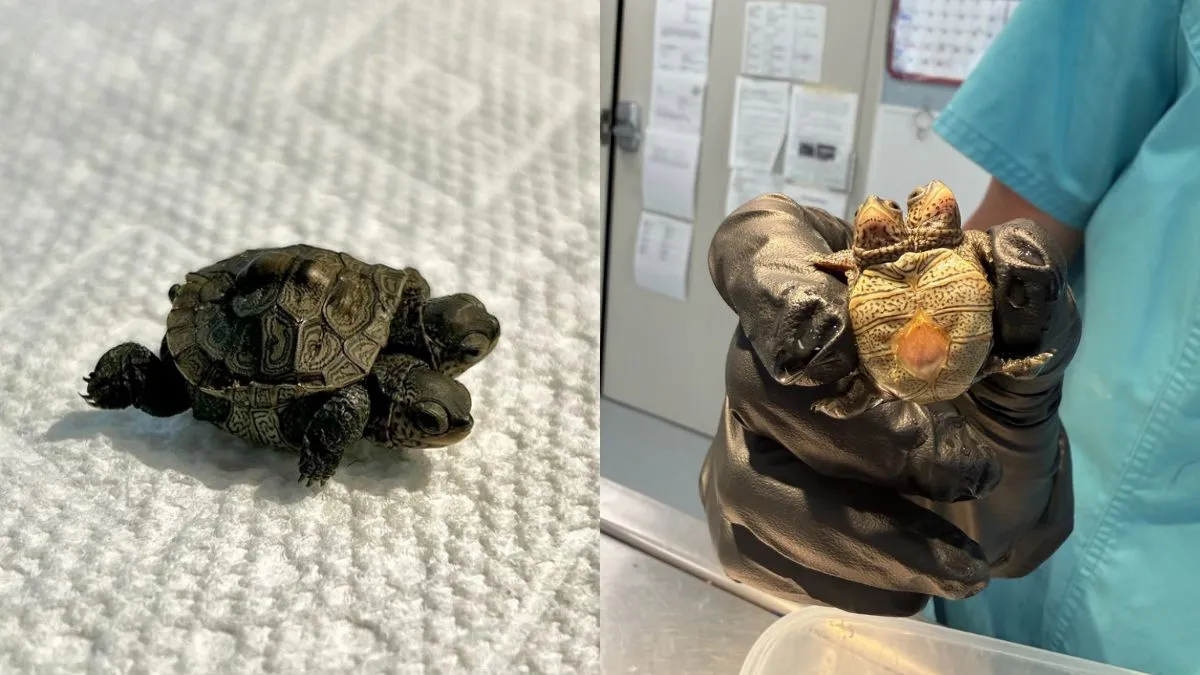
A rare two-headed diamondback terrapin hatchling has been brought to the Cape Wildlife Center in Massachusetts after being found at a protected nesting site on Cape Cod. The 5.2-gram turtle has bicephaly, a developmental anomaly in which an embryo does not fully separate, and both heads appear functional and alert. Veterinarians are monitoring its hydration, appetite, growth, behavior and coordination before moving it to a larger enclosure for swimming and feeding. The center says this is only its third such case in roughly five to six years, while diamondback terrapins are a threatened species in Massachusetts. Experts say the condition is exceptionally rare, particularly in the wild, and the animal could provide valuable insight into how duplicated body structures function.
Key Points
1
Zak Mertz said bicephaly may occur in roughly one out of every 100,000 diamondback terrapin hatchlings, although there is not enough data to determine whether it results from genetic mutations, environmental factors or a combination of both.
2
Veterinarians observed that both sides were bright and alert, with the left head appearing somewhat more precocious than the right.
3
The hatchling may not yet have an appetite because it had only recently absorbed the yolk sac and umbilicus that supplied nutrients from the egg; staff planned to offer food once it was ready.
4
A comparable two-headed diamondback terrapin found in Massachusetts in 2021 had two heads and six legs and appeared healthy while being monitored at a wildlife center.
5
Experts cautioned that many bicephalic animals die young because the two sides may compete for food or attack one another, making the hatchling’s continued development especially significant.
Sentiment
Mostly NegativeNEGATIVENEUTRALPOSITIVE
Publishers
6
Articles
14
Reach
20
A
AnonymousAuthor


