Kilauea Lava Fountains Erupt
Kilauea Erupts With 500-Foot Lava Fountains and Prompts Alert Level Rise
Anonymous
Trending on XKilauea Volcano Ongoing Eruption Hawaii
Key Points
1
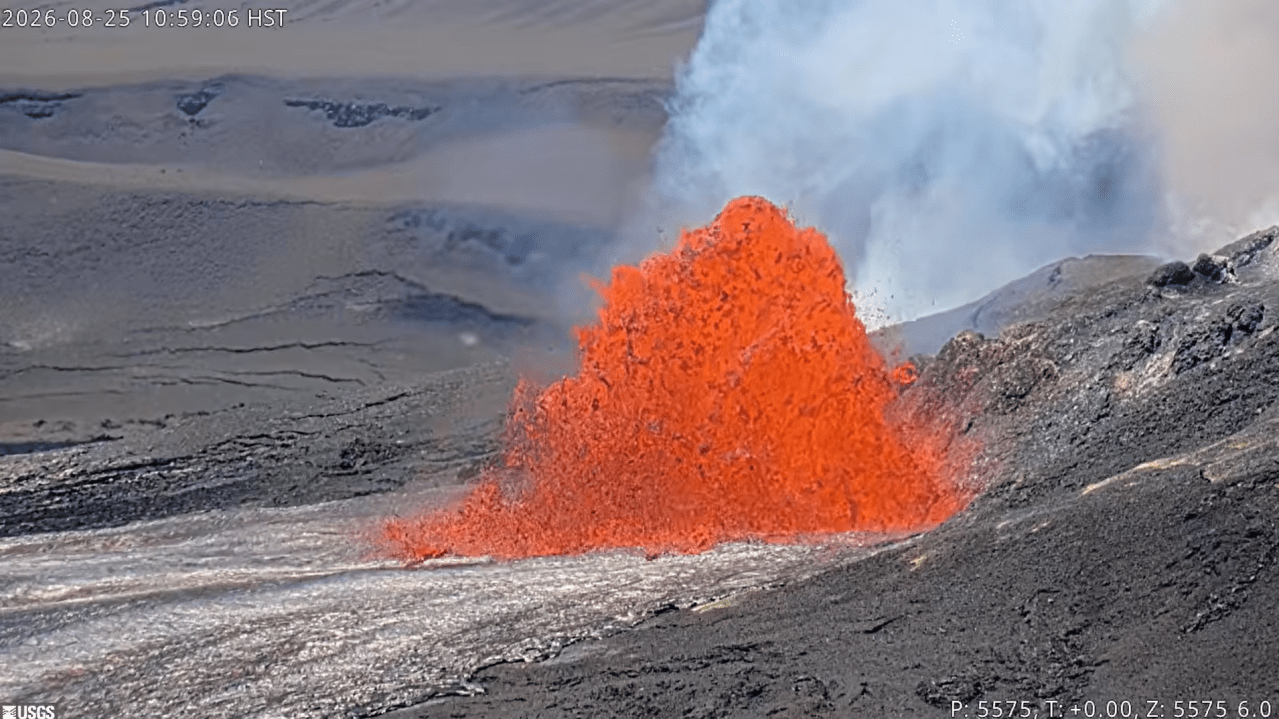
By 12:15 p.m., the north vent's lava fountain was about 500 feet above ground with the plume reaching roughly 17,000 feet above sea level.
2
Ground-level wind sensors indicated winds from the northeast, suggesting gas and tephra could be transported to the southwest toward Kaʻu communities such as Pāhala and Wood Valley.
3
Precursor activity included strong, rhythmic gas pistoning spikes roughly every 5–10 minutes, with glow from the vents increasing and spattering becoming nearly continuous after midnight.
4
Civil Defense reported elevated gas levels, ash and tephra downwind, with fine ash potentially reaching Wood Valley and Pahala for a few hours.
5
Three summit livestream videos showing eruptive lava fountains are available, along with KPcam and MKcam views that provide plume-height information for aviation purposes.
Kilauea's 54th lava fountaining episode began at 10:30 a.m. Tuesday in Halemaʻumaʻu crater, with the north vent shooting fountains 50–75 feet high initially and reaching approximately 500 feet by midday The Garden Island. The USGS raised alert levels from Advisory to Watch and the Aviation Color Code from Yellow to Orange as winds shift volcanic gas, ash, and Pele's hair toward Kaʻu communities like Pāhala and Wood Valley Yahoo News.
By 12:15 p.m., the lava plume had climbed to roughly 17,000 feet above sea level, with precursor activity beginning as early as 6:16 a.m. when overflow started at the north vent TechTimes. Officials expect most fountaining episodes to last a day or less, with all activity confined to Halemaʻumaʻu crater inside Hawaii Volcanoes National Park.
Fountain Height Jumped From 75 Feet to 500 Feet
The north vent's lava fountain grew explosively within hours. Fountains began at 50–75 feet above ground. By midday, they had soared to roughly 500 feet, with the volcanic plume reaching 17,000 feet above sea level The Garden Island. Such rapid escalation reflects increasing pressure and degassing beneath the crater.
Strong, rhythmic gas pistoning spikes occurred every 5–10 minutes during the lead-up, signaling rising pressure deep inside the volcano USGS. Glow from the vents intensified and spattering became nearly continuous after midnight, providing clear warning signs hours before the main eruption began.
Volcanic Gas and Ash Head Toward Kaʻu Communities
Ground-level wind sensors show winds coming from the northeast, pushing volcanic gases, ash, and Pele's hair toward the southwest The Garden Island. Communities directly in the path include Pāhala and Wood Valley. Tephra fall is greatest within 3 miles of the vents, but lighter ash can travel much farther downwind.
Civil Defense reported elevated gas levels and ash downwind of the crater. Fine ash is expected to reach Wood Valley and Pāhala for a few hours as the plume drifts. Residents in affected areas should monitor air quality and stay indoors if ash arrives.
Alert Levels Raised as Eruption Intensifies
The Hawaii Volcano Observatory escalated the volcano alert level from Advisory to Watch and the Aviation Color Code from Yellow to Orange USGS. These upgrades reflect the shift from precursory activity to sustained lava fountaining. Higher alert levels trigger public warnings and aviation advisories for pilots flying near the crater.
Officials emphasize that all activity remains confined to Halemaʻumaʻu crater within Hawaii Volcanoes National Park. Residents should monitor livestream videos from KPcam and MKcam for plume-height data and real-time eruptive conditions. Most fountaining episodes last a day or less, though officials will track the situation closely.
Sentiment
Mostly NegativeNEGATIVENEUTRALPOSITIVE
Publishers
20
Articles
6
Reach
26
A
AnonymousAuthor


