Toyota Plans $6.4B Annual Automation, 400,000 Robots
Toyota Plans $6.4B Annual Automation, 400,000 Robots
Anonymous
Key Points
1
Toyota Motor Manufacturing Canada has signed an agreement with Agility Robotics to test Digit humanoid robots at its RAV4 assembly plant in Woodstock, Ontario. Seven robots are expected to assist with transporting components, loading and unloading, and other logistics tasks after a year of testing.
2
The planned automation could help Toyota maintain production capacity while reducing reliance on human workers for repetitive or physically demanding tasks, while also giving factories more flexibility as vehicle production becomes more complex.
3
Analysts may increasingly treat the proposed 1 trillion-yen annual outlay as a higher baseline for capital spending rather than a one-time modernization program, potentially increasing depreciation and maintenance costs and putting pressure on supply-chain margins during a multiyear upgrade cycle.
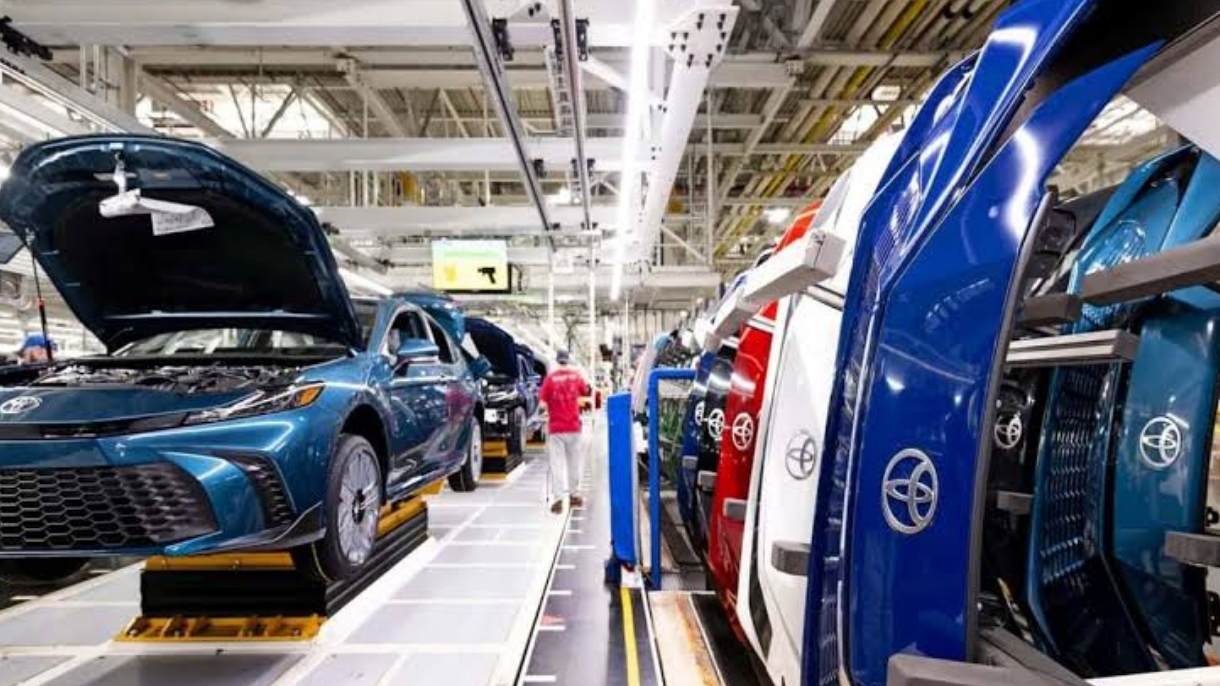
Toyota is planning to spend about $6.4 billion annually starting in 2028 to modernize its factories with automation, according to Star-Telegram. The world's largest automaker told investors it could eventually deploy roughly 400,000 robots—both traditional industrial and humanoid systems—to replace aging equipment and handle new production and logistics tasks.
The massive investment reflects Toyota's push to address labor shortages, rising costs, and the growing complexity of building modern vehicles. However, News Observer notes the company has not committed to a specific spending schedule or total program cost, making this an estimate rather than a firm annual budget.Herald Sun
Humanoid Robots Start Testing in Canada
Toyota's Canadian operations are already piloting humanoid technology. Sun Herald reports that Toyota Motor Manufacturing Canada signed an agreement with Agility Robotics to test Digit humanoid robots at its RAV4 assembly plant in Woodstock, Ontario. Seven robots are expected to begin assisting with transporting components, loading, unloading, and other logistics tasks after a year of testing.
Automation Tackles Labor Shortages and Production Complexity
Toyota faces mounting pressure from worker shortages and the rising complexity of vehicle manufacturing. The planned 400,000 robots—combining traditional industrial systems and newer humanoid models—could help the company maintain production capacity without expanding its human workforce. Ledger-Enquirer suggests the automation will let factories handle more flexible production schedules as vehicles become increasingly complex.
Cash Flow Pressure and Industry-Wide Shift to Robotics
The 1 trillion-yen annual outlay could strain Toyota's free cash flow and shareholder returns in the near term. Star-Telegram notes analysts may treat the spending as a baseline for capital investment going forward rather than a one-time program, increasing depreciation, maintenance costs, and pressure on suppliers during the multiyear upgrade cycle. News Observer adds that Toyota is not alone—Hyundai is also planning to deploy humanoid robots at a U.S. factory starting in 2028.
Sentiment
Mostly PositiveNEGATIVENEUTRALPOSITIVE
Publishers
15
Articles
129
Reach
144
A
AnonymousAuthor


