Church and State.
Supreme Court Justice Gorsuch Rejects Christian Nationalism, Calls Idea "Demonstrably False" on PBS.
Anonymous
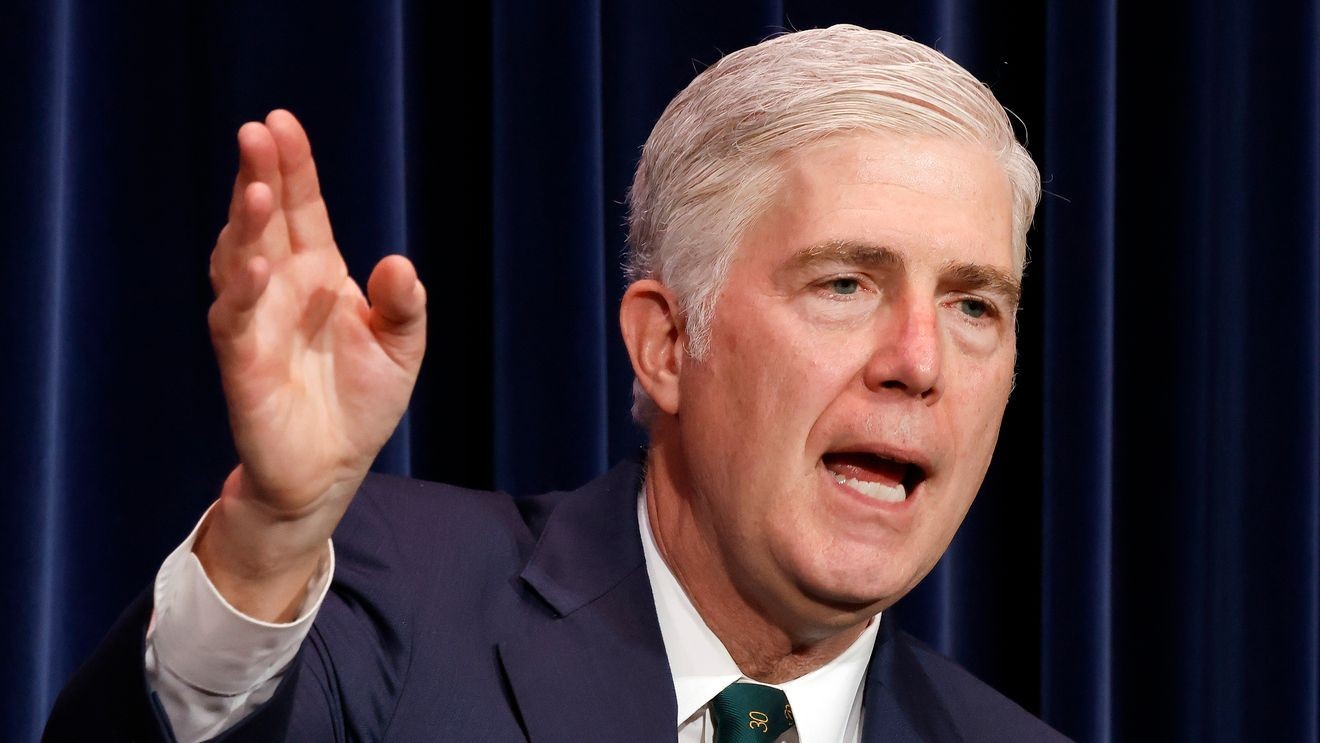
Supreme Court Justice Neil Gorsuch has rejected the idea that the United States is a Christian nation, calling it "demonstrably false." In an interview on PBS's "Firing Line," the Trump-appointed justice said America was founded for religious pluralism — not to favor any single faith. WGME reported that Gorsuch stated the country was built to give everyone "the opportunity to practice your own faith."
The remarks put Gorsuch at odds with some of the most powerful voices in the current political moment. Top Trump administration officials have used faith-based arguments to back key policy positions, and Christian nationalist movements have long pushed the idea that America's identity is rooted in Christianity. KUTV noted that Gorsuch's pushback was a direct challenge to that view.
Gorsuch's 'Demonstrably False' Comment Explained
Gorsuch did not mince words on PBS. He said the claim that the U.S. is inherently Christian is "demonstrably false" — meaning it can be disproved with plain facts. He pointed to the founding of the country itself, arguing the founders built a system that protected all religions, not just one. KATU reported that Gorsuch said the nation was designed for people of every faith.
The First Amendment bans the government from establishing an official religion. Gorsuch, a practicing Catholic and one of the court's most conservative members, argued that this protection is central to what America is. His comments show that even among conservatives, Christian nationalism is not a settled idea.
What Christian Nationalism Actually Argues
Christian nationalism is the belief that America was founded as a Christian country and should still be governed by Christian values. Supporters argue that the law, schools, and government should all reflect Christian principles. WUTV29 reported that this view has been "championed by top Trump administration officials" in recent years.
Critics say the movement erodes the separation of church and state. That separation — the idea that religion and government should stay out of each other's business — is seen by many historians as a core founding principle. Gorsuch's remarks suggest even some conservatives believe the movement goes too far.
Trump Administration's Faith-Based Policy Push
The Trump administration has leaned heavily on religious language to justify its positions. Newschannel9 reported that top officials have used faith-based arguments to support a range of policies. The administration has also taken steps seen as blurring the line between government and religion, including executive actions tied to religious exemptions.
Gorsuch was nominated by President Trump in 2017. His willingness to break with the administration's religious framing is notable. It signals that even justices appointed by Trump are not monolithic on the question of religion's role in public life.
Why a Conservative Justice's Words Carry Extra Weight
Gorsuch is widely seen as one of the most conservative justices on the Supreme Court. He has sided with religious groups in landmark cases before. That makes his rejection of Christian nationalism harder to dismiss as a liberal talking point. KOMO News noted that his comments came in the context of rising debate over religion and government in America.
The Supreme Court has the final say on church-state disputes. With several religion cases expected in the coming terms, Gorsuch's public stance on religious pluralism could offer a clue about how he sees those boundaries. For now, his message is clear: no single faith owns America's founding story.
Sentiment
NeutralNEGATIVENEUTRALPOSITIVE
Publishers
13
Articles
12
Reach
13
Topics
A
AnonymousAuthor


