Domestic Rail Fleet Renewal
Canada Invests $4.7 Billion to Build New VIA Rail Cars Domestically
Anonymous
Trending on XUS national debt exceeds $40 trillion amid foreign policy and economic debates
Key Points
1
Alstom Americas CEO Michael Keroullé called the VIA Rail deal 'the contract of the decade' and highlighted that the project marks a first-time collaboration with VIA Rail to replace decades-old cars.
2
Alstom will rely on a network of more than 900 Canadian suppliers and is required to maximize the use of steel produced in Canada for the new cars.
3
The VIA Rail investment is part of a broader program, following a July announcement of C$1.9 billion to produce 45 locomotives and build an assembly/maintenance plant in Montreal, with total fleet renewal projected to exceed C$6.6 billion.
4
The 313 cars are slated to serve eight long-distance and regional routes and remote communities located outside the Quebec-Windsor corridor.
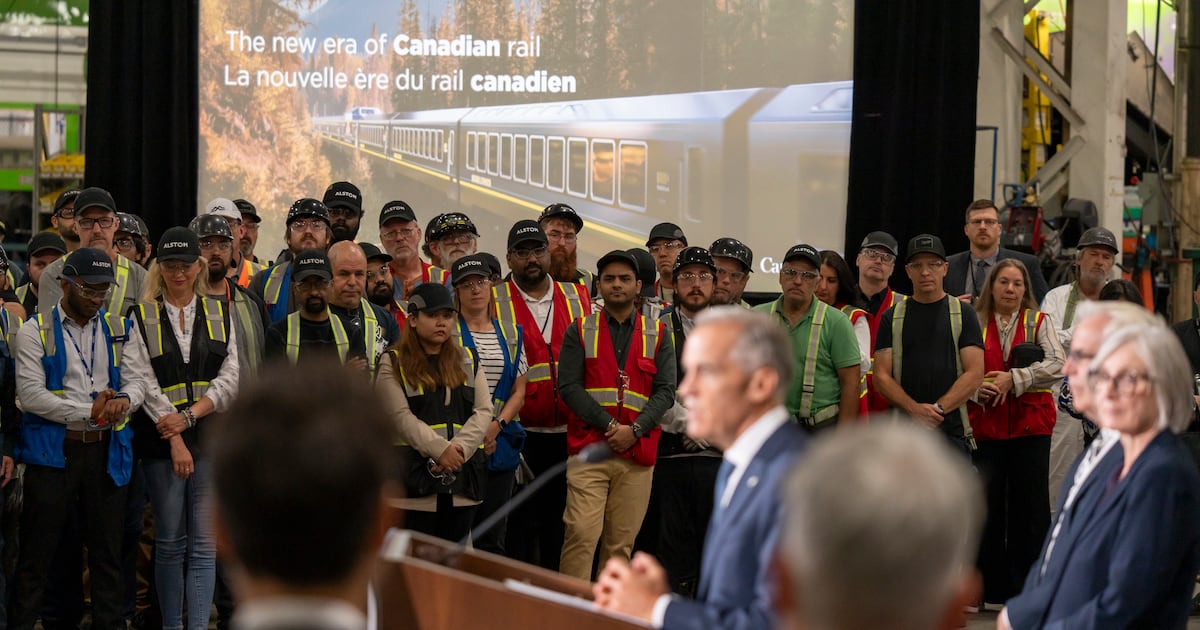
Canada is investing C$4.7 billion to build 313 new passenger cars for VIA Rail, marking the first domestic manufacturing of rail cars in four decades. Prime Minister Mark Carney announced the deal at Alstom's Thunder Bay plant on September 3, saying cars that were once built in the United States will now be made right here in Canada.
The project will generate C$1.6 billion in economic activity and support roughly 700 jobs across Ontario and Quebec. It replaces aging VIA Rail cars—some over 70 years old—and is part of Canada's broader push to strengthen domestic manufacturing and reduce dependence on U.S. supply chains.
VIA's Aging Fleet Gets Its First Overhaul in Decades
VIA Rail's long-distance and remote routes run on stainless-steel cars built in the 1950s by the U.S.-based Budd Company. Some equipment is over 70 years old, causing frequent breakdowns and delays. Transport Minister Steven MacKinnon called this deal the "single largest procurement in VIA history," designed to replace the worn-out fleet serving eight routes and nearly 400 remote communities outside the Quebec-Windsor corridor.
The 313 new Adessia cars—ranging from sleeper cars to dining cars to panorama cars—are scheduled to arrive starting in 2031. VIA Rail's interim CEO noted that replacing these aging vehicles will directly cut breakdowns and improve on-time performance for passengers across Canada.
Made-in-Canada Push Shields Rail from Trade Tensions
The contract deliberately shifts rail car production from the United States back to Canada. Carney said: "For the first time in four decades, those cars will be produced and assembled and maintained in our country." The move reflects Canada's Buy Canadian policy and aims to protect critical infrastructure from escalating trade disputes.
Manufacturing will happen in Thunder Bay and La Pocatière, Quebec, with design and engineering done in Saint-Bruno-de-Montarville. Alstom Canada will tap more than 900 Canadian suppliers and is required to maximize use of Canadian-made steel. The company is also investing C$38 million to upgrade its century-old Thunder Bay plant.
Labor Wins 700 Jobs and Promises of Long-Term Security
The project is expected to create roughly 700 jobs across Ontario and Quebec, with about 200 workers hired immediately in Thunder Bay. Unifor Local 1075 president Justin Roberts said the deal "brings some security to [members] and their families" and will "result in the hiring of a couple hundred workers for sure in the immediate future."
The contract includes a 15-year technical support and spare parts agreement, giving workers long-term visibility. Alstom Americas CEO Michael Keroullé called it "the contract of the decade," highlighting the historic significance of the first VIA Rail collaboration with Alstom to replace decades-old equipment.
Part of a Larger C$6.6 Billion Rail Modernization Plan
The C$4.7 billion passenger car deal follows a July announcement of C$1.9 billion for 45 new locomotives and a Montreal assembly and maintenance facility. Together, these investments exceed C$6.6 billion and represent VIA Rail's largest modernization effort in decades, fundamentally reshaping the fleet.
Sentiment
Mostly NegativeNEGATIVENEUTRALPOSITIVE
Publishers
44
Articles
106
Reach
150
A
AnonymousAuthor


