Regional Energy Hub
Argent LNG and Albania Evaluate 5-Mtpa Regional Hub for Southeastern Europe
Anonymous
Key Points
1
Albania would primarily serve as the host and regional gateway, not a major LNG buyer; its domestic electricity system is predominantly supplied by renewable energy.
2
The proposed terminal is being positioned as a flagship project of the Three Seas Initiative, linking regional pipelines to help deliver U.S. LNG across the region.
3
Potential financing could involve the U.S. Trade and Development Agency, the U.S. International Development Finance Corporation and the U.S. Export-Import Bank; Argent has not provided a cost estimate, site or construction timetable for the Albanian facility.
4
The U.S. Department of Energy authorized Argent in July 2026 to export LNG from its proposed Port Fourchon terminal to countries that have free-trade agreements with the United States.
5
Separately, Argent designated CB&I as its preferred EPC contractor for three full-containment LNG tanks at the planned Louisiana export terminal, totaling 600,000 cubic meters of storage; FEED and early works have begun ahead of a targeted December 2027 construction start.
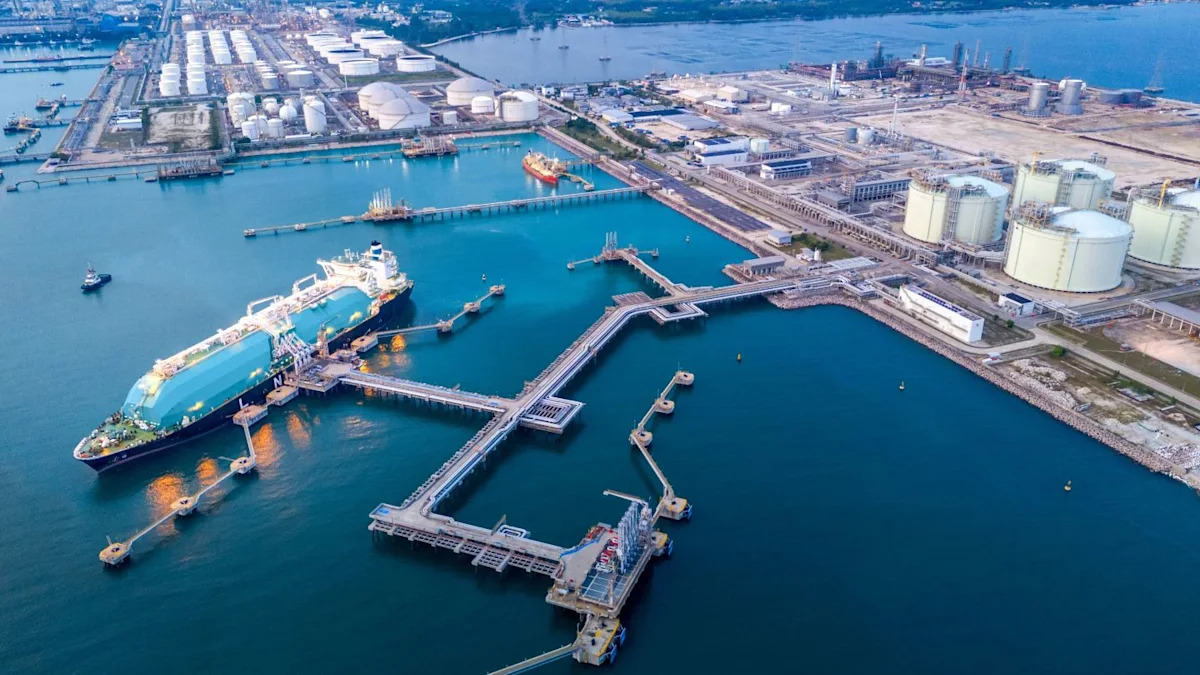
Argent LNG and Albania signed a nonbinding agreement to study a major liquefied natural gas terminal on Albania's coast that could handle up to 5 million metric tons per year. Natural Gas Intelligence reported the facility would serve as a regional hub for the Western Balkans and Southeastern Europe, not primarily for Albania's own use. The project could tap into existing regional pipelines and potentially supply Ukraine through reverse flows and trading arrangements.
A joint working group will examine potential sites, feasibility, and financing options, but the agreement includes no binding commitments for construction or funding. LNG Prime noted the terminal would complement Argent's proposed 25-million-ton-per-year export facility in Port Fourchon, Louisiana, creating a transatlantic LNG corridor to serve European demand.
Why Albania Becomes a Strategic Energy Crossroads
Albania sits at a crucial junction for European energy infrastructure. Streamline Feed reported the terminal would connect with the Trans Adriatic Pipeline, Ionian Adriatic Pipeline, and Fier–Vlorë gas corridor. This positions the small Balkan nation as a gateway delivering U.S. LNG across the entire region rather than consuming it domestically.
Albania's electricity grid is already powered almost entirely by renewable energy, so it needs far less natural gas than neighboring countries. Offshore Technology explained the facility would instead serve as a trading and storage hub—a flexible supply point for peak demand periods and emergency disruptions across Southeastern Europe.
Ukraine Support and Regional Energy Security
The project carries strategic importance beyond commercial energy trading. Natural Gas Intelligence noted Argent designed the terminal to support Ukraine deliveries through reverse pipeline flows, swaps, and regional arrangements. This follows earlier memorandums Argent signed with Ukraine's Naftogaz and Romania's Transgaz to strengthen Eastern European energy independence.
Energy security for the region remains fragile. The terminal would provide buffer storage and alternative supply routes if disruptions occur. LNG Prime reported the facility is being branded as a flagship Three Seas Initiative project—a U.S.-backed effort to link Central and Eastern European energy infrastructure.
Louisiana Terminal Makes Progress Toward 2027 Start
Argent's American export terminal is advancing faster than the Albanian import facility. LNG Prime reported the company selected CB&I as the preferred engineering contractor for three large storage tanks totaling 600,000 cubic meters at the Port Fourchon site. Front-end engineering design and early construction work have already begun.
The Louisiana terminal targets a December 2027 construction launch. Yahoo Finance noted the U.S. Department of Energy authorized Argent in July 2026 to export LNG to countries with U.S. free-trade agreements. This legal clearance clears the way for the facility to supply Europe, including the proposed Albanian regasification hub.
Funding Remains Uncertain Without Committed Partners
No cost estimate, specific site location, or construction timeline has been announced for the Albanian facility. Yahoo Finance reported potential financing could involve the U.S. Trade and Development Agency, the U.S. International Development Finance Corporation, and the Export-Import Bank. These agencies typically fund infrastructure that advances U.S. strategic interests.
The nonbinding nature of the agreement means Albania and Argent remain in the exploratory phase. Either party can walk away if feasibility studies prove unfavorable or financing cannot materialize. The joint working group's findings over the coming months will determine whether this becomes a real project or remains a strategic proposal.
Sentiment
Mostly PositiveNEGATIVENEUTRALPOSITIVE
Publishers
13
Articles
8
Reach
21
A
AnonymousAuthor


