Europe targets shadow fleet.
European Naval Forces Board Toa Payoh Tanker in Mediterranean to Enforce Russia Sanctions.
Anonymous
Key Points
1
Expanded mandate under Operation Atalanta allows flag-verification boardings of vessels suspected of belonging to Russia's 'shadow fleet' in the western Indian Ocean and other designated areas, extending EU maritime enforcement reach beyond the Mediterranean.
2
IRINI's recent interdiction combined naval and air assets, with ITS Thaon di Revel escorted by the Greek frigate KANARIS and supported by a Polish M28B1R Bryza aircraft for aerial surveillance to identify and classify vessels before inspection.
3
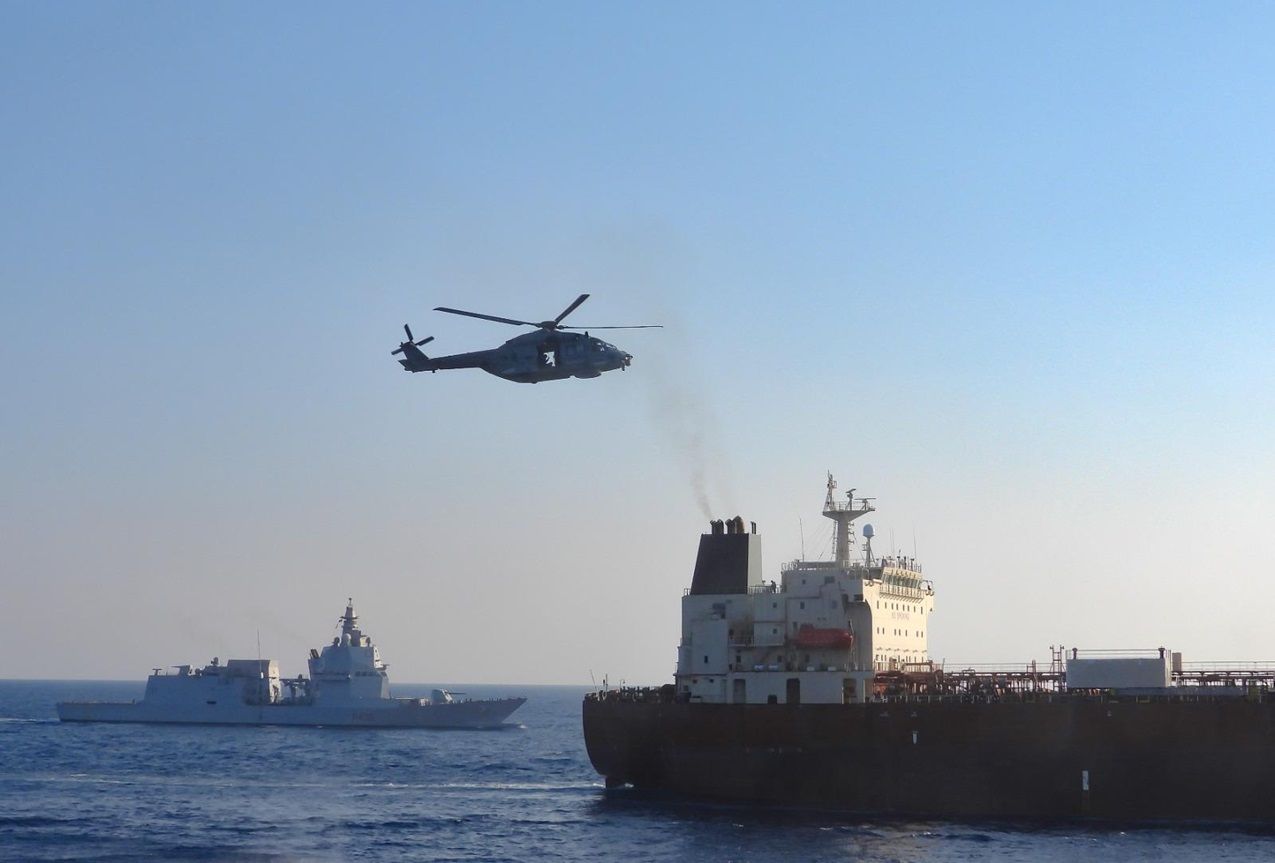
The boarding was conducted after the captain initially refused cooperation, with Italian forces reaching the tanker by helicopter from the Thaon di Revel; the operation lasted about two hours and was described by Italy's defence minister as a demonstration of professionalism and resolve.
4
The Toa Payoh’s voyage details include departing Cotonou, Benin on 16 July bound for Istanbul, flying under the Cameroonian flag, and already being subject to EU sanctions, underscoring the ongoing enforcement against sanctioned ships within the shadow fleet.
Italian naval forces boarded the oil tanker Toa Payoh in the Mediterranean Sea on August 2, marking one of Europe's most assertive moves yet against Russia's shadow fleet. The vessel, already under EU sanctions, was intercepted near the island of Pantelleria — between Sicily and Tunisia — as part of Operation IRINI, the EU's maritime enforcement mission, according to Kyiv Independent.
The Toa Payoh had left Cotonou, Benin on July 16 and was headed for Istanbul when intercepted. Flying under the Cameroonian flag, the tanker is part of a sprawling network of vessels believed to help Russia sell oil in defiance of Western sanctions, Italian Military Radar reported.
Captain Refused Entry, Helicopters Delivered Boarding Team
The captain of the Toa Payoh initially refused to cooperate with inspectors. Italian forces then flew to the vessel by helicopter from the offshore patrol ship ITS Thaon di Revel. The whole operation lasted about two hours, Albeu reported. Italy's defence minister called it a show of professionalism and resolve.
The boarding team checked the ship's documents and verified its flag and nationality. International law — specifically UNCLOS, the global treaty governing the seas — allows such checks in certain circumstances. The inspection was described as routine once the crew allowed the team aboard, according to Italian Military Radar.
Greek Frigate and Polish Aircraft Joined the Operation
The mission was not Italy's alone. The Greek frigate KANARIS escorted the ITS Thaon di Revel during the intercept. A Polish M28B1R Bryza aircraft flew overhead, providing aerial surveillance to spot and classify vessels before the boarding, Italian Military Radar reported.
The multi-nation effort signals that EU states are pooling resources to enforce sanctions at sea. Operation IRINI has increasingly combined naval ships and surveillance aircraft to track shadow fleet tankers across the central Mediterranean.
Shadow Fleet Tankers Face Growing Pressure Across Europe
The shadow fleet refers to hundreds of older tankers that move Russian oil while hiding their ownership and origins. The Toa Payoh is already named on the EU sanctions list, meaning European entities are barred from doing business with it. Its boarding shows that sanctions are now being enforced on the water, not just on paper, Yahoo News reported.
Several European countries have ramped up interception efforts in recent months. The EU's Operation IRINI has also expanded its reach. An updated mandate under Operation Atalanta now allows flag-verification boardings in the western Indian Ocean, stretching EU maritime enforcement well beyond the Mediterranean, according to Italian Military Radar.
Why the Boarding Matters for Russia's Oil Revenue
Russia relies on shadow fleet tankers to export oil and earn revenue to fund its war in Ukraine. Western nations have imposed a $60-per-barrel price cap on Russian oil, but the shadow fleet helps Moscow dodge that limit by obscuring where the oil comes from and who is moving it, Kyiv Independent reported.
Each boarding creates risk for tanker operators and insurers who work with sanctioned ships. Experts say that even short inspections send a signal that European navies are watching — and willing to act. The Metro reported that the Toa Payoh boarding is part of a broader EU push to make the shadow fleet's operations far more costly and difficult.
Sentiment
Mostly NegativeNEGATIVENEUTRALPOSITIVE
Publishers
18
Articles
69
Reach
87
A
AnonymousAuthor


