Seattle Rail Disruption
Seattle Link light rail derailment halts service across region, prompting investigation.
Anonymous
Key Points
1
Overhead wires in the Downtown Seattle Transit Tunnel were de-energized after the derailment near International District/Chinatown Station, prompting an immediate shutdown of rail movements through the core segment and a full closure between Northgate and Judkins Park as crews assessed damage.
2
The CID derailment occurred near the center turnaround track used for reversing trains, involving a center pocket track adjacent to CID Station; photos and reports describe at least one car off the rail but upright, with emergency personnel inspecting the site as trains operated in tight tunnels.
3
Investigators are evaluating track and switch integrity, signaling systems, and maintenance history, with post-incident protocols including data downloads from onboard event recorders and wheel-and-track gauge measurements to determine contributing factors before service resumes.
4
Transit agencies implemented alternate routing via bus bridges and rerouted services to absorb displaced riders, with the network effectively split into shorter service segments as trains turn back on either side of the derailment site.
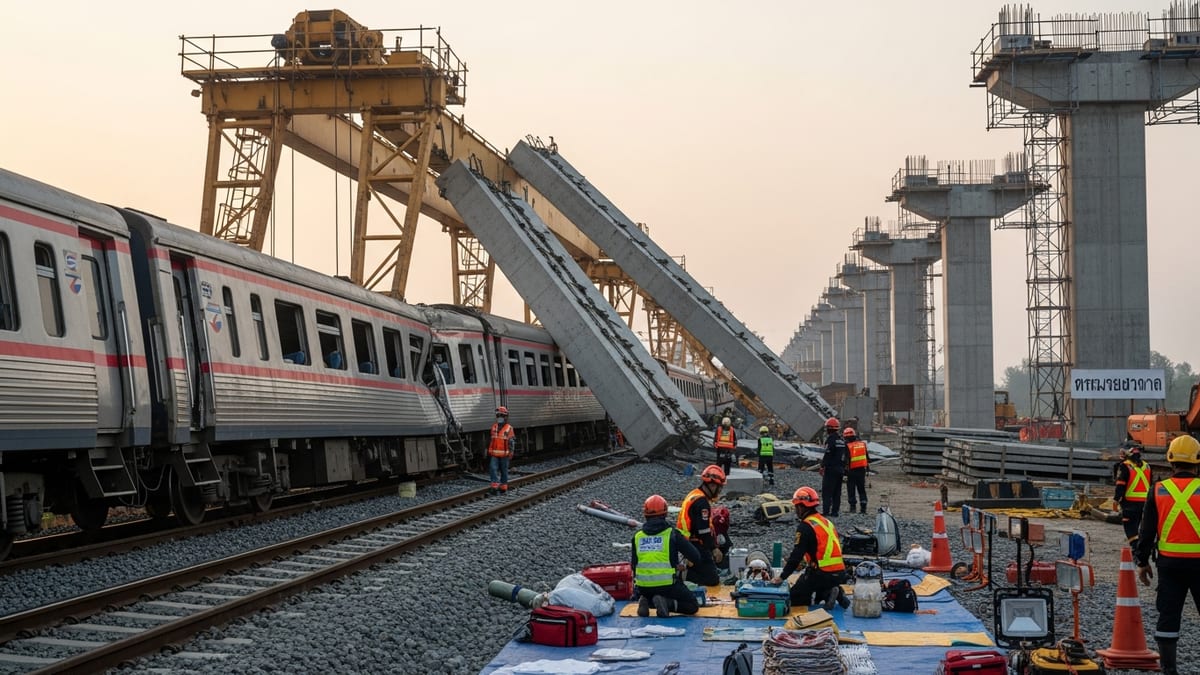
A slow-speed Sound Transit light rail train derailed late Saturday night near Seattle's International District/Chinatown Station, knocking at least one car off the rails and forcing a full shutdown of downtown service for several hours, according to MyNorthwest. The train came to rest just a few feet from the tracks, and emergency crews quickly moved in to inspect the site.
The incident suspended 1 Line service across the core downtown segment, stranding riders who then relied on shuttle buses, rideshares, and rerouted connections to get around, The Traveler reported. No serious injuries were reported in the initial phase of the disruption.
Train Leaves Track Near Critical Downtown Switch
The derailment happened near a center pocket track — a short section of rail used to reverse trains — adjacent to CID Station, according to The Traveler. Photos from the scene showed at least one car off the rail but upright. Emergency personnel fanned out across the tight tunnel to check the area for damage.
Overhead wires in the Downtown Seattle Transit Tunnel were de-energized after the incident, The Traveler reported. That killed power to the core segment and triggered a full closure between Northgate and Judkins Park. Crews could not restart service until they confirmed the track and electrical systems were safe.
Bus Bridges and Shuttle Routes Replace Rail for Hours
With the downtown tunnel shut, Sound Transit split the 1 Line into shorter segments. Trains turned back on either side of the derailment site. Riders in between had to use shuttle buses to cover the gap, MyNorthwest reported. The buses drew crowded conditions as commuters scrambled for alternatives.
Transit agencies also pointed riders toward parallel bus routes and rideshare options. The disruption hit during late-night weekend hours, when alternative options are thinner and wait times longer. Service was eventually restored after crews cleared the scene and confirmed the track was safe to use, according to MyNorthwest.
Investigators Examine Track, Switches, and Onboard Data
Sound Transit launched an investigation into what caused the derailment. Officials said crews would review track and switch integrity, check signaling systems, and pull data from onboard event recorders — essentially a black box for trains — to piece together what went wrong, according to The Traveler.
Investigators will also measure wheel and track gauge — the precise width between the rails — to see if any gap or misalignment played a role. These post-incident checks are standard before normal service can resume. The cause had not been officially confirmed as of initial reports.
Seattle Light Rail Has Faced Repeated Service Gaps
Saturday's derailment is the latest in a string of disruptions to Seattle's Link light rail system. Earlier outages have been tied to power failures, signaling problems, and maintenance issues along the same downtown spine, The Traveler reported. The CID area, a key junction for the system, has repeatedly been at the center of service breaks.
The pattern points to ongoing stress on the core segment of the network. As Seattle's system grows and ridership climbs, the cost of any single failure at a chokepoint like CID Station ripples across the entire region. Officials have not yet said what steps will be taken to prevent future derailments.
Sentiment
Mostly NegativeNEGATIVENEUTRALPOSITIVE
Publishers
11
Articles
9
Reach
20
A
AnonymousAuthor


