Phased Denuclearization Proposal
South Korean President Lee Urges Phased Denuclearization Plan for North Korea
Anonymous
Key Points
1
Lee warned that North Korea may be capable of producing, or may already be producing, an additional 10 to 20 nuclear weapons each year, raising the risk that Pyongyang could eventually export weapons to generate revenue once it believes its arsenal guarantees regime survival.
2
Lee said North Korea’s expanding ties with Russia and China could further complicate diplomacy; he noted that one bridge between North Korea and Russia has opened while another connecting it with China is nearing completion.
3
Lee described Trump’s request that South Korea join the U.S. effort to denuclearize Iran as a deliberate signal that Washington has no hostile intent toward North Korea, despite Seoul declining the request.
4
Lee argued that any breakthrough would require a political decision by the leaders themselves, saying Trump and Kim should meet face-to-face to identify common ground; he also said both Seoul and Washington remain open to talks without preconditions.
5
Estimates of North Korea’s nuclear arsenal vary widely, from Trump’s figure of 57 warheads to more than 100 according to some experts, underscoring the uncertainty surrounding the scale of the weapons program.
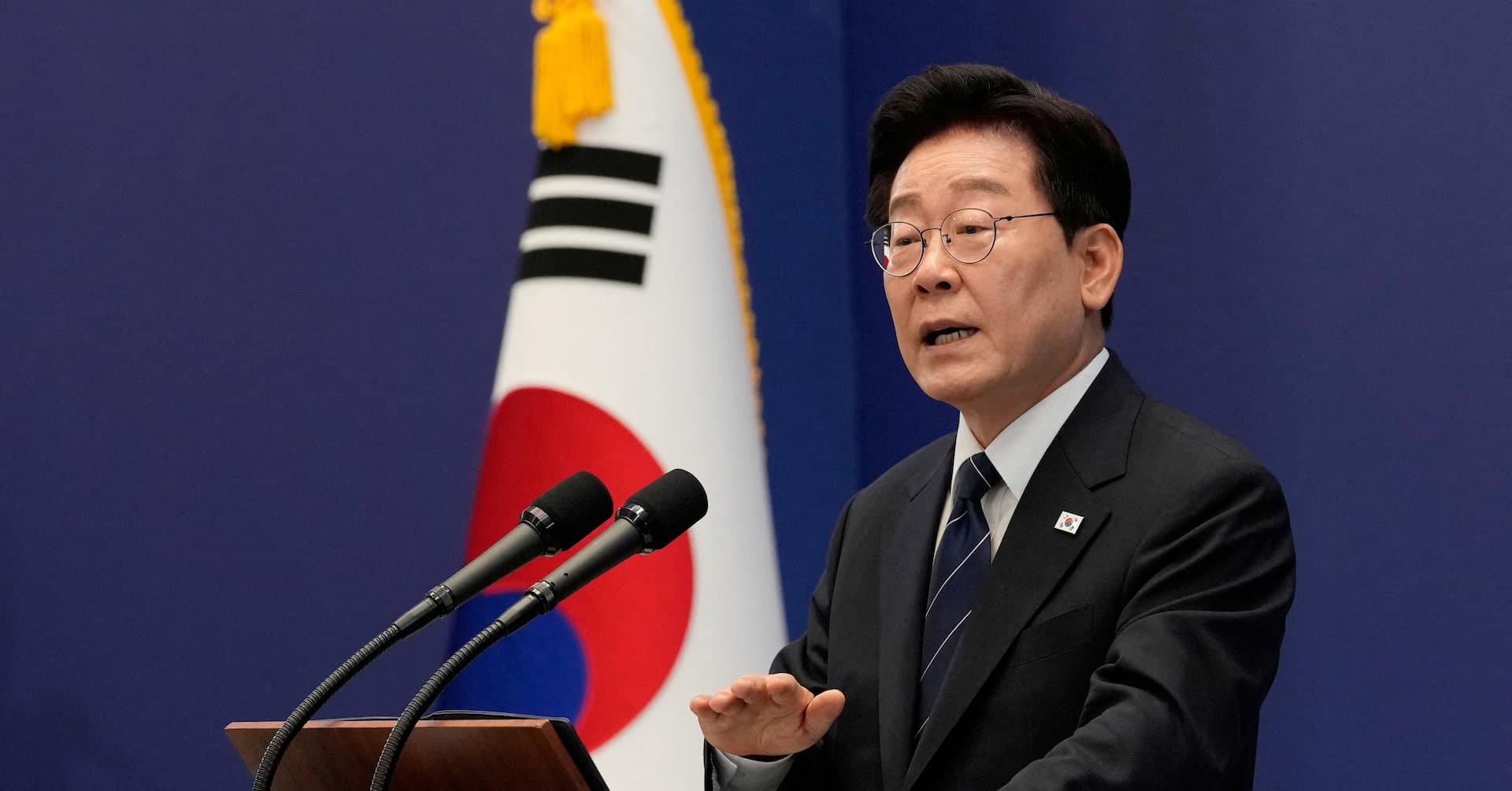
South Korean President Lee Jae Myung is pushing a new strategy to break the nuclear deadlock with North Korea. At the U.N. General Assembly, Lee urged the U.S. and North Korea to resume leader-level talks, arguing that NHK's reporting shows Trump's relationship with Kim Jong Un offers a rare diplomatic opening. Lee's plan asks Pyongyang to first freeze its nuclear and missile work, then gradually reduce its arsenal, with sanctions relief and economic incentives tied to each verified step.
The proposal faces steep hurdles. UPI notes North Korea has rejected recent U.S. overtures and is expanding ties with Russia and China instead. South Korean intelligence estimates Pyongyang is producing 10 to 20 new nuclear weapons each year. Experts disagree sharply on arsenal size—Trump cites 57 warheads while some analysts estimate over 100.
A Phased Approach to Nuclear Freeze
Lee's plan ditches the old demand for immediate, total denuclearization. Instead, he proposes three phases: suspension of weapons tests, reduction of the arsenal, and eventual dismantlement. HeadTopics reports Lee argued that "sanctions are not particularly effective anyway" and should be eased in exchange for a verifiable freeze. He said any breakthrough requires face-to-face talks between Trump and Kim to find common ground.
Lee's logic is blunt: demanding total disarmament while North Korea's weapons grow is a recipe for stalemate. A freeze, he argued, stops the threat from expanding and buys time for negotiations. He noted Seoul and Washington remain open to talks without preconditions.
Trump Reaffirms Dialogue While Japan Holds Firm
During a 30-minute summit, Trump reaffirmed his willingness to talk with Kim Jong Un. The two leaders also discussed Seoul's push for nuclear-powered submarines, expanded nuclear fuel rights, and faster transfer of wartime military control. Trump made no public mention of North Korea during his own U.N. address, signaling caution.
Japan takes a harder line. Prime Minister Sanae Takaichi reaffirmed Tokyo's commitment to "complete, immediate denuclearization." This reveals a rift: Seoul sees a phased freeze as pragmatic progress, while Tokyo and hawkish U.S. voices view it as accepting North Korea as a nuclear power.
North Korea's New Escape Routes Through Russia and China
Lee warned that Pyongyang's deepening ties with Moscow and Beijing undermine Western leverage. HeadTopics reports one bridge between North Korea and Russia has already opened, with a second bridge to China nearing completion. These economic backdoors let Pyongyang sidestep sanctions, making traditional pressure tactics less effective.
This shift matters because sanctions have been the West's primary tool for decades. With new supply lines, North Korea can ignore pressure to negotiate. Lee is betting that sweetening the offer—offering relief for concrete actions—works better than the carrot alone.
The Proliferation Threat Driving Seoul's Urgency
Underneath Lee's diplomatic push is a darker concern: once North Korea feels its arsenal guarantees regime survival, it may export nuclear weapons or missiles for hard currency. South Korean intelligence estimates CNBC's data shows Pyongyang could produce 10 to 20 warheads annually. Even conservative estimates place its arsenal at 57 warheads; some experts say over 100.
Exporting weapons would turn North Korea into a proliferation hub, spreading nuclear material to unstable regimes or terror groups. Lee's message is clear: freeze the program now, negotiate details later, or watch the problem metastasize.
Sentiment
Mostly NegativeNEGATIVENEUTRALPOSITIVE
Publishers
52
Articles
134
Reach
186
A
AnonymousAuthor