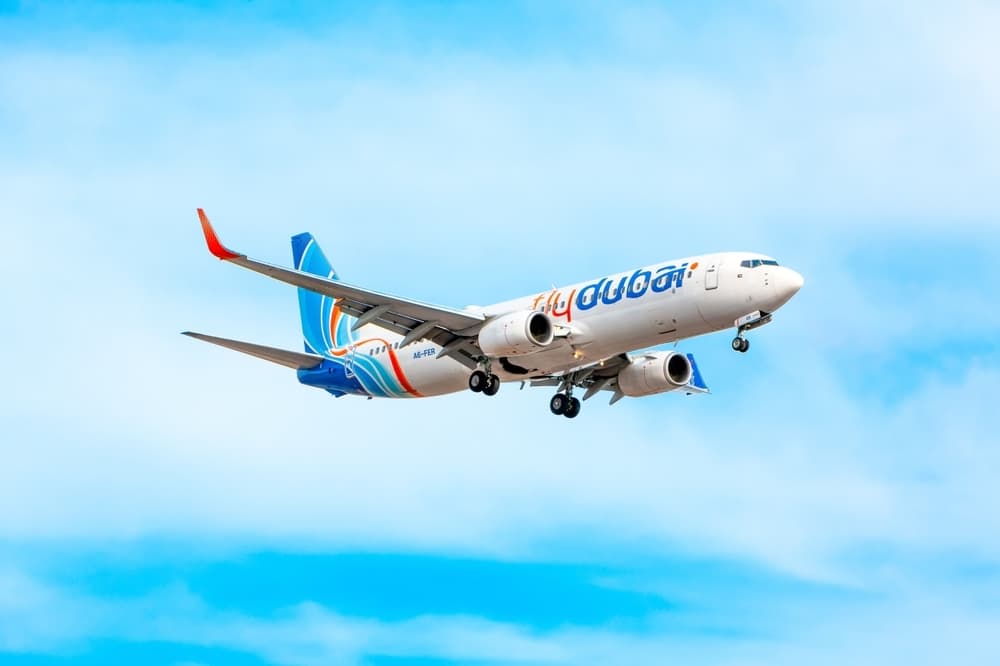
Flydubai Hijacking Investigation
Trump Says Iran Behind Flydubai Hijacking Attempt While Officials Investigate
Anonymous

Key Points
1
The aircraft reportedly dropped about 16,000 feet in roughly two minutes before a hijacking distress signal was transmitted.
2
The UAE described the incident as a “terrorist attack,” according to reporting on the investigation.
3
Two Flydubai pilots who were travelling as passengers helped take control of the aircraft before it landed in Tabuk.
4
Israeli Prime Minister Benjamin Netanyahu praised Captain Smit Machchhar as a “hero of Israel, India, and the world” during a video call while Machchhar was recovering.
President Donald Trump said he personally believes Iran orchestrated the attempted hijacking of Flydubai Flight FZ1073 on September 30, when an Omani co-pilot attacked Indian Captain Smit Machchhar with a crash axe and forced the plane into a steep dive. Trump warned Iran would be hit "very hard" if state involvement is confirmed. Vice President JD Vance struck a different note, saying Vance had seen "nothing conclusive" yet and deferred to intelligence officials. The Boeing 737 carrying 180 people dropped 16,000 feet in under two minutes before passengers and off-duty crew subdued the suspect, allowing for a safe emergency landing in Tabuk, Saudi Arabia.
The UAE has classified the incident as a UAE "terrorist attack" and is leading the investigation. Early U.S. and Israeli assessments suggest the co-pilot, Hamam al-Hammami, may have acted alone, though Israeli officials reported he planned the attack before joining the airline and targeted the Dubai-to-Tel Aviv route. Captain Machchhar suffered severe injuries but survived, and Netanyahu called him a "hero of Israel, India, and the world."
The Attack: A Two-Minute Plunge and Heroic Response
At 05:22 UTC on September 30, First Officer al-Hammami attacked Captain Machchhar from behind with a cockpit crash axe while the aircraft cruised at 34,000 feet. The plane plunged 16,000 feet in roughly two minutes, reaching a dive angle of 39 degrees that tore away sections of the tail rudder. Crew members broadcast emergency codes including Squawk 7500—the hijacking distress signal—along the Saudi-Jordanian border.
Captain Machchhar opened the cockpit door despite severe axe wounds. Passengers, led by Yaniv Hayun, and two off-duty Flydubai pilots rushed in and subdued al-Hammami. Machchhar later recalled: "I was trying to save my own life... But I also knew I couldn't let all of them die." The off-duty pilots completed a safe emergency landing in Tabuk with no fatalities among the 174 passengers and 6 crew members.
Trump and Vance Diverge on Iran's Role
Trump took a decisive stance, claiming Iran was behind the plot and warning of severe retaliation if confirmed. His assertion reflected broader U.S.-Iran tensions but lacked public evidence. In contrast, Vance offered restraint: "I wouldn't say I've seen anything conclusive just yet" and noted the administration was deferring to CIA Director John Ratcliffe and intelligence officials for final attribution.
The split between the two top officials underscores uncertainty about al-Hammami's true motives and external support. Vance also raised security concerns, stating: "We're certainly looking at our procedures within the United States to make sure that people who are obviously flight risks are not getting behind the wheel of an airplane." This signals a broader review of pilot vetting across borders.
Red Flags Missed Before the Attack
Al-Hammami, 29, joined Flydubai eight months before the attack despite troubling background. Intelligence Sources indicate he was fired by Oman Air and flagged by Omani authorities after adopting extremist views. He told investigators he specifically joined Flydubai to target the Dubai-to-Tel Aviv route and had planned a similar hijacking in July 2026 but aborted it.
The incident exposes critical lapses in cross-border pilot vetting. Vance questioned how al-Hammami passed clearance procedures, prompting urgent reviews in both the UAE and the United States. Aviation analysts noted the extreme structural stress—a 39-degree dive angle—placed on the aircraft during the attack, demonstrating how close the plane came to catastrophic failure.
Israeli Praise, Flight Suspensions, and Ongoing Fallout
Netanyahu called Captain Machchhar's actions heroic during a video call while the captain recovered from his injuries. The incident has triggered immediate operational disruptions: Flydubai suspended all operations on its Tel Aviv route, forcing Israeli carriers to run emergency repatriation flights from the UAE. The suspension highlights how a single attack can fracture regional aviation ties.
Captain Machchhar sustained severe axe wounds but survived—one of six injured aboard. The other 174 passengers, mostly Israeli nationals, escaped physical harm. UAE Authorities continue their investigation while security experts warn of similar vulnerabilities in cockpit access procedures across Middle Eastern and global airlines.
Sentiment
Mostly NegativeNEGATIVENEUTRALPOSITIVE
Publishers
35
Articles
76
Reach
111
A
AnonymousAuthor