Huawei Launches Tri-Fold Phone Ahead of Apple Foldable
Huawei Launches Tri-Fold Phone Ahead of Apple Foldable
Anonymous
Key Points
1
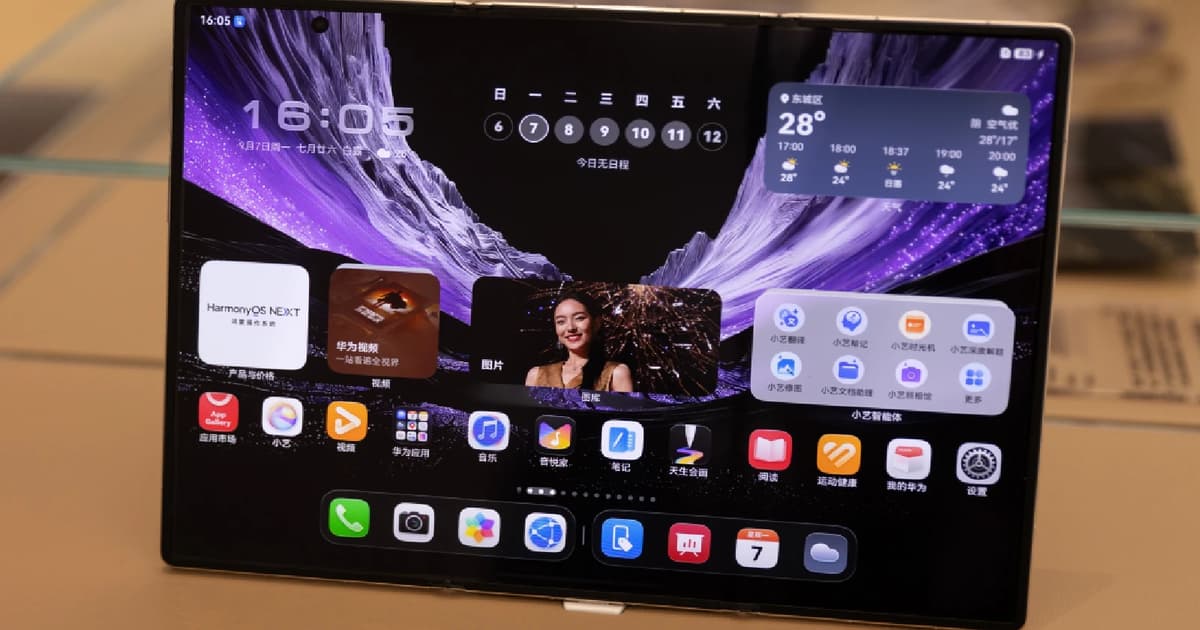
The Mate XT 2 is scheduled to go on sale in China on September 10, opening to a 10.2-inch display and carrying a battery larger than 6,000mAh. Its redesigned hinge is intended to reduce the crease common to folding screens.
2
Xiaomi’s 18 Fold is expected to cost about 8,999 yuan and includes a 7.6-inch folding display, a 200-megapixel main camera and 67-watt wired charging.
3
The Mate XT 2 adds improved water resistance, upgraded cameras and an optional privacy screen designed to prevent nearby people from viewing the display. Huawei says company testing showed 42% better overall performance than the previous model.
4
Huawei held 22.6% of China’s smartphone market in the second quarter, ahead of Apple’s 18.1% and Xiaomi’s 12.4%, according to IDC. Huawei’s position is even stronger in foldables, where it accounted for 68% of Chinese shipments, according to Smart Analytics Global.
5
The Mate XT 2 marks the first unveiling of a Kirin chip at a Huawei flagship event since the Mate 40’s global launch six years ago. Huawei describes the Kirin 9050 Pro’s architecture as layered logic units linked by vertical interconnect channels, which shorten signal paths and reduce latency.
Huawei launched its second-generation Mate XT 2 tri-fold smartphone on Monday, racing ahead of Apple's expected foldable iPhone debut. The device opens into a 10.2-inch tablet-sized display and features Huawei's new Kirin 9050 Pro chip, designed to boost performance by 42% over the previous model The Next Web. The move underscores how U.S. technology restrictions have pushed Chinese phone makers to develop increasingly sophisticated homegrown chips and components.
TipRanks reports Apple plans to unveil its foldable iPhone, called the iPhone Ultra, on September 9 — just one day after the Mate XT 2 launches in China on September 10. Xiaomi is also entering the race with its 18 Fold, expected to cost about 8,999 yuan. These launches highlight an intensifying battle in premium smartphones as Apple prepares to bring its huge high-end customer base into the foldable category.
Huawei's New Tri-Fold Phone Sets Technical Benchmarks
The Mate XT 2 opens to a 10.2-inch display and packs a battery larger than 6,000mAh China Daily Asia. Huawei says its redesigned hinge reduces the visible crease common to folding screens. The phone adds improved water resistance, upgraded cameras and an optional privacy screen to prevent nearby viewers from seeing the display. China Daily Asia reports the new Kirin 9050 Pro chip uses a "logic-folding" architecture with vertical interconnect channels that shorten signal paths and reduce latency.
This marks the first time Huawei has unveiled a Kirin chip at a flagship event since the Mate 40 launched six years ago Free Malaysia Today. The company's homegrown processor demonstrates how sanctions have forced Chinese manufacturers to build their own technology instead of relying on U.S. suppliers like Qualcomm.
Xiaomi and Huawei Both Bet on Domestic Chips
Xiaomi's competing 18 Fold costs about 8,999 yuan and features a 7.6-inch folding display, a 200-megapixel main camera and 67-watt wired charging Head Topics. Like Huawei, Xiaomi emphasizes domestically sourced technology, using the company's Xring O3 processor and locally made memory. Both companies are building self-sufficient supply chains to counter U.S. trade restrictions that have crippled their access to foreign chip designers and component makers.
This strategy reflects a broader shift in China's tech industry. When Washington imposed sanctions on Huawei starting in 2019, the company had to develop its own chips from scratch. Now rivals like Xiaomi are following suit, investing heavily in domestic R&D to reduce dependence on foreign suppliers.
Huawei Leads China's Foldable Market Before Apple's Entry
Huawei holds 22.6% of China's overall smartphone market in the second quarter, ahead of Apple's 18.1% and Xiaomi's 12.4%, TipRanks reports citing IDC data. But Huawei's grip on foldables is far stronger — the company accounted for 68% of Chinese foldable phone shipments, according to Smart Analytics Global. This commanding share gives Huawei a first-mover advantage in a category where most consumers are still learning what tri-fold phones can do.
Apple's entry could quickly reshape the segment TipRanks warns. The company's premium brand and massive loyal customer base have historically driven adoption of new phone categories. If the iPhone Ultra succeeds, it could pull millions of high-spending users toward foldables, threatening Huawei's current dominance in China's most profitable phone segment.
Sentiment
Mostly PositiveNEGATIVENEUTRALPOSITIVE
Publishers
13
Articles
61
Reach
74
Topics
A
AnonymousAuthor


