Fashion Renewable Collaborative
Levi's and Marks & Spencer launch collaborative to bring renewable energy to fashion suppliers
Anonymous
Key Points
1
The collaborative builds on Levi Strauss’ earlier Levi Energy Accelerator Program (LEAP), launched with Schneider Electric to help garment manufacturers in India understand and access renewable-energy procurement resources. Levi said the experience showed the need to expand from a single-brand effort to an industry-wide model.
2
Levi Strauss said it and Marks & Spencer were motivated by their shared suppliers: Jennifer DuBuisson, Levi’s senior director of sustainability, said brands risk creating “noise in the system” when they approach the same suppliers with slightly different requirements.
3
The initiative is positioned as an implementation program rather than one focused mainly on emissions targets or road maps: its offerings are intended to help suppliers assess actual energy purchases and installations, including distributed renewable generation and storage.
4
A roadmap from the World Resources Institute and the Apparel Impact Institute estimates that shifting manufacturing to renewable electricity represents roughly two-thirds of the fashion sector’s identified emissions-reduction potential, underscoring why supplier power is a priority for the collaborative.
5
The practical feasibility of renewable-energy procurement varies substantially by market: available options and prices depend on local conditions, while some arrangements require specialized expertise, sufficient aggregated demand and long-term commitments to make projects viable.
Levi Strauss and Marks & Spencer launched the Fashion Renewable Collaborative at New York Climate Week to help apparel suppliers switch to renewable electricity. ESG Today reported the initiative, backed by Schneider Electric, aims to cut the fashion industry's outsized emissions from textile mills and dye houses, which produce more than half the sector's total carbon footprint.
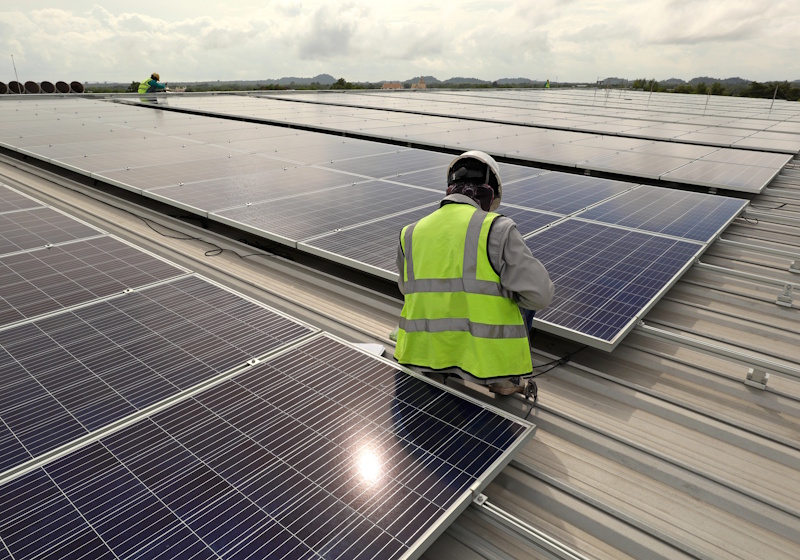
The collaborative will provide digital training, market guidance, and practical support for renewable options like power purchase agreements, solar panels, and battery storage. Unlike past efforts targeting single brands, this industry-wide model coordinates requests from multiple companies to ease the burden on suppliers navigating fragmented energy markets with limited resources.
Levi's Earlier Solar Push Showed the Need
Levi Strauss built this collaborative on lessons from its Levi Energy Accelerator Program (LEAP), launched with Schneider Electric to help garment manufacturers in India access renewable-energy resources. Ecotextile reported the company realized a single-brand effort wasn't enough — suppliers needed industry-wide coordination to tackle energy challenges at scale and avoid duplicate requests.
Brands Create Confusion When Acting Alone
Jennifer DuBuisson, Levi's senior director of sustainability, explained that multiple brands approaching the same suppliers with slightly different renewable requirements creates "noise in the system." By pooling demand, Levi Strauss and Marks & Spencer reduce the compliance burden on manufacturers who must navigate fragmented energy markets and prove their capacity to meet each brand's separate standards.
Renewables Could Cut Fashion Emissions by Two-Thirds
A roadmap from the World Resources Institute and the Apparel Impact Institute found that switching manufacturing to renewable electricity represents roughly two-thirds of the fashion sector's identified emissions-reduction potential. This massive opportunity explains why the collaborative prioritizes supplier power adoption over setting distant emissions targets or publishing glossy road maps.
However, renewable-energy feasibility varies widely by market. Available options, prices, and required expertise depend on local conditions. Some arrangements demand long-term commitments and sufficient aggregated demand to work financially — hurdles the collaborative aims to overcome through coordinated buyer support.
Sentiment
Mostly PositiveNEGATIVENEUTRALPOSITIVE
Publishers
16
Articles
31
Reach
47
A
AnonymousAuthor


