Kyiv Headquarters Struck
Russian Drone Strike Hits SBU Security Headquarters in Central Kyiv
Anonymous
Key Points
1
Local authorities gave differing casualty figures: Kyiv officials reported nine people wounded in one account, while other reports cited five or seven injured; it was also unclear whether any SBU personnel were among the wounded.
2
The strike was described as a rare case of a Ukrainian government building being damaged during the war, and it also destroyed the Zavertailo bakery building opposite the SBU headquarters.
3
Russia’s daytime attacks on Ukraine have intensified in recent weeks, sometimes involving jet-powered drones that are more difficult for air defenses to intercept; AFP said it could not independently verify what type of munition struck the SBU building.
4
The SBU has been involved in major operations against Russian targets, including the 2022 bombing of the bridge linking Russia with occupied Crimea and the 2025 Spiderweb drone attack on Russian strategic bombers; Russia has characterized some Ukrainian covert attacks as terrorism.
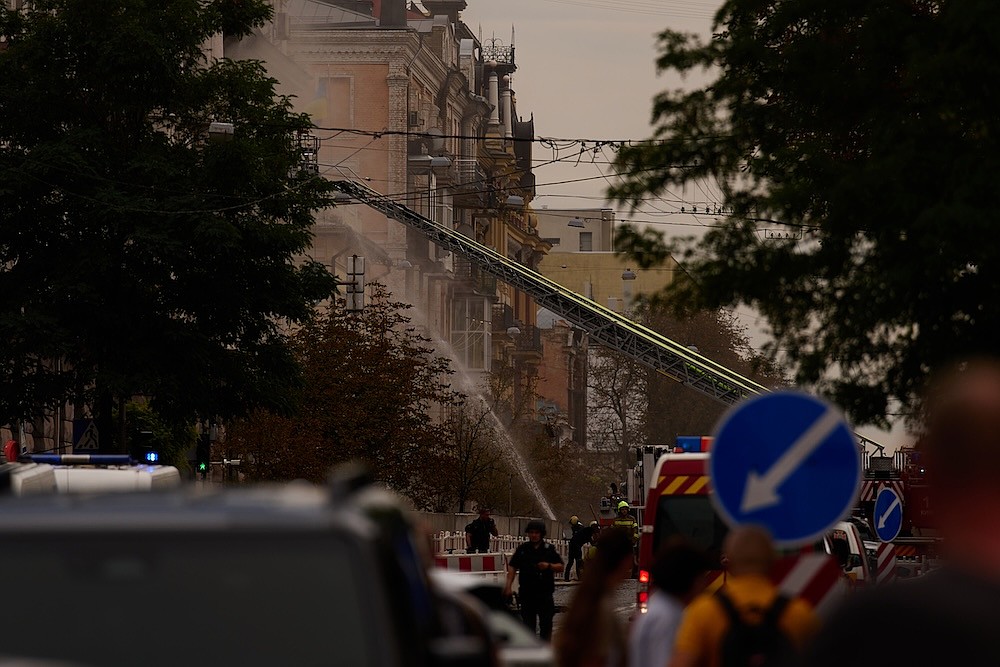
A Russian drone struck the headquarters of Ukraine's Security Service (SBU) in central Kyiv on September 4, damaging the building and injuring at least seven people. Times Free Press reported that President Volodymyr Zelenskyy confirmed the attack appeared to target the office of acting SBU chief Oleksandr Poklad. The strike came as U.S. envoys prepared diplomatic visits to Moscow and Kyiv, and Zelenskyy immediately ordered the SBU to prepare an "appropriate" retaliatory response.
The drone hit near St. Sophia Cathedral in central Kyiv, a rare direct strike on a Ukrainian government building during the war. India's News reported the attack also destroyed the Zavertailo bakery across the street. The assault marked the 10th consecutive day of Russian drone attacks on the capital, with recent daytime strikes reportedly using faster, jet-powered drones that are harder for air defenses to intercept.
SBU's Covert War Deep Inside Russia
The SBU is Ukraine's main intelligence agency conducting secret operations against Russian military targets. United24 Media reported that a Ukrainian drone recently killed Anatoly Chernyshov, an executive who supplied Russian forces in occupied Crimea. The agency has orchestrated major strikes, including the 2022 bombing of the Crimean Bridge linking Russia to occupied territory and the 2025 "Spiderweb" drone campaign targeting Russian strategic bombers.
These covert operations make the SBU a priority military target for Russia. By striking its Kyiv headquarters, Russia aimed to damage Ukraine's ability to launch attacks deep inside Russian territory. The precision strike on Poklad's office—timed when he was absent—suggested Russian intelligence had detailed information about his location and schedule.
Zelenskyy Vows Immediate Retaliation in Kind
President Zelenskyy ordered the SBU to prepare a "mirror" response after the attack. The strategy signals that Ukraine will strike comparable targets inside Russia to deter future assaults on senior security officials. Zelenskyy tasked military leadership with selecting targets for "maximum effect," though the timing was left deliberately open.
This reciprocal approach risks deepening an escalation cycle. Each side may rush to strike harder targets before negotiations resume, using continued attacks as leverage in talks. The retaliatory strike also sends a message to Russia that Ukraine will not accept blows to its security leadership without comparable consequences.
Daytime Drone Attacks Break Through Air Defense
Russia has intensified daytime attacks on Kyiv using faster, jet-powered Shahed drones that outpace traditional air defense systems. Ukrainian Air Force data showed that 121 Shahed drones were launched overnight into September 4, with roughly half using the advanced jet-powered design. Defenders shot down 103 drones, but several penetrated Kyiv's defenses to strike central targets.
The successful hit on the SBU building demonstrates Russia's growing ability to threaten high-value targets in the Ukrainian capital. Urban panic has risen as strikes breach protective barriers, damaging historic districts near UNESCO-protected sites. The 10-day assault on Kyiv shows Moscow is maintaining military pressure even as diplomacy ramps up.
U.S. Envoys Arrive as Diplomatic Window Narrows
U.S. special envoys Steve Witkoff and Jared Kushner landed in Moscow on September 5 to present peace proposals, triggering a temporary 72-hour pause on strikes against Kyiv. Arkansas Online reported the timing placed negotiations in sharp contrast to the day's attack on Ukraine's top security agency. The diplomatic mission aims to reduce tensions, but the SBU strike underscores how fragile ceasefire arrangements remain.
Ukraine's Foreign Minister Andrii Sybiha publicly condemned the strike as a "major escalation" proving Moscow rejects diplomacy. The attack on the eve of high-level talks raises the political cost of peace efforts, suggesting both sides will seek stronger battlefield leverage before serious negotiations begin. Zelenskyy's vow of retaliation signals Ukraine will not pause operations during diplomatic windows.
Sentiment
Mostly NegativeNEGATIVENEUTRALPOSITIVE
Publishers
45
Articles
120
Reach
165
Topics
A
AnonymousAuthor


